Will Deliver 3,200 Engines Over Next Decade: CEO Of GE Aerospace South Asia Vikram Rai To NDTV
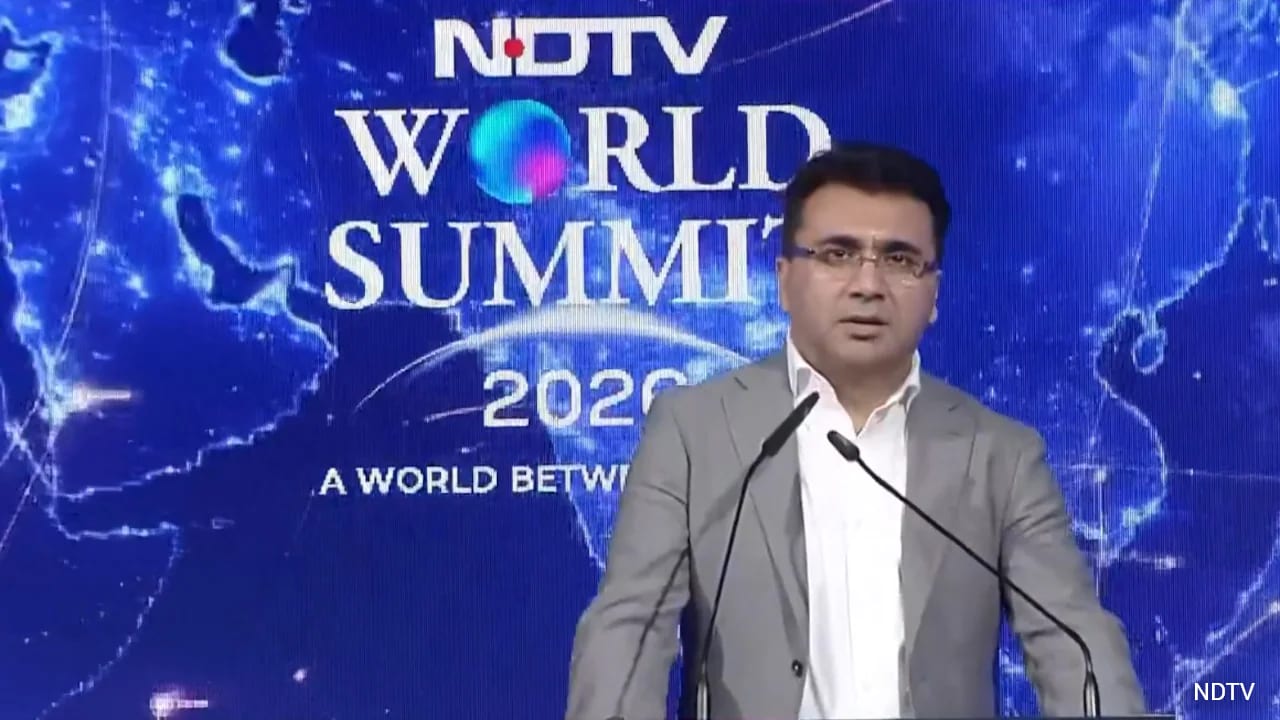
India is at the front and centre of defining next-generation aviation technology, Vikram Rai, CEO, GE Aerospace, South Asia, told NDTV on Thursday.
Speaking at the NDTV World Summit 2026 on the topic of 'Powering India's Ascent: Building Aerospace Capability for a Resilient World', Rai explained that the aviation industry is at a defining moment of how the next-generation jet engines would look like.
Where The Aviation Industry Stands
Rai stated that the aviation industry has been through several challenges over the past few decades, from the September 11 terror attacks to the pandemic, but emerged stronger each time.
He stressed that behind every aircraft that takes off, there's a "remarkable piece of engineering" that passengers never see and behind every aircraft engine there is a global ecosystem of engineers, manufacturers, suppliers working on one uncompromising standard: safety.
"At GE Aerospace safety is our topmost priority. We don't compete on safety," he said.
He talked about the exponential growth in passenger traffic in India over the past two years, as well as the infrastructure spending by the government.
As per the GE Aerospace South Asia CEO, India's domestic airlines generated approximately $19 billion in revenue in FY2026.
The domestic passenger traffic in the country has touched 340 million, he said, adding it is expected to grow to 2.1 billion by 2040.
Watch Vikram Rai's, CEO, GE Aerospace, South Asia, special address at #NDTVWorldSummit2026 on 'Powering India's Ascent: Building Aerospace Capability for a Resilient World' @GE_Aerospace #NDTVWorldSummit https://t.co/plomoy9MQa
— NDTV (@ndtv) October 22, 2026
GE Aerospace's Partnership With India
“In a world of geopolitical uncertainty and supply chain disruptions, resilience is not built overnight. It is built through engineering depth, manufacturing capabilities, skilled talent, and trusted partnerships,” Rai stated.
He emphasised that GE Aerospace's collaboration with India rested on four pillars: engineering depth, manufacturing capabilities, skilled talent, and trusted partnership.
The GE Aerospace executive cited the company's technology centre in Bengaluru and its partnership with HAL as examples of long-standing collaboration.
"We are the first aerospace company to establish a technology centre in Benagluru in 2000. Since then the technology centre has had 1,000 patents and is working on next generation hybrid electric engine program," he said.
Rai said that the company had made significant progress to build aerospace capability in India over the past few months.
He said that GE Aerospace's joint venture, CFM International, is set to help IndiGo set up and operate an engine MRO (Manintenance, repair and overhaul).
Talking about the company's continued confidence in the country's aerospace ecosystem and manufacturing capabilities, Rai said, “India's moment is both an opportunity and a responsibility, one that we take seriously.”
Rai said that GE Aerospace would deliver over 3,200 engines over the next nine to 10 years. To put it in perspective, nine of the 10 aircraft delivered by the company in the next decade will be powered by GE or its joint ventures.
Promising to be the “backbone of the airline industry,” Rai said that GE Aerospace was committed to fulfilling its responsibility to power the next phase of India's aerospace growth reliably and safely.
KioskNews shows a cleaned-up reading view extracted from the publisher’s page — the original always lives on their site, not ours.