Does Philadelphia’s ‘house of horrors’ hold the key to seven missing women?
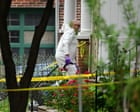
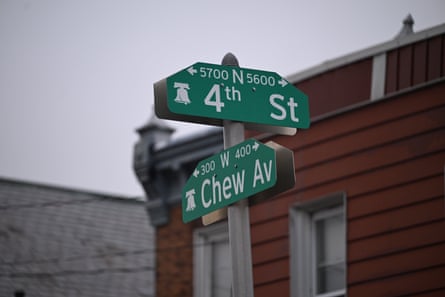
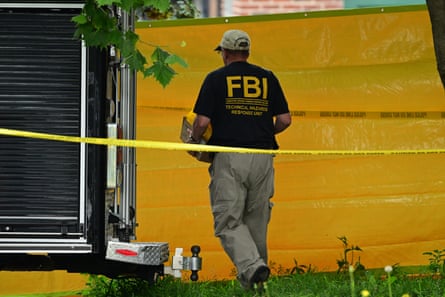
A dilapidated house, burned out above the second story, may hold clues to dark tales and – potentially – the darkest of endings as the FBI and police in Philadelphia try to unpick what took place at 417 West Chew Avenue for more than three decades.
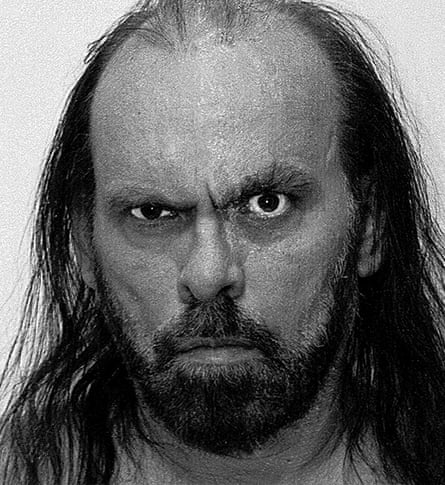
Last week, homicide investigators shifted their focus from examining an archive of a million photographs and film recovered from what is known locally as the “house of horrors” to excavating what is in or under the home of Raymond “RC” Horsch, a career criminal, local artist, author and snuff photographer who died last year aged 82, and his son Eugene, 44.
So far, at least seven missing women have been linked to the home in the Olney section of the city, originally a German American neighborhood but now largely African American, Hispanic and Asian. Investigators believe five are dead.
Fifty-eight women seen on film and in photographs recovered from the trash-strewn property have been identified. Of those, 25 have been located but not yet interviewed; 19 have spoken with detectives but declined to cooperate.
Investigators are faced with a difficult task: how to discern from images whether Horsch’s subjects are posing, and what is real and what is staged. Such is the grim nature of snuff photography and the murky exchanges that lie beneath. Investigators have said that the five women appear unconscious, lifeless or injured, but with no bodies the medical examiner cannot issue death certificates.
“We’re going slow and methodical,” a police source said. “Do we think people were killed in the house? Sure. It’s a tough investigation because the guy who had the house was a violent pornographer. Is it art or is it reality?”
Deputy police commissioner Frank Vanore said at a news conference on 10 September: “Some of this is play-acting. Some of it we believe could be real, but we’re not there yet.”
The five women who police believed to be dead are Blair Tonzelli, 35, missing since 2023; Nicole Fusaro and Maribel Fresses, both 27, who disappeared in 2018; Amy McHale, who disappeared in June 2016 and had been married to Horsch; and Gabrielle Amarando, 22, who disappeared in 2012.
Four miles from the Olney home lies Philadelphia’s Kensington neighborhood, an area notorious for its open-air drug use, prostitution and homelessness, and as a place where people simply disappear from life.
Many women in the community last week recalled some of those identified by investigators. One had connections to the Olney house – her driver’s license was registered there – but declined to discuss the case. Others said they recalled Horsch’s son, Eugene, currently in custody pending federal gun and drug charges, cruising the block in a black BMW. One remembered Fresses as an “Italian princess – sweet and kind”.
Ashley, making her way from a woman’s shelter with a plastic bag of candies, syringes, and a glass bowl for smoking fentanyl or meth, said bleakly: “A lot of girls go missing here. You get dope sick, it makes you crazy, and then you make bad decisions.”
Not all the women who passed through the Olney home were connected to Kensington. Media reports suggest that some met Horsch in Camden, New Jersey, 20 miles away. A woman from the area told ABC Philadelphia she had gone to the Olney home, blacked out from the drugs Raymond Horsch gave her, and woke up with him standing over her, taking pictures.
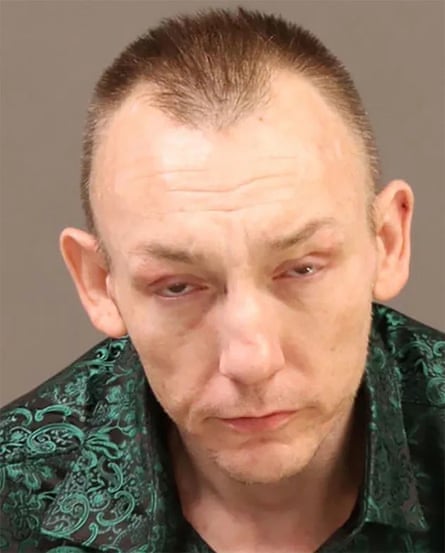
Police first raided the home in June after Eugene Horsch was stopped in a car in Philadelphia’s Old City neighborhood. Horsch was carrying fake ID indicating he was federal law enforcement and DEA agent. A female passenger was carrying Tonzelli’s identification.
Two handguns and approximately $8,000 worth of illegal drugs were found in the vehicle. According to court documents, Eugene Horsch allegedly said Tonzelli would “never be seen again”. A search of the home turned up an additional illegal firearm, a marijuana grow operation, a fake FBI badge and five urns containing cremated remains.
The arrest of the younger Horsch, who had not been charged in connection with the missing women, shone a spotlight on his father, who was never charged in connection with the disappearances of any of the five identified women. The city’s medical examiner’s office has advised that if images of at least three women recovered from the home “are authentic and have not been altered, the women depicted appear to be deceased”.
Court records show that Raymond Horsch was convicted in 2009 for attempting to lure a nine-year-old girl into his car in Kensington. “Come here, in my car, sexy girl,” Horsch said to her, according to an arrest report. Horsch was found guilty, sentenced to two and a half to five years in prison, and required to register as a sex offender.
But his lawyers sought a new trial and the case collapsed because the girl was too afraid to testify a second time, according to the Philadelphia Inquirer. Horsch’s conviction was expunged and the records placed under seal. A judge has ordered them to be preserved.
According to a 1985 psychological examination obtained by the Inquirer, Horsch was a manipulative criminal who was “consumed by anger … grandiose, mistrustful, suspicious, and excessively controlling”.
The profile was commissioned as part of a federal drug manufacturing case. Horsch fled the US with his second wife, Myroslawa Anna Ferkuniak. He was arrested in New Zealand, where he’d been living under the name of Stanley Stokowski, a real California chemist who had a Stanford doctorate.
According to the profile, he spoke in the third person, as if describing “events from someone else’s life”. Michael Yoder, a retired FBI special agent, told the outlet that, judging from the report, “I would say you have a potential serial killer on your hands.”
For a time, Horsch and his young son lived in Pennsylvania’s Berks county, where he opened a barbecue restaurant while also pursuing a career as a fetishistic or “snuff” photographer. In 2009, he was arrested after a marijuana grow operation was discovered in his basement, and he was sentenced to five years in prison.
Raymond Horsch had been offering cash and drugs to women in Kensington in exchange for participating in his violent pornographic films since the early 2000s. He also had access to to a crematorium connected to Kensington’s Garzone funeral home to photograph corpses. In 2007, the business was shut down for selling body parts on the black market.
Horsch wasn’t hiding his access to the morgue – a video exhibited at a “Transgressions” art show in 2014 featured a body being loaded into an incinerator. The exhibition asked visitors to consider if Horsch’s “often transgressive images can possibly be art? Or, as many critics and philosophers claim, are art and pornography completely and forever mutually exclusive?”
Horsch was not reticent about his obsession with women in addiction. He uploaded photos of his subjects to his website featuring women “imagining and acting their own deaths” juxtaposed with real photos of overdose victims. A handwritten note found in the home describes hurting people and makes reference to serial killer Ted Bundy.
Horsch’s films included a documentary, Whore!, and films including Deleted Scenes: A Serial Killer’s Video Journal and Slaves. He starred in and directed Lovers, which was produced by a feminist porn studio. He produced The Erotic Memoirs of a Male Chauvinist Pig, featuring Georgina Spelvin, the star of The Devil in Miss Jones.
He published a two-volume photo book called Eroto~ To the Prurient Interest, showing a woman he referred to as “Anna” in staged “deaths”. 2014’s Empathy included a chapter about dissolving a murdered woman’s body with chemicals.
The home is already a tourist attraction even as investigators still search for evidence. “It was creepy vibes. He’d be out front staring at women, or he’d be in his yard doing some kind of chemist stuff,” recalled Jessica Diaz, 37. A neighbor living opposite the home said he recalled young women coming and going from the home. On occasion, ambulances were called. “They need to tear that house down,” he opined.
With Raymond Horsch dead, and his son Eugene under investigation, it remains possible that no charges will be brought and the best the families of the missing can hope for is a police report. “We have a duty to those families who are all concerned about whether their loved one lost their lives in that house or maybe somewhere else,” said the Philadelphia police commissioner, Kevin Bethel.
But the story of Raymond Horsch is already entering the annals of Philadelphia horror lore. Edgar Allan Poe and Bram Stoker both wrote in the city, and it’s had serial murderers in the past. In the 1980s, Gary Heidnik, an inspiration for the fictional character Buffalo Bill in The Silence of the Lambs, imprisoned six vulnerable women in a pit in his basement with the goal of creating a “baby farm”.
Josh Hitchens, a writer and historian known locally as a prominent “purveyor of the macabre”, said that in each case, it was people preying on the vulnerable. “These are often not the people that law enforcement pays much attention to. That’s one of the horrifying things about what’s unfolding now – what Raymond Horsch was doing was apparently known and talked about within the community.”
Hitchens said Horsch is likely to become a point on the horror map of Philadelphia, achieving a measure of recognition in death that his films and writings failed to secure in his life.
“I hope that within that we’re not just talking about Raymond and Eugene Horsch, but the lives of the women are also remembered and given the respect they deserve.”
KioskNews shows a cleaned-up reading view extracted from the publisher’s page — the original always lives on their site, not ours.