Rural households’ budget for processed food more than doubled in 20 years: IIMA report
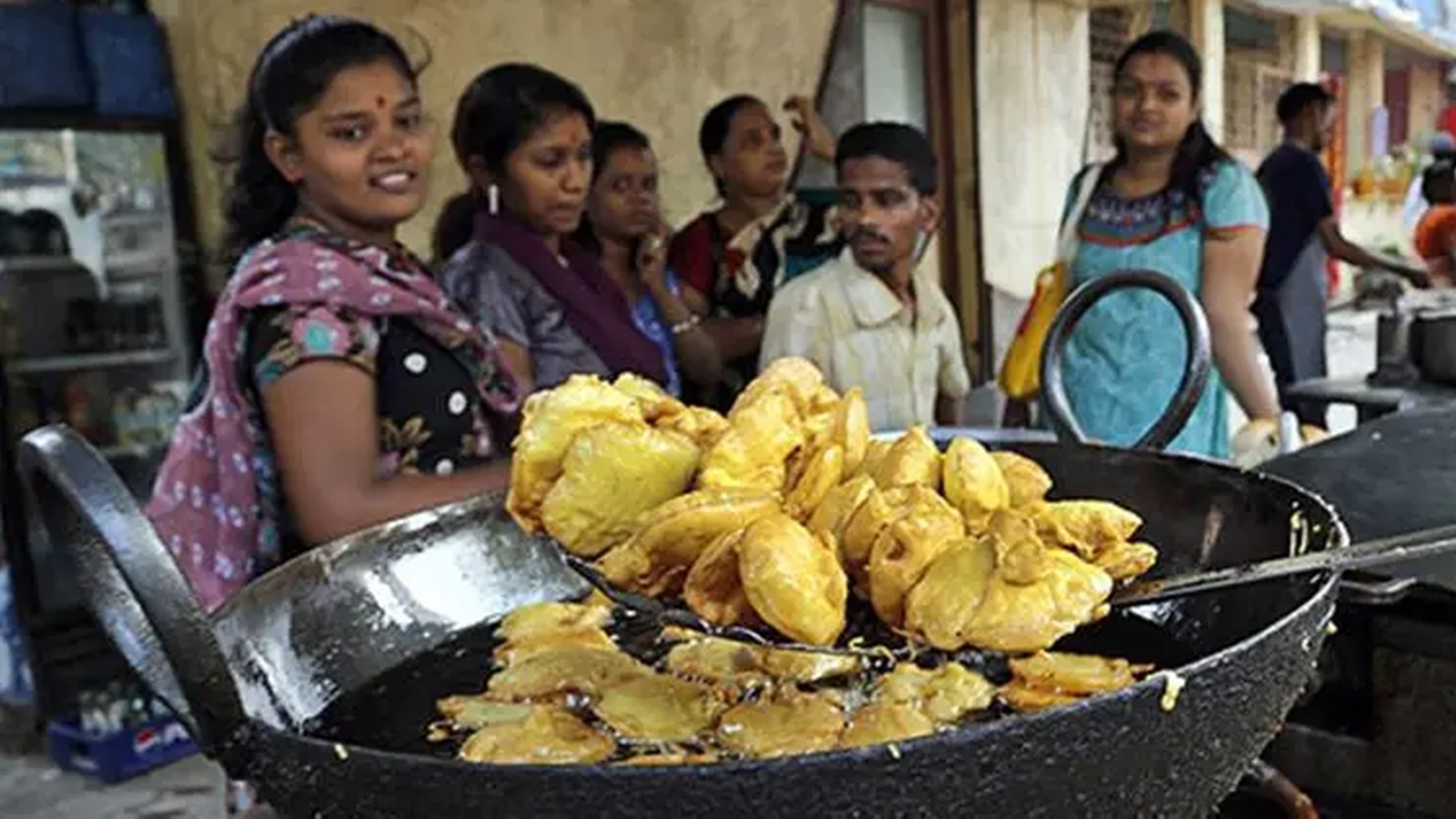
The amount a rural household spent on processed foods rose faster than that of an urban household in the country in the last two decades, said the India Clean Food Report 2026 released by The Indian Institute of Management, Ahmedabad (IIMA), and Khetika Foundation, a not-for-profit to promote traditional foods.
“Over the 24-year span from 1999-2000 to 2023-24, the share of household budgets allocated to processed foods surged 2.35-fold in rural India (from 4.19% to 9.84%) and 1.75-fold in urban India (from 6.35% to 11.09%),” the draft report said.
Households across the country now spend more money on beverages, refreshments and processed foods than on cereals, milk and vegetables, the report said.
Released at the India Clean Food Summit 2026 at IIMA on Wednesday, the report, relied on data from the household consumption expenditure 2023-24 of the Ministry of Statistics and Programme Implementation (MoSPI), shows how packaged and processed foods have become embedded in daily consumption across income tiers.
According to the report, a rural household spends around 47% of expenditure on food in a month while it is 39.68% in an urban household.
In the household food basket, “beverages, refreshments, and processed food” have overtaken cereals, milk, and vegetables to become the single largest food expenditure category in both rural and urban households, it added.
Clean food market
The report has categorised existing food in India into four brackets — tier I as unsafe and adulterated, tier 2 as conventional ultra processed, tier 3 as clean label and tier 4 as verified clean food.
“We are trying to propose a multi-prone framework on which a clean food system will evolve. We want people, the consumers, to be aware and understand how the labels operate and understand what is there inside the labels. Awareness is an important factor,” Prof Ranjan Kumar Ghosh, chairperson Centre for Management in Agriculture (CMA) at IIMA told The Indian Express, on the sidelines of the summit.
Story continues below this ad
The draft report, which will be open for suggestions and feedback before finalisation, also urged the companies, entrepreneurs and actors who want to get into the clean food ecosystem to understand its value chain from the farm to the fork.
“There is a fear that if we invest in clean food, we will not have customers. This is a myth,” Prof Ghosh said.
Experts at the summit felt that if more companies entered the segment of clean food, it would scale up production and the prices would, in turn, decline.
“All who want to enter this ecosystem of clean food should not be afraid to enter the market. There is a big market and this is going to boom. We aim to make premium quality and clean food affordable,” Prithvi Singh, the co-founder of Khetika Foundation, told this newspaper.
Rejection of Indian spices
Story continues below this ad
According to Prof Ghosh, most of the Indian spices which got rejected in international markets are consumed locally.
“Why are a good amount of Indian spices rejected in other countries? Because of the level of adulteration,” Prof Ghosh observed.
According to a December 2024 paper, ‘Case study on recent trends in export rejections of spices from India’ in Horizon e-Publishing Group that uses data from the United Nations Industrial Development Organization (UNIDO), though aggregate rejection rates have declined by 53 per cent over the past decade, the number of export rejections “is still significant”.
“We Indians, day in and day out, are consuming everything we get at cheap prices. Not only spices, this is the case with every food item. In Europe, even if there is .00001% doubt on the quality, the food gets rejected. But here if it is 1 or 2 per cent (short on quality) we ignore. If you want, viksit (developed) Bharat, we need viksit Bharatiya. We need healthy Indians,” Prof Ghosh observed.
KioskNews shows a cleaned-up reading view extracted from the publisher’s page — the original always lives on their site, not ours.