Opinion: Opinion: Tagore And Sarat Chandra's 1927 Dispute Returns In Srijit Mukherji's New Film
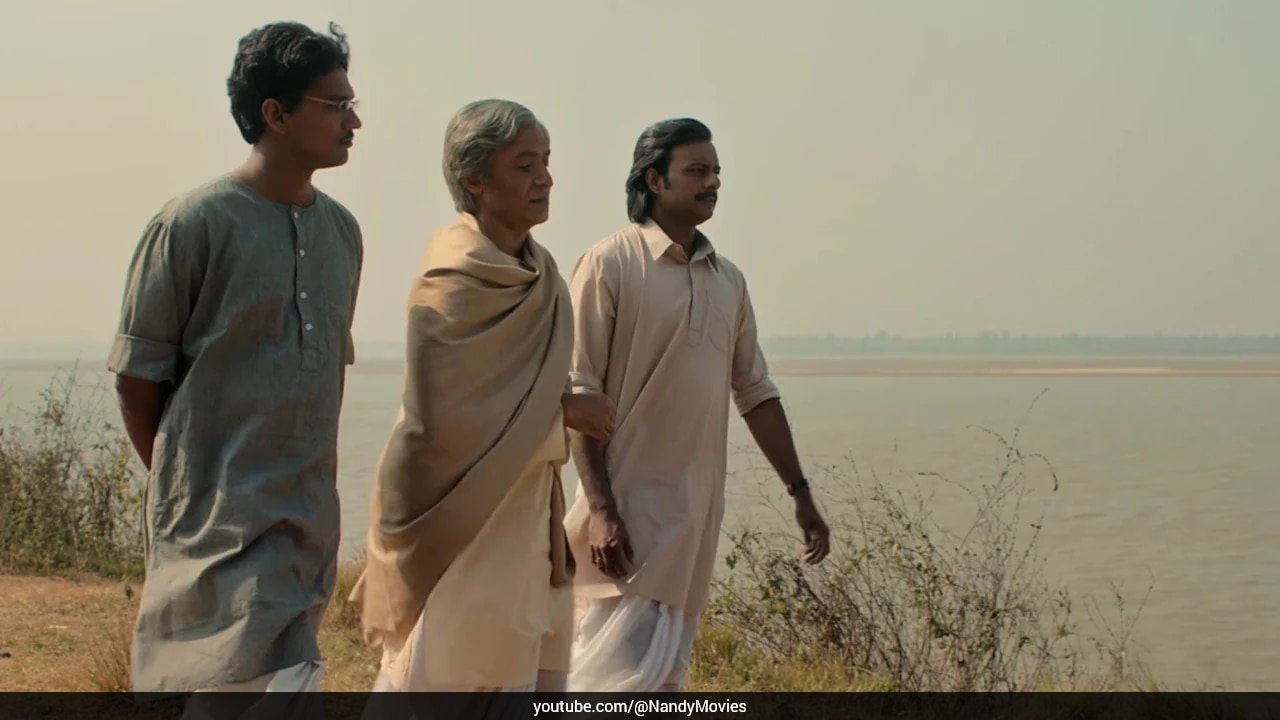
A hundred years ago the British banned a book because of the ideas it contained. The novelist was Sarat Chandra Chattopadhyay - one of the literary legends from Bengal. He turned to Rabindranath Tagore for support against the ban. Tagore had a different take on the protest. Cut to 2026, West Bengal has just seen a major political change. And in the first Durga Puja since that change, Bengal's renowned director Srijit Mukherji brings back to the screen the Sarat Chandra-Tagore dispute in his film 'Emperor Vs Sarat Chandra' set to release on October 15.
Bengal has a long tradition of intellectual disagreement spilling beyond literature into politics and public life. Mukherji now takes on a new challenge of examining dissent and dilemma through the lens of Tagore and Chattopadhyay and asking whether an artist should simply let the work speak to power or challenge power when it strikes back.
In undivided Bengal, disagreements among great intellectuals were not unusual. There were cerebral differences, exchanges of letters and notes and sharp disagreements of opinion. A similar intellectual disagreement emerged between Tagore and Chattopadhyay during the British period, at a time when the colonial state was interfering with and placing severe restrictions on artistic and intellectual freedom. Their disagreement centred on Sarat Chandra's novel, Pather Dabi, published in 1926. Even today, that exchange remains an important part of Bengal's literary and intellectual history.
The controversy has acquired fresh relevance this year because Pather Dabi is completing 100 years and is still remembered not simply as a literary work but as a political and historical document of its time. Srijit Mukherji has now turned that history into the basis of his film "Emperor vs Sarat Chandra". The film draws on Pather Dabi, its banning by the British government, Sarat Chandra's resistance to that decision and, importantly, the correspondence between Sarat Chandra and Rabindranath Tagore.
Director's Cut
Before we delve deeper into the disagreement between the legends, it begs the question why the director felt so deeply about the issue to turn it into a film, especially during Durga Puja? A period when Bengalis are indulgent and commerce thrives in the city.
Speaking to NDTV, Mukherji said his range of work, after having 12 Puja releases, has been versatile, and that he believes any good film works in the Puja and it does not necessarily have to be commercial and massy. He in fact said that he has faith in the Bengali audience to watch a movie that is well made.
Srijit made an important argument when asked why he thought that Sarat Chandra-Tagore face-off is relevant today and if the discourse reflects the dilemma faced by artists today in the Bengali film industry, which has often been closely associated with the political power in the state. Is there a feeling of disappointment when support does not come from expected quarters?
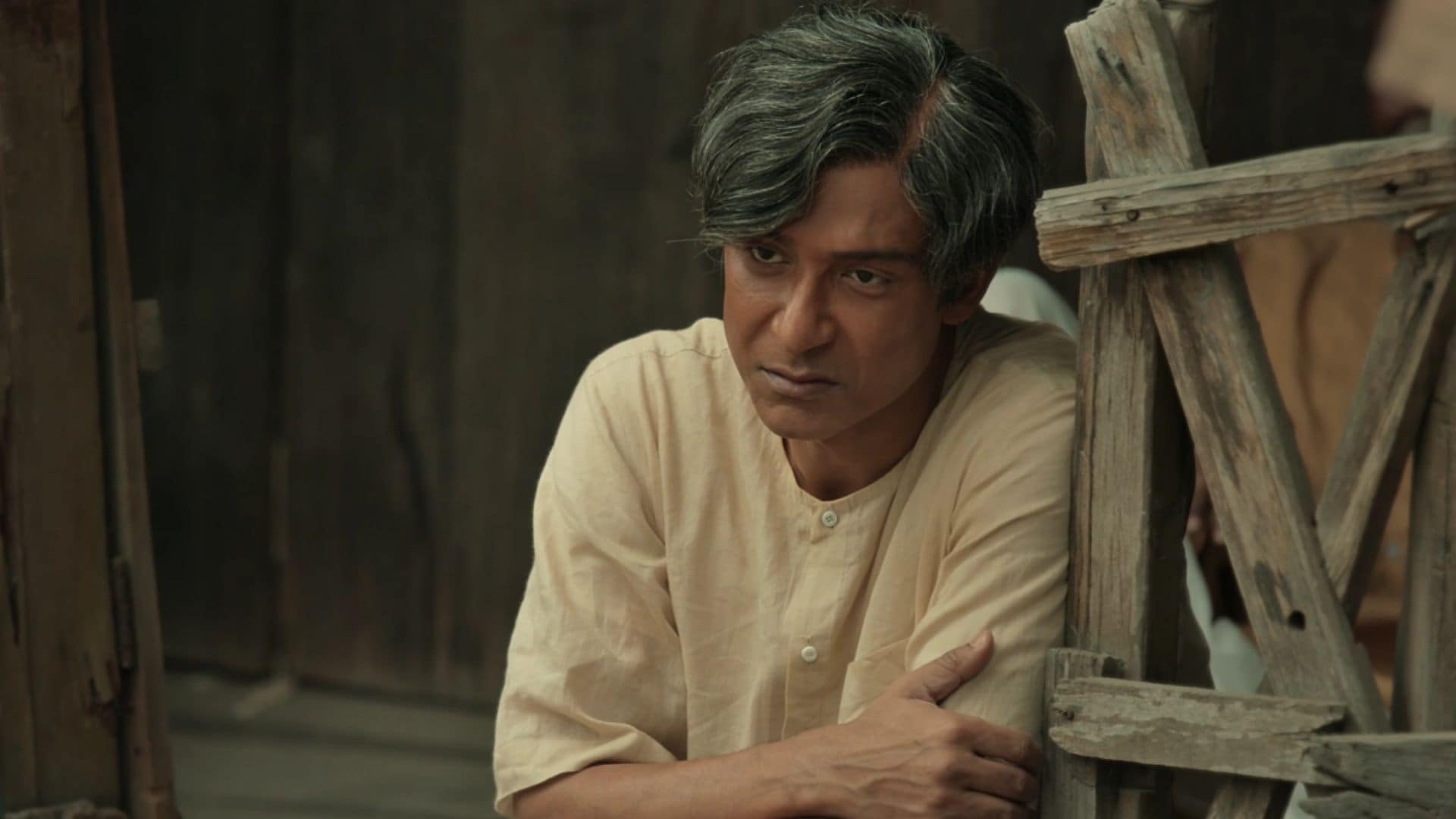
A still from the film
Photo Credit: youtube.com/@NandyMovies
He said, "I think the topicality of Emperor versus Sarat Chandra, apart from the hundred-year celebration of Pather Dabi and 150-year celebration of Sarat Chandra, is also about today's day and age where you might want collaborators from your own community. You might want to seek help from people who you would expect to rally around you if any injustice is done against you. That support doesn't always come."
The Crux Of The Great Conflict
When Pather Dabi appeared, the British colonial administration reacted strongly. On 4 January 1927, the British government proscribed the book on the grounds that it contained material intended to bring the government into contempt and excite disaffection towards British rule. The ban remained in force for years and was finally lifted in 1939, a year after Sarat Chandra's death.
This is where the personal and social backgrounds of Rabindranath Tagore and Sarat Chandra become important.
Rabindranath belonged to the Tagore family of Jorasanko, one of the most prominent families of Bengal. Sarat Chandra, by contrast, was much closer to the ordinary Bengali household and to people living outside the privileged social establishment. His own life was far more unsettled. He lived in the Howrah region, travelled to Burma and experienced a wandering existence.
That difference in background is important because, when the British government banned Pather Dabi, Sarat Chandra did not simply accept the decision. He wrote to Rabindranath Tagore and sought his support. His request was essentially this: if the British government had prohibited the novel, could Rabindranath intervene and ask the
authorities to withdraw the ban? Sarat Chandra's reasoning was straightforward. If ordinary people were prevented from reading the novel, then what was the point of writing it?
Rabindranath, however, took a different position. His response was, in essence, that if Sarat Chandra had used his pen to challenge and condemn British rule, then he also had to accept the consequences of doing so. To attack the colonial government through literature and then ask that same government to show leniency appeared, from Tagore's perspective, contradictory. Sarat Chandra should not expect the colonial authorities to withdraw the punishment simply because he had protested.
Tagore's letter therefore emphasised dignity, responsibility and the willingness of a writer to accept the consequences of his own act of dissent. But Sarat Chandra was deeply hurt by this response. Sarat Chandra drafted a reply to Tagore but ultimately did not send it. In that draft, he made it clear that he accepted Tagore's right to hold his own opinion but objected to what he believed was an implication that he was protesting merely to protect himself.
Two Sabyasachis And Two Ideas Of Political Faith
While the original discourse stands out and is relevant even today, Mukherji's sharp political commentary reflects in the two Sabyasachis he put on screen in the same year. Winkle Twinkle, a cinematic adaptation of Bratya Basu's acclaimed play by the same name, shows Sabyasachi Sen, essayed effortlessly by Ritwick Chakraborty, as a communist who sleeps through 26 years of political and social change and wakes up to a different world. He fails to understand the new world, but refuses to give in. In the end, a twist. Sabyasachi once again faces the barrel of a gun but does not die. Is it the principles that don't die in him or is it Sabyasachi's blind faith that prevents him from seeing the real world?
But in 'Emperor vs Sarat Chandra', Sabyasachi Mallik does not sit back and wait for a change. He is an extraordinary and almost larger-than-life revolutionary character. He can adopt different disguises and identities and possesses an extraordinary ability to move through different social worlds while remaining beyond the reach of the British authorities. He is committed to fighting British rule and is prepared to continue that struggle to the last drop of his blood. The character of Sabyasachi became one of the most memorable elements of the novel. This is precisely the historical and intellectual world that Srijit Mukherji is now bringing to the screen. While Sen waits and resists, Mallik forces power to respond.
Which Sabyasachi is closer to the Bengali political temperament? Responding to that question, Mukherji said, "I think both Sabyasachi's are a part of the Bengali psyche. In Sabyasachi Sen, faith outlives power. This faith is there in the mind of Bengalis but at an extreme pressure point, where it continuously encounters blows from the power, turns into the other Sabyasachi Mallik."
Highlighting a line from a song from Winkle Twinkle, he said, "In fact there's a song in Winkle Twinkle which has a line: 'Slogan palte hoye jaye fishfash, fishfash tao palte jete pare, hotat karo prachondo chitkare (A slogan can turn into a whisper; even a whisper can change - suddenly, into someone's tremendous scream)', so the tremendous scream is Sabyasachi Mallik and the slogan which sometimes becomes whispers over years of inactivity is Sabyasachi Sen.
Sarat Chandra Beyond Social Fiction
A century later, Sarat Chandra still has his readers. What he did not receive in quite the same way was the kind of public afterlife associated with Tagore - the travelling name, the institutional presence and the continuous public debate surrounding his work. A Puja-season film about a banned book therefore brings that old disagreement back into public conversation. That is important because Sarat Chandra is often remembered primarily through his social fiction.
His characters, his depiction of ordinary Bengali life and his ability to portray social injustice made him one of Bengal's most widely read writers. But Pather Dabi reveals another side of him - a writer confronting colonial power directly and using fiction to engage with revolution, nationalism and resistance.
(Shreya Sinha is Deputy Editor, NDTV. Jayanta Ghosal is Consulting Editor, NDTV)
KioskNews shows a cleaned-up reading view extracted from the publisher’s page — the original always lives on their site, not ours.