G20 foreign ministers end Atlanta meeting without consensus on key issues
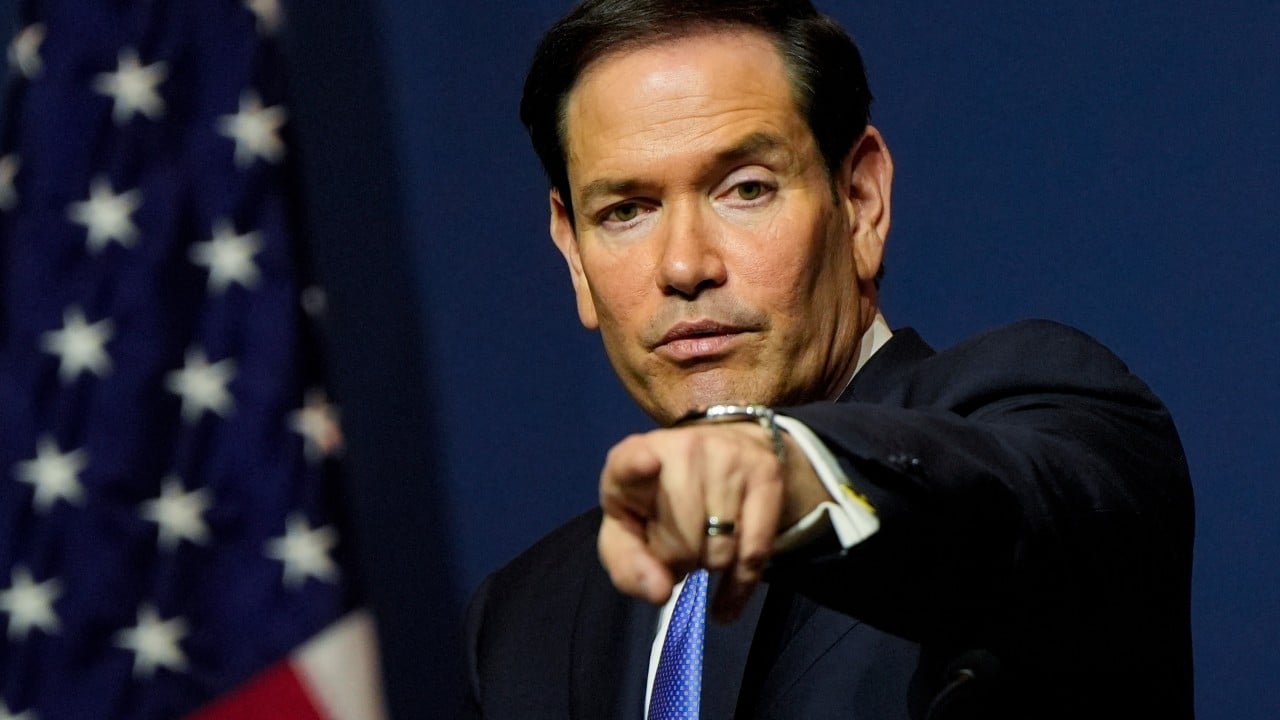
As Washington seeks to loosen China’s dominance over critical minerals, US Secretary of State Marco Rubio urged other members of the Group of 20 (G20) to strengthen supply chains and secure strategic trade routes as the group’s foreign ministers’ meeting drew to a close in Atlanta on Saturday.
Rubio said there was a “universal recognition” among the G20 members over issues like critical minerals, supply chain security and freedom of navigation.
“The first step is at least some universal acknowledgement that freedom of navigation matters, that critical minerals matter, that supply chains matter, that food security matters, not just to the countries at the table, but to countries around the world,” he said at a news conference following the meeting.
“And I do think we have that now.”
Chaired by Rubio, the annual meeting aims to tackle economic and security challenges, laying the groundwork for the G20 leaders’ summit hosted by the United States in Miami on December 14 and 15.
The summit will mark the fourth meeting this year between US President Donald Trump and Chinese President Xi Jinping, following two state visits and expected bilateral talks at the Asia-Pacific Economic Cooperation (Apec) summit in Shenzhen in mid-November.
Rubio’s calls reflect Washington’s broader efforts to reduce its reliance on China for critical minerals and build alternative supply chains through American-led initiatives such as Pax Silica.
The US secretary of state also acknowledged the difficulty of reaching agreement on global challenges, as the event closed without a consensus on key issues, including wars in Iran and Ukraine, as well as sky-high oil prices.
“There are no universally accepted solutions to these problems, but I do think that among the G20 represented here are countries that are working together to solve some of them, particularly in the realm of supply chains and critical minerals,” he said.
Rubio: Quad not anti-China
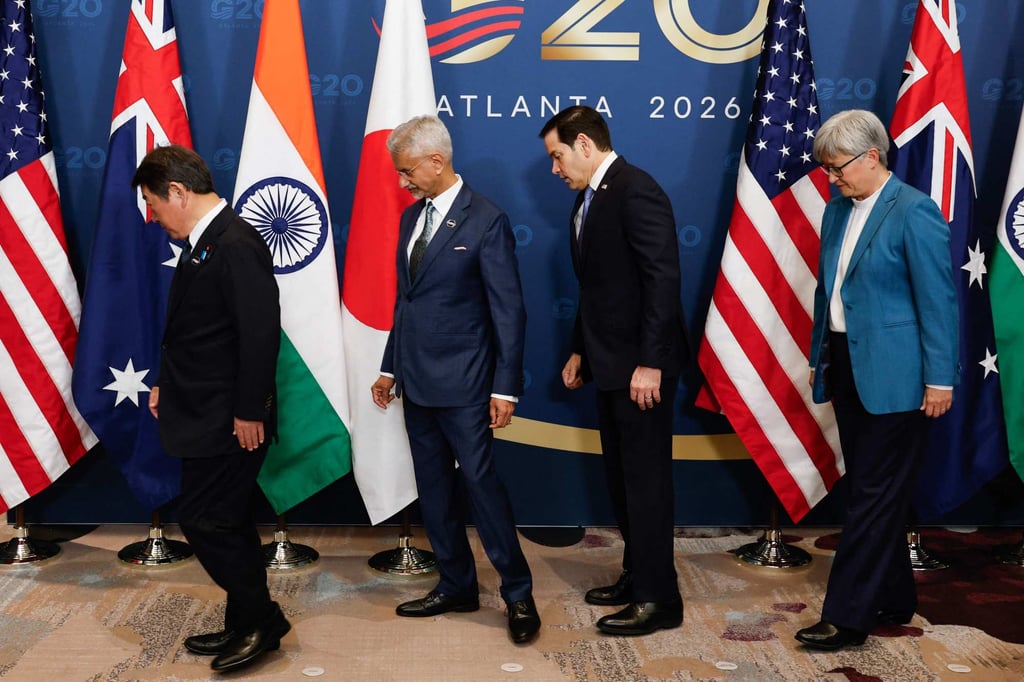
On Saturday, top diplomats from the Quadrilateral Security Dialogue, or the Quad – the Indo-Pacific partnership comprising Australia, India, Japan and the US – also met on the sidelines of the gathering to finalise preparations for next month’s summit in the Philippines.
After the meeting, Rubio said that the Quad is not an “anti-China” coalition but is concerned about Beijing’s “behaviours” and “activities”.
“Now, those activities or behaviours are coming repetitively from one country. That’s going to be obvious to everybody,” he added.
In an email response to the South China Morning Post, the Chinese embassy in Washington said that Beijing opposes “forming exclusive groupings or engaging in bloc confrontation”, and cooperation between countries should not “target any third party”.
The Quad, an informal grouping of four democracies, is widely viewed as a forum to counter China’s growing influence in the Asia-Pacific region.
Without mentioning China by name, the foreign ministers’ joint statement expressed concerns over “overcapacity” and vowed to build “reliable and open global supply chains and trusted and resilient infrastructure”.
It will be the Quad’s first leaders’ gathering in more than two years and the first to be held outside the group’s four member countries.
Trump is scheduled to attend the Association of Southeast Asian Nations (Asean) summit and related engagements in the Philippines, including the Quad summit, before travelling to Shenzhen for the Apec meetings, where he will hold bilateral talks with the Chinese leader.
The two-day foreign ministers’ meeting brought together top diplomats from the world’s largest economies, with representatives from China, Japan and Russia among those attending.
“We are facing a series of interconnected economic and geopolitical crises,” Rubio said in his opening remarks on Friday. “The G20 must work together to confront these threats, to strengthen our economic resilience, to safeguard our markets and the economies that they sustain.”
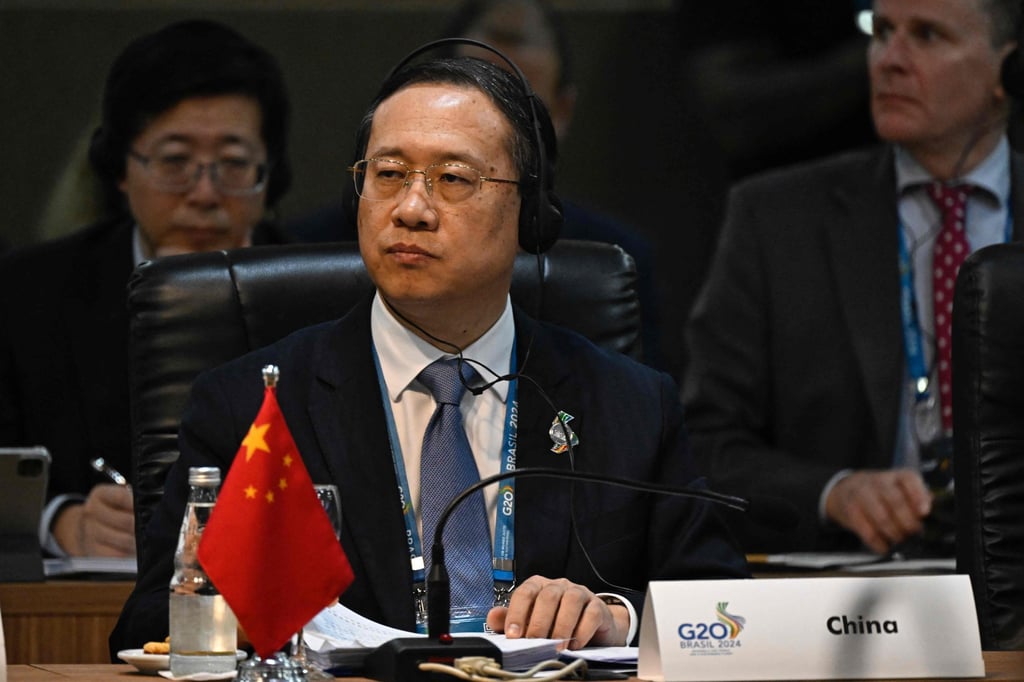
While China’s top diplomat Wang Yi was absent, Executive Vice-Minister of Foreign Affairs Ma Zhaoxu attended instead.
The G20 consists of 19 individual countries alongside two regional blocs: the African Union and the European Union.
The member nations are Argentina, Australia, Brazil, Canada, China, France, Germany, India, Indonesia, Italy, Japan, South Korea, Mexico, Russia, Saudi Arabia, South Africa, Turkey, the United Kingdom and the United States.
This year’s talks unfolded in the context of a polarised world, and geopolitical friction spilled directly into the summit’s opening hours.
On Friday, the US scrapped plans for a group photo when several European ministers objected to being photographed with Russian Foreign Minister Sergey Lavrov, according to the Associated Press.
While Ukraine is not a G20 member, it has been invited to similar meetings in the past. This year, Ukraine was not on the guest list.
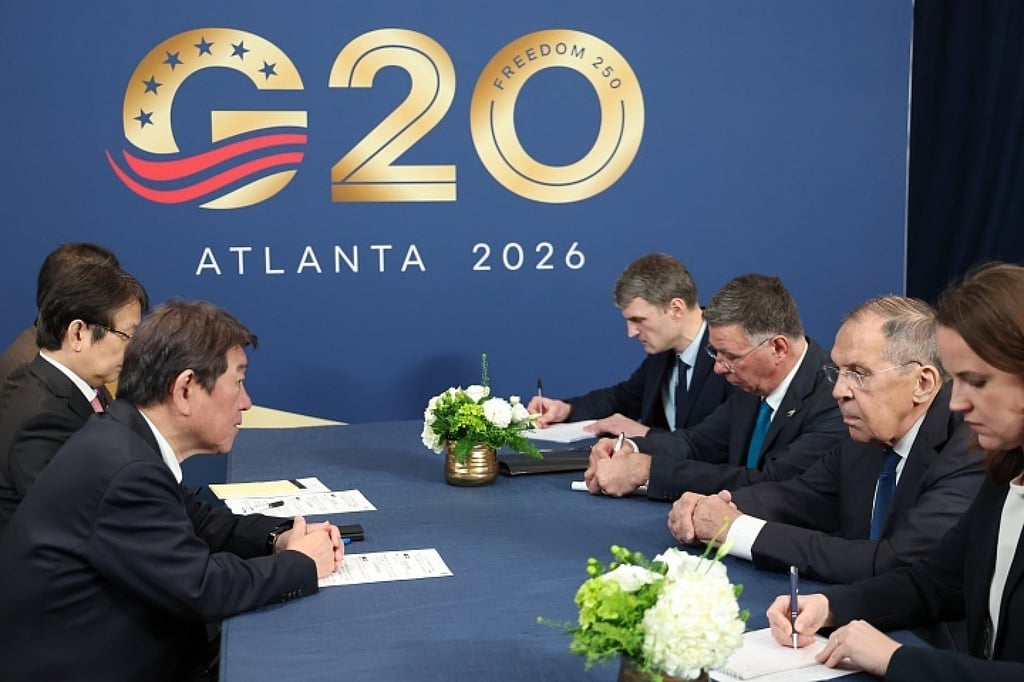
Several bilateral meetings took place on the sidelines of the two-day event. Among these meetings was one between Japanese Foreign Minister Toshimitsu Motegi and Russia’s Lavrov.
“Concerning the international situation, Motegi once again strongly called on Russia to take positive actions toward achieving a just and lasting peace in Ukraine,” the Ministry of Foreign Affairs of Japan said in a statement.
An exclusion
There was one country noticeably absent from this year’s G20 foreign ministers’ gathering.
The US excluded last year’s G20 host, South Africa, from the meeting amid deteriorating relations between the two countries.
Beijing addressed South Africa’s lack of invitation on Friday, calling the country “an important member of the G20”.
“China supports South Africa in continuing its participation in G20 activities,” said Ministry of Foreign Affairs spokesman Guo Jiakun.
Last year, the Trump administration boycotted the leaders’ summit, after Trump accused South Africa of persecuting white farmers, a claim Pretoria denies.
KioskNews shows a cleaned-up reading view extracted from the publisher’s page — the original always lives on their site, not ours.