Why is ‘Waterman’ Rajendra Singh asking Telangana not to copy the Sabarmati model for Hyderabad’s Musi riverfront plan?
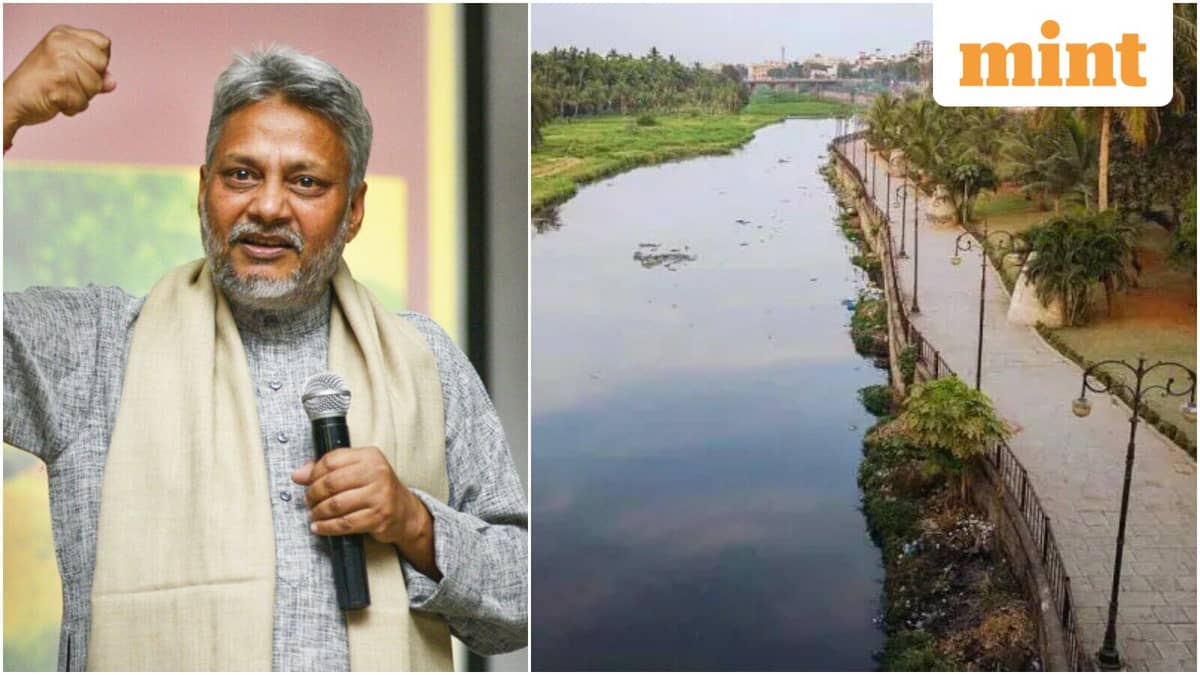
Water conservationist Rajendra Singh has urged Telangana to avoid copying the Sabarmati riverfront model for the Musi. He wants the government to protect the river's natural banks, plant more trees and put local people and ecology first.
Water conservationist Rajendra Singh has advised the Telangana government against copying the Sabarmati riverfront model for the Musi river in Hyderabad. He has urged the state to develop its own plan, with a focus on protecting nature and involving local people.
What does Rajendra ‘Waterman’ Singh want for the Musi riverfront?
Singh, popularly known as the 'Waterman of India', shared his views at the curtain-raiser event for the Telangana Climate Conclave on 27 November. The conclave is scheduled to take place from 7 to 9 December.
He warned that large construction projects along the river could harm the environment and local culture. He also asked the government not to turn the Musi into a concrete-lined canal.
Instead, he suggested planting different types of trees and bushes along the riverbanks and keeping the river in its natural form.
Singh suggested that the government should develop three layers of vegetation along the Musi's banks.
He said smaller bushes should be planted close to the water. Medium-sized trees should come in the middle, while taller trees should be planted further away from the river.
The aim is to protect the riverbanks through natural vegetation instead of covering them with concrete.
He also asked the government to make the project people-centric. According to him, development should not be driven only by contractors and companies if it comes at the cost of nature and local culture.
Singh suggested using 'geo-cultural mapping'. This means studying the natural features of an area along with its history, culture and the way local people use the land and water.
He also spoke about his work in water conservation. Singh said he had helped revive 33 small rivers without taking money from governments. He added that 15,800 small dams had been built across these rivers using local knowledge and methods.
These figures were shared by Singh during his address.
What is his advice on water use, forests and lakes
Singh also raised concerns about how water and land are used.
He urged the government to prevent the cultivation of commercial crops and asked officials to restrict industrial water supply during El Niño phases. El Niño is a climate pattern that can affect rainfall and increase the risk of dry conditions in parts of the world.
He also warned against removing forest areas from protected status and flattening hills for development projects.
Singh praised the work of the Hyderabad Disaster Response and Asset Protection Agency (HYDRAA) on restoring the city's lakes. However, he said the work was moving slowly and asked the government to speed it up so that more lakes could be protected and restored.
The focus on lakes is important because they are part of Hyderabad's wider water system. Protecting them can help the city manage rainwater and reduce the risk of flooding.
Telangana is preparing its own climate plan
The Telangana Climate Conclave will bring together scientists, policymakers, farmers, environmental experts and community representatives. It will discuss issues such as drinking water security, drought-proofing, heat protection, forests, biodiversity and clean energy.
The state plans to use the discussions to prepare a long-term climate resilience agenda.
Singh's comments come as the Telangana government is working on plans to revive the Musi and improve the city's water resources. The government has also spoken about restoring lakes and removing encroachments from water bodies.
The debate over the Musi is not only about how its banks should look. It is also about how the river, nearby communities and the city's natural water systems should be protected.
Singh's message is that Hyderabad should not simply copy a riverfront project built elsewhere. The city should develop a plan based on the Musi's own needs, while protecting its natural flow, riverbanks and surrounding environment.
KioskNews shows a cleaned-up reading view extracted from the publisher’s page — the original always lives on their site, not ours.