The secret lives of men who read romance books: ‘My life is full of love, so I’m drawn to them’
After a tiring day as a school maintenance worker, 28-year-old Paul loves nothing more than unwinding with a good romance novel – ideally one with a fantasy or horror element to it. He reads five or six a month – most recently Love Bytes, about an 8ft-tall werewolf woman who runs an extremely successful AI company and falls in love with a handsome ballroom instructor.
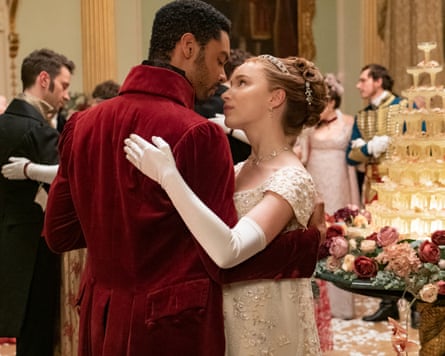
Paul got into romance fiction via what he calls its “more traditional” side – such as the Regency romance series Bridgerton. He is partially sighted, so he mostly reads on his Kindle, where he can adjust the font size. In the first Bridgerton novel, “Simon, the main character, has a speech impediment that he has to work through,” says Paul. “I’m more attached to that one. Typically, I don’t come across disabled protagonists that much.”
He doesn’t talk to anyone about his love of romance novels, communicating only with other users of a Discord channel called Romance for Men. “I was on a separate Reddit thread for book recommendations and someone asked if there’s romance out there for men,” he says. “And half of the comments were just, ‘Oh, you mean porn?’”
Straight men like Paul who read and write romance are largely invisible to the wider world. Women are the genre’s main audience, followed by queer romance, which is a well documented success. The fifth volume of Alice Oseman’s Heartstopper – about the friendship between two teenage boys blossoming into love – is the UK’s fastest-selling graphic novel and a hit Netflix show, while novelists such as Alexis Hall are widely read and critically acclaimed. But in this corner of publishing, straight men are rarely seen and usually stigmatised.
At Mills & Boon, the best known publisher of romantic fiction, men account for only 4% of sales, according to an editorial director, while less than 2% of the UK’s Romantic Novelists’ Association is male. Almost nothing is known about how many men read romantic fiction, and why.
For those I spoke to, however, reading romance is more than just entertainment. It offers a kind of liberation, allowing them to feel deeply, imagine being desired, and accept parts of themselves that conventional masculinity has little room for. Many would only speak anonymously, worried about being misunderstood or mocked.
Before books, Paul’s path into romance began with role-playing video games in his teens: “You have some non-playable characters who are your companions, and you can build romantic relationships with them as you go along.” He gravitated towards playing aggressive male characters rallying different factions to war, realising later that the diplomatic approach worked better. The appeal of these characters was that they were so different from him. “I’m downright afraid of conflicts, and if there’s an argument, I just want to hide,” he says.
In 2015, Paul learned that Stephenie Meyer, author of the vampire romance Twilight, had released a gender-flipped version of the book. “As a teenager, it was so cool to just hate on Twilight. But I read it anyway, and there’s a moment where Edythe, the vampire, tells the male protagonist that she is tired of trying to stay away from him. That’s when it hit. There’s a fantasy aspect in being wanted that badly.” Today, he seeks out novels known to fans as romance for men (RFM), such as Charlotte’s Reject by KR Treadway, which features a female character who’s “kind of scary”. “With women’s romance, it’s always the man being the aggressor,” he says. “Reading men’s romance is often the opposite, and it made me realise I’m fine being the way I am. I’m able to accept myself more, because I’ve seen that this is a possible dynamic in romantic relationships.”
Andrew’s entry into romance was a deliberate experiment. The 31-year-old, who works in tech, is a huge lover of sci-fi and fantasy who considers himself “on the feminist side of the world”. He couldn’t look past the reality that the bulk of the dialogue in his favourite books was written by men and between men. “I just got really bored,” he says.
Wandering around a bookshop three years ago, he made it his mission to pick up a book by a female author, and found Rebecca Yarros’ Fourth Wing, about the dragon-riding, lightning-wielding Violet Sorrengail. “I had very little context and just bought it. I didn’t know what romance or romantasy was,” he says. “It was refreshing to see things from the perspective of a female protagonist. I’d also never read a fantasy book that had so much in it about romance and sex.”
Since then, Andrew has sought out other romantasy writers, from Penn Cole to Carissa Broadbent and Sarah J Maas. And he has introduced his wife to the genre. “She has a women’s book club, and they were all very sceptical in general, and then they all got hooked on it,” he says.
Romantasy is not “grim” in the way that pornography is, Andrew says, but he would still blush at publicly buying books that are “substantially about sex”. “I like the anonymity of reading it on my phone or on Kindle, as opposed to a physical book on the tube,” he says. Still, he wonders if the genre’s constant idealisation of sex comes with a cost. “Every time they do it, it’s the best thing that’s ever happened to them. I can imagine there being some subtle toxic element to it, because real-life sex could be a bit of a letdown.”
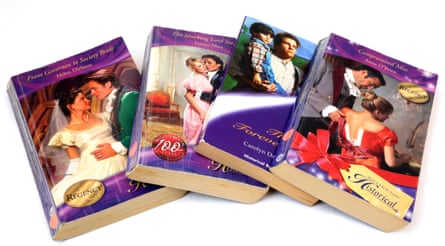
Ali, 54, a former investment banker, had his “first dedicated exposure to romance” 40-odd years ago. His younger sister had a subscription to the now defunct teen magazine Jackie, and as a teenager he used to read its romance photo-strips. “They were all boy-meets-girl stories,” he remembers. Another publication that stuck with him was Judy Blume’s Forever, a book so candid in its treatment of teenage sex that it has been targeted by censors since it was published in 1975. Later, as a student journalist at Oxford, Ali had the chance to interview Barbara Cartland, the undisputed queen of paperback romances. “It’s not a momentous event that changed my life,” he says, “but it’s quite funny to think about now.”
A voracious reader, from contemporary historical romance writers such as Tessa Dare and Evie Dunmore to Jane Austen and Daphne du Maurier, Ali is not bothered by criticism that the genre is formulaic. Even Shakespeare, he points out, tells you upfront if a play you’ll be watching is a tragedy or comedy; the latter “will end with a wedding, probably more than one”. “Formulas are a blessing and a curse. The curse is when it’s done badly, and everyone yawns,” he says. “But when done right, there are huge payoffs – the dark moments, the happy endings.”
Although Ali is happy to talk about romance “all day long”, he observes that other readers – male and female – might feel the need to lie about what they read to look good. He points to a market research phenomenon: “Everyone says they listen to Radio 3 or 4, but actually they all listen to Radio 2, right? And I think this insecurity is a genuine problem.”
After studying creative writing at Kingston University in his 40s, Ali is now in two writers’ groups, where he’s notably the only person writing romance. He’s since written a series of three historical romance novels, all set in Mayfair in the late Victorian era. The first will be published soon, under the pen name Ali Murphy – combining his name and his wife’s birth name. “I chose it as a gender-neutral name,” he says. “I’m not trying to mislead people. But I don’t want anyone to pick up the book and say, oh God, it’s a bloke writing romance.”
While Ali and Andrew prefer more mainstream romance, Paul and many other men are fans of a lesser-known strand of the genre. RFM is mostly self-published and sold digitally. It has a significant following: more than 10,000 weekly visitors to its dedicated Reddit, and a thriving Discord community where book recommendations are exchanged and discussed.
Fans caution against any single definition of what RFM is, but agree that some patterns recur. It is typically written from the perspective of an ordinary man whose love interest is an unusually powerful woman – a straightforward inversion of narrative conventions in mainstream romance, where the heroine is expected to be relatable and the hero mythologised. Many readers indicate that the central crisis in RFM is often external to the couple’s relationship, such as a war or a shared enemy, rather than emerging from misunderstandings or jealousy between the two leads. There’s also a long-running argument about “harem” fiction, where one man is paired with several women. Some consider it the genre’s biggest success, while others don’t think it’s romance at all.
Thirty-three-year-old Jonny Rogers works in finance. He reads copiously, has finished 90 books this year, and loves everything from Dostoevsky to the popular RFM series Would You Love a Monster Girl?, which he finished in six days. Two-thirds of what he reads is romance, most of it RFM.
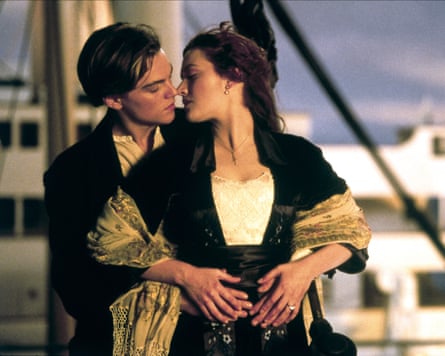
“I watched Titanic when I was about 11 and it really moved me,” he says. “I know it’s a little corny, but I just loved the idea of meeting someone and falling in love the way Jack and Rose did.” Wanting more of that feeling on the page, Jonny stumbled upon The Rosie Project, Graeme Simsion’s novel about an awkward, probably autistic man’s search for love. “I think there may have been some kinship there,” he says, explaining that he suspects he’s on the spectrum himself but is undiagnosed. Years later, a friend recommended Sarah J Maas’s A Court of Thorns and Roses. He read it in a week, then found his way to the RFM Reddit.
What keeps him riveted isn’t the fantastical trappings – spaceship battles, magic-wielding warrior women – so much as what’s underneath. “I just love following along with two people who fall in love with each other,” he says. “It’s the most human thing in the world, and it’s really magical.” He’s drawn to books with strongly written female leads, and insists a well written romance can be enjoyed by anyone.
His girlfriend encouraged him to expand a short writing experiment into something longer. This became Daniel’s Dilemma, a novel about a young man falling for his best friend’s mother, warmly received by the RFM community. He chose the pen name Jonny Rogers not out of shame, he says, but caution: the book contains some explicit content, and “I don’t want my grandma or parents to buy my book and know I wrote that scene”. When he read his girlfriend a date scene between the two leads, she asked him: “That’s so romantic. How come you’re never that romantic with me?”
Jonny’s close male friends know about his foray into writing. “None of them have actually bought it,” he says with a laugh. “I think when I told them, they were picturing erotica.” Although he’s never been bullied or insulted for enjoying romance, it’s not information that he volunteers outside his inner circle.
One of RFM’s often-recommended authors is DH Willison, 58. He’s known for his Tales of Arvia series, set in a fantasy world where dragons and other creatures are central characters rather than obstacles for humans to conquer, and where unconventional pairings, such as a harpy and an incompetent adventurer, are ubiquitous.
Willison feels he’s found more resistance among fellow writers than readers. At one writers’ group, someone mentioned finding an old pulp romance novel and gleefully picking it apart line by line as proof of the poor quality of romance stories, he recalls. In another writing group, he was told that a “real” romance requires the male and female leads to conform to certain rigid roles, down to genre conventions such as the “age gap” trope, which is assumed by default to mean an older man. The opposite is known as a “reverse age gap”. Willison thinks the distinction is “kind of silly”. This sort of gendered thinking, he adds, is self-fulfilling when extended to marketing: “I think romance is for everyone, but if you’re writing and selling with only women in mind, then you end up appealing only to women.”
The other, more upmarket end of the romance spectrum mostly leaves sex off the page, together with the more obvious conventions. Mike Gayle and Bobby Palmer write at this more literary end, and publish under their own names.
Gayle, 55, has been writing about love and relationships since his 1998 debut My Legendary Girlfriend, about a young man struggling to recover from heartbreak. He won the Romantic Novelists’ Association’s outstanding achievement award in 2021, becoming the first man to do so, joining names including Jilly Cooper and Joanna Trollope. “I know of female readers who find it a breath of fresh air to read about love from a man’s perspective,” he says. “The more we’re exposed to different perspectives, the more we see we can both be right.”
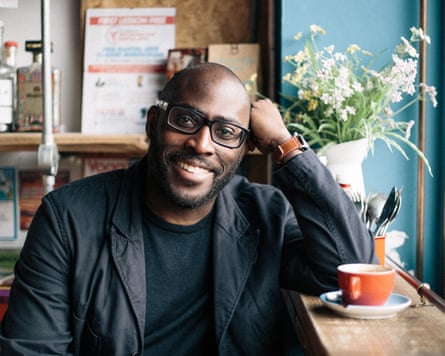
Over the years, Gayle has become more interested in writing about what happens after couples get together, rather than the lead-up – which is what most romances focus on. “It’s much sexier to write about the getting together,” he says. “But true romance is about staying together and making it work.” His writing has evolved in line with his personal life. “I was in my 20s, and kind of obsessed with finding ‘the one’. Now that I’ve seen relationships go by the wayside and taken for granted, I wanted to write about something deeper and more substantial.”
Gayle’s next novel, Not Quite Myself, will be published in 2027. It’s co-written with his wife, Claire, and explores the lives of a couple who find themselves body-swapped after their youngest son goes to university. “It’s interesting to look at that stage of life where the only thing really keeping the couple together as a unit is the fact that they’ve got kids in the house,” he says. “How do you begin seeing your partner as a separate person again, from a fresh perspective?”
Where Gayle now writes about what happens after the happy ending, Palmer, 33, is upending expectations around how romantic stories are told with his recently published third novel, Main Characters. It’s narrated entirely by the people around the central couple – but not the couple themselves – so that their relationship stays, as he puts it, “this kind of beautiful, private thing”, where readers never learn directly what the leads think or feel about each other.
It’s also – in a departure from his previous books – being marketed as romance in the UK, with a bright pink cover. He’s noticed already that fewer men are getting in touch about it than with his other work.
It’s their loss, of course, though not every man needs romantic fiction to teach them anything. Jonny, for his part, doesn’t think it has shaped him. “I’ve had a life filled with love,” he says. “Rather than romantic novels shaping my life, it’s actually that my life has been so full of love that I’m drawn to them.”
KioskNews shows a cleaned-up reading view extracted from the publisher’s page — the original always lives on their site, not ours.