In Southeast Asia, China’s split personality stands out

Countries, like people, can have several identities at once. They are a source of strength, but also of tension when different identities pull in different directions. China is reaching that point, with Southeast Asia confronting growing gaps between the Global South identity that Beijing claims, the great-power capabilities it wields and the expectations placed on it as an emerging global leader.
China describes itself as the world’s largest developing country. The claim partially holds given the wide developmental disparities within China and its per capita income remaining well below that of advanced economies. But China is also the world’s second-largest economy, a technological leader across a widening range of industries and a major creditor. It is a great power that increasingly wields the chokepoints its industrial dominance has created and asserts a predominant role in its own neighbourhood.
The recent Apec summit in Shenzhen put these tensions on full display. As host, and as a major beneficiary of an open global economy, China presented itself as a defender of multilateralism and the rules-based trading system. Yet the political spectacle of the Trump-Xi-Putin summit overshadowed the multilateral gathering. China was at once championing an inclusive regional order while claiming a central place in an exclusive three-way conversation that projected the opposite: an international order managed among great powers, reviving anxieties about spheres of influence and a might-makes-right world.
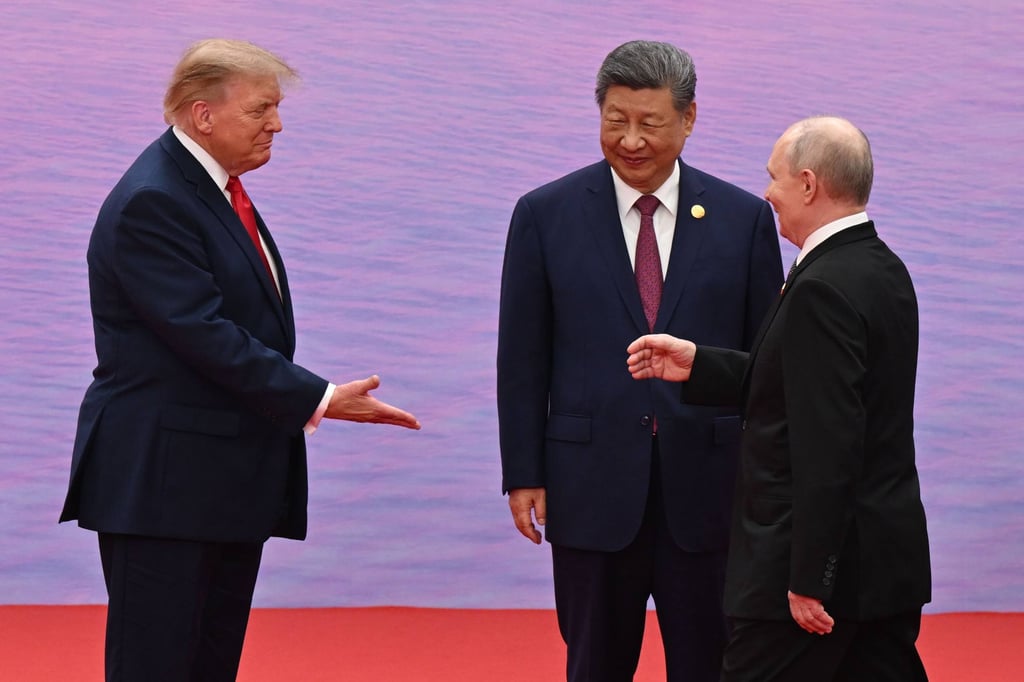
For smaller states, this exposes an underlying tension in China’s diplomacy. Beijing advocates greater democracy and justice in international relations, where the voice of the majority counts. Yet it also operates within a great-power logic, in which a few powers negotiate the terms of order.
The same tension runs through China’s economic engagement abroad. Inequality in global governance no longer falls neatly along the developed-developing divide. It increasingly exists within the Global South, including between China and many of the countries whose interests it claims to champion.
As China grows wealthier and positions itself as a champion of global governance reform, and as the US retreats from global leadership, expectations of Beijing are changing. Take development finance. Will China provide more grants and concessional assistance instead of relying predominantly on loans? Will it assume a greater share of the burden when heavily indebted countries run into financial distress?
China does not see itself as another Western-style donor giving aid to poorer countries. It frames its engagement as South-South cooperation among equals. Yet its role as a major creditor to far smaller economies creates a stark asymmetry. Nearly half of Laos’ external public debt is owed to China and the Southeast Asian nation’s financial distress has led to a growing Chinese foothold in its strategic infrastructure: China Southern Power Grid now holds a 90 per cent stake in the joint venture that manages Laos’ high-voltage grid. This illustrates how cooperation framed around equality and mutual benefit can, under conditions of deep asymmetry, reinforce the stronger partner’s leverage.
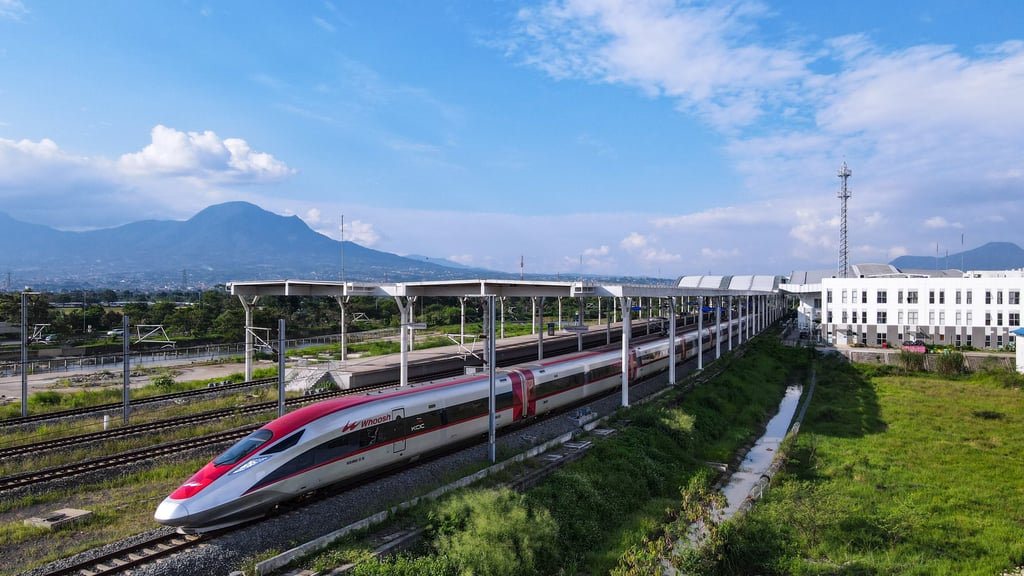
Indonesia confronts the debt issue at the project level. The Jakarta-Bandung high-speed railway cost US$7.27 billion, about 75 per cent of it financed by China Development Bank loans. Conceived as a business-to-business venture, the financial burden ultimately fell on the state – with Jakarta now seeking to stretch its repayments to Beijing over decades.
When the economics underpinning Chinese lending falter, development finance gives way to negotiations over who bears the costs. Beijing has shown flexibility through deferrals and restructuring, but the underlying financial burden largely remains with the borrower, as the debt is deferred, not forgiven. This sharpens the tension between China’s identity as a fellow developing country and the greater forbearance increasingly expected of it as a major creditor with vastly greater financial capacity.
Industrialisation presents another facet of the tension.
For decades, East Asia’s development was described through the “flying geese” model. As the lead goose moved into more sophisticated industries, lower-value production migrated to those following behind: from Japan to the newly industrialised economies, then to China and Southeast Asia.
China does not fit neatly into this pattern. It now leads in electric vehicles, batteries, solar technology, telecommunications and sophisticated machinery, yet has not vacated the lower and middle rungs of manufacturing. This creates a tension between China’s economic interests and its neighbours’ developmental aspirations.
Chinese firms have strong incentives to move production to Southeast Asia, from where they can reach growing markets, pay lower wages and better navigate US tariffs. But the Chinese government also has compelling reasons to resist the hollowing-out of its industrial base, given concerns over employment and economic security.
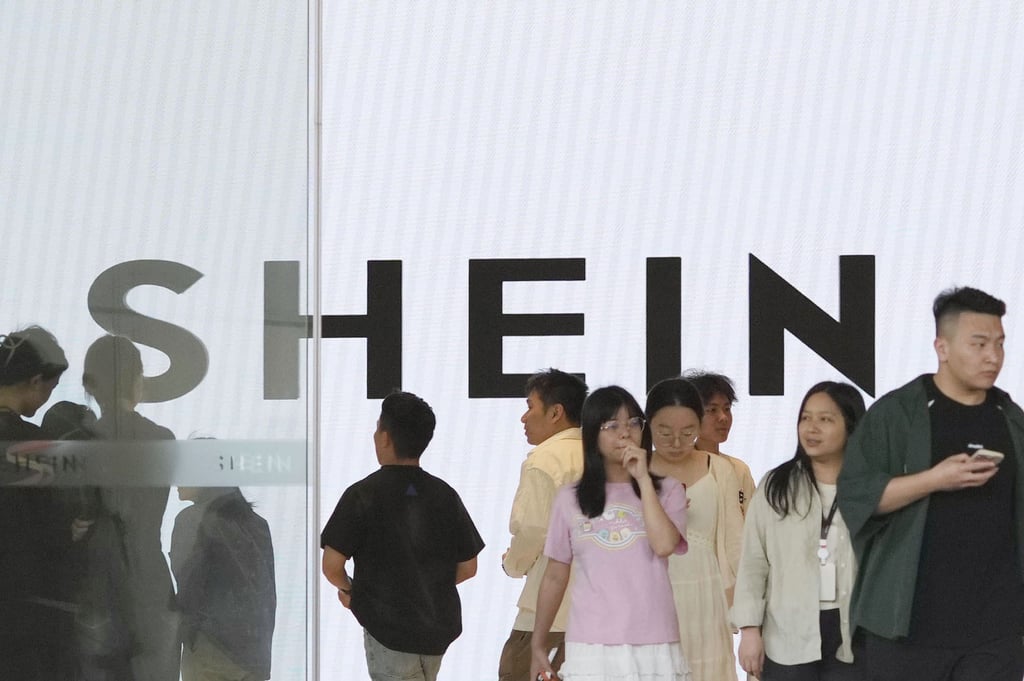
In 2025, Beijing reportedly tightened transfers of specialised manufacturing equipment and technical personnel to India and Southeast Asia, seeking to limit the movement of manufacturing capacity and know-how abroad. China’s Commerce Ministry also reportedly discouraged Shein from shifting more sourcing and production overseas. Combined with AI-enabled automation, China’s vast industrial ecosystem may ultimately allow it to remain competitive across multiple rungs of the value chain all at once.
Here too, China’s identities pull apart. As a Global South leader, it speaks the language of shared development, but its domestic economic imperatives give it reasons to protect its own industrial base. This opens a gap between what partners expect of the “lead goose”, which is to make room for those behind, and what they actually experience. For members of the Association of Southeast Asian Nations, the central question is whether deeper integration with China leaves enough room for their own industrial upgrading.
Reconciling these tensions will require more than skilful strategic communication from Beijing. China’s multiple identities are real, and so are the tensions among them. Its Global South identity is important to its political positioning, but its growing capabilities increasingly make it think and act as a great power.
Southeast Asia will therefore judge China not simply by the identity it claims but by how it uses its power: whether it assumes greater responsibilities, leaves space for others to prosper and exercises restraint when it holds the stronger hand.
Hoang Thi Ha is Senior Fellow and Co-coordinator of the Regional Strategic and Political Studies Programme at ISEAS – Yusof Ishak Institute in Singapore.
KioskNews shows a cleaned-up reading view extracted from the publisher’s page — the original always lives on their site, not ours.