[OPINION] The weakest link may not be the subsea cables
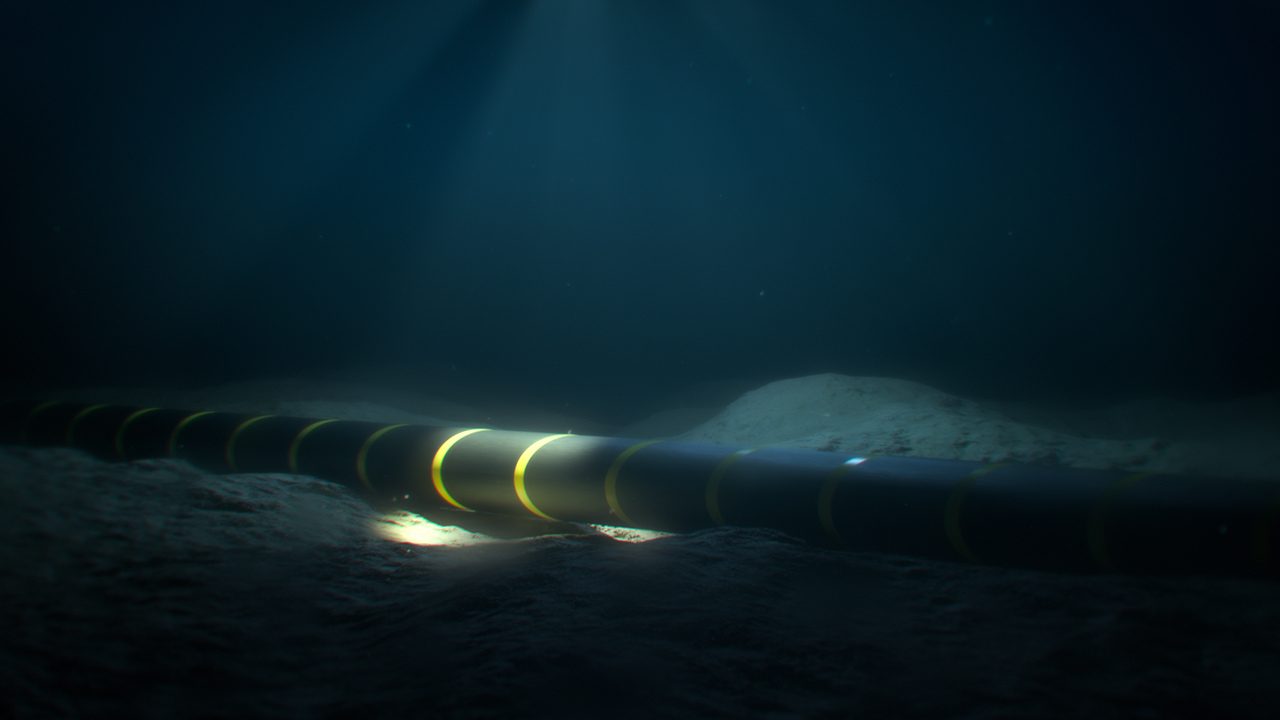
Subsea cables entered the Philippine news twice in the span of a week, for different reasons.
The first involved a research vessel holding position in waters that host cable corridors connecting the country to Northeast Asia. On September 28, the Philippine Coast Guard reported that the vessel did not answer radio challenges and had displayed a physically impossible Automatic Identification System trail. It later deployed a ship and aircraft, disrupted what it described as unauthorized marine scientific research, and compelled the vessel to leave its position.
The second was a network disruption.
On October 2, the C2C Philippines-Singapore link went down while its Hong Kong link was under maintenance. Providers rerouted traffic, but the disruption coincided with reports of slow or intermittent connections. The Singapore link was restored the following day. Its cause had not been made public as of writing.
No public reporting has established a connection between the incidents. They should not be treated as one chain of events. But each exposes a different part of the same problem: what can the country detect and protect, what disruption can the network absorb? They also raise a third question that becomes critical when redundancy is no longer enough: how quickly can the system recover?
Taken together, this is a question of resilience.
Archipelagic governance
For the Philippines, subsea cable resilience is a question of archipelagic governance.
This is the approach being explored by The Asia Foundation through its Archipelagic Governance for Subsea Cables (AGOS) initiative, which brings government and industry together to look at subsea cable resilience beyond the infrastructure itself. The cable is only one part of a wider system of infrastructure, institutions, policies, and capabilities. The system connects what happens at sea with what happens on land.
For an archipelago, these connections are shaped by geography. Connectivity crosses maritime spaces, lands in different communities and jurisdictions, and depends on institutions and infrastructure spread across islands.
A disruption at sea can affect banking, government services, businesses, and emergency communications. Suspicious activity near a cable route may force government to respond before it fully understands the risk. Delays in maritime access can also delay repair and restoration.
The connection works both ways. Decisions on permits, power supply, security arrangements, and coordination with local governments affect whether the system can expand, remain operational, and recover from disruption.
The system stretches from cables on the seabed to landing stations and land-based networks. It also includes power, network operations, repair capacity, government policies, emergency arrangements, and the institutions responsible for them.
This makes protecting cables and building cable resilience related but different tasks. Protecting a cable is about reducing the risk of damage or interference. Resilience is about whether the larger system can continue to function when disruption happens.
Across AGOS consultations with government and industryparticipants spoke about resilience in different ways: protecting the system, keeping services running during a disruption, and restoring connectivity quickly. Taken together, their inputs pointed to three qualities describing a resilient system: protected, adaptable, and recoverable. These qualities do not come from infrastructure alone. They also depend on the policies, capabilities, and coordination that allow the system to function.
A protected system can identify and manage risks. An adaptable system can reroute traffic and keep essential services running. A recoverable system can quickly mobilize maritime access, repair permits, security, technical teams, and local support.
The cable alone can do none of these things.
The question, then, is not only whether the Philippines can prevent something from happening to a cable. Not every cable fault, anchor drag, natural hazard, technical failure, or deliberate act can be prevented. The question is also whether the system around the cables can continue functioning when something does happen.
This is why keeping the system resilient cannot be treated as the work of the Coast Guard or Navy alone. Maritime authorities have distinct responsibilities at sea. But building a resilient subsea cables system also requires action from telecommunications regulators, economic and security agencies, emergency authorities, and operators.
Uncertainty over the cause of disruption further complicates the response. An incident may be accidental or deliberate, and establishing which takes time. But the response cannot wait for attribution. If services on land are already affected, continuity measures, repairs, and coordination have to kick in.
Attribution and resilience therefore operate on different clocks. Authorities may still be determining what happened while operators and government already need to keep services running and preparing for recovery.
Building a response before it’s needed
The Philippines already has laws, mandates, and mechanisms that cover parts of the system. Telecommunications and data-transmission rules govern networks. Maritime authorities operate under their respective mandates at sea. Disaster-response mechanisms can support continuity. The Konektadong Pinoy Act provides an open-access framework for data transmission, while Executive Order No. 32 streamlines permitting process for telecommunications and internet infrastructure.
The challenge is not always the lack of a policy. It is whether existing mandates can be brought together quickly enough when an incident crosses institutional boundaries.
Which agency receives the first report? What threshold triggers interagency coordination? Who verifies the incident, secures the area, prioritizes essential services, authorizes emergency access, and communicates with affected communities? Which approvals can be expedited, and under whose authority? What information should operators share with government, and what information should remain protected?
An incident protocol is one way to answer those questions before a disruption. It should connect detection to assessment, protection, continuity, repair, and public communication.
This is where an archipelagic approach becomes operational rather than conceptual. The task is not necessarily to create another institution. The task is to make sure the institutions that already hold different parts of the system know when and how to act together.
The Philippines is not starting from scratch. PCG detected and acted on unusual vessel activity. Operators shifted traffic when an international route became unavailable. Companies already invest in additional capacity, route diversity, and repair arrangements.
At the September 29 AGOS Forum, PLDT Global Corporation President and CEO, Albert Villa-Real put the industry case plainly: “Capacity without diversity is not resilience.” He also pointed to exploratory discussions among Philippine operators on shared or complementary infrastructure that could provide greater redundancy.
Route diversity makes the network more adaptable, but redundancy does not address the whole resilience problem.When redundancy is no longer enough, or when physical repair is required, maritime access, government processes, security, information sharing, and repair capacity become part of the system’s ability to recover.
Those efforts show that competition and cooperation can coexist. No single operator or government agency controls all the elements needed for resilience. Some forms of cooperation are therefore necessary, and possible, even within a competitive industry.
What is needed is a clearer way for the different parts of the system to work together. That means having a common operating picture that protects sensitive information, clear rules on when to share it, an agreed response protocol, and a process for settling government requirements before a repair vessel is ready to move.
International experience shows a growing recognition that protecting undersea infrastructure requires cooperation between government and industry. After several incidents involving damaged cables in the Baltic Sea, NATO launched Baltic Sentry to strengthen surveillance and support national authorities. NATO also works with industry through its Critical Undersea Infrastructure Network.
But the Philippines cannot simply copy the Baltic model.
Archipelagic governance must respond to the country’s own geography, institutions, communities, and risks. It does not require placing every decision under one institution. Nor does it mean treating subsea cables primarily as a military or security problem. It requires each institution to understand how its authority connects with others, what actions should follow when an incident occurs, and how consequences at sea will be managed on land.
The recent incidents point to a broader lesson. A country can patrol the waters above a cable and still lack resilience. It can add cable capacity and still lack resilience. It can have repair arrangements, permits, emergency authorities, and capable institutions, but still find that these pieces do not connect quickly enough when disruption occurs.
For an archipelago, the weakest link may therefore not be the cable itself. It may be the system around it. – Rappler.com
Kat Tolosa is director of The Asia Foundation’s Governance and Resilience unit in the Philippines. Taj Basman is a program officer in the same unit and leads the Foundation’s Archipelagic Governance for Subsea Cables initiative. The views expressed are their own.
KioskNews shows a cleaned-up reading view extracted from the publisher’s page — the original always lives on their site, not ours.