Thatcherism via the Walkman: Stuart Hall’s British cultural studies preserved online

Whether it was Thatcherism, populism or the story of the Sony Walkman, Stuart Hall was a public intellectual famed for defining the times. Now a major digital archive of his previously unpublished papers, notebooks, recordings and videos has been launched.
When the Jamaica-born sociologist and seminal figure in postwar Black British history died in 2014 aged 82, his obituary in the Guardian said he had been “among the first to identify key questions of the age”. Hall coined the term Thatcherism and in 1985 warned of the dangers of “authoritarian populism”.
The University of Birmingham, where Hall developed the Centre for Contemporary Cultural Studies, has digitised and released more than 3,100 items donated by his widow, the historian Catherine Hall.
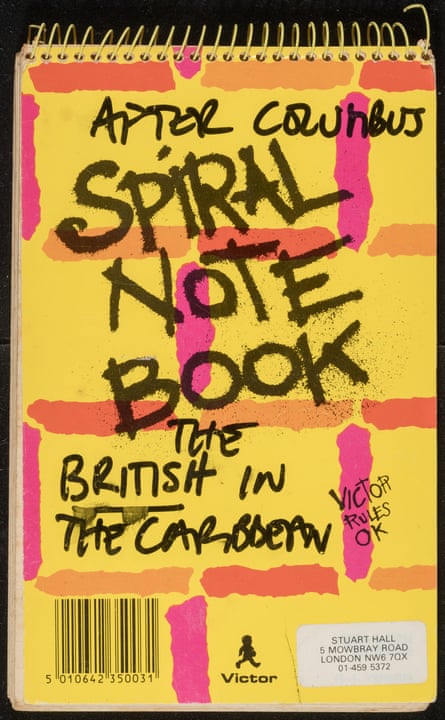
They include notebooks, index cards, his abandoned doctoral thesis and hours of previously inaccessible audio and video tracing the evolution of cultural studies, all within an interactive database.
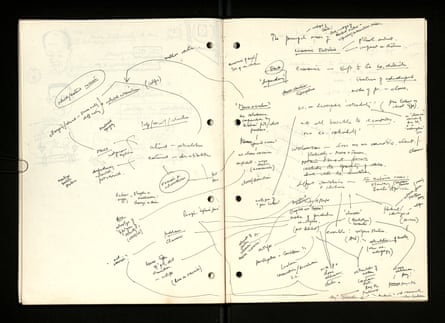
Also released are his “Origins of the new left” lecture, notebooks on “race and moral panics”, and Encoding/Decoding Cybernetics, a research project exploring Hall’s impact on the architecture of large language models.
In response to the era of artificial intelligence, and the questions it raises about culture, copyright and corporate power, the academics behind the Stuart Hall Archive Project have barred AI bots from accessing the data.
The Cadbury Research Library, which has catalogued the original papers, has run the digital archive through a programme that “poisons the data” for bots.
The project lead, Dr Rebecca Roach, working with Helen Fisher and Dr Katherine Parson, said they did not create the archive “just for AI to scrape” and commercialise. She said the platform was built to ensure “it doesn’t replicate the exploitation of people of colour and their cultural heritage that technology has historically enabled”.
“One of the things that was really central to us developing the Stuart Hall digital site was to think about what can we learn from Hall’s ideas – and how can we apply that to our current moment with machine learning,” Roach said.
Hall died before the AI era fully arrived, but he left a body of work with which to interpret it. His theory of representation – examining how media builds meaning through language, symbols and cultural codes – remains relevant amid concerns about algorithmic bias. Doing Cultural Studies, a textbook he co-authored, used the Walkman as a case study of how social, cultural and economic life could be expressed through a single technology.
Roach said it was important to celebrate Black British intellectuals who had made “incredible contributions” to British culture, and noted that while scholars had sometimes been “a bit sniffy” about popular culture, Hall was at its forefront. She called him “a guiding figure for making the world better”.
Alongside the archive, Roach has produced learning materials for primary schoolchildren, while the art collective Vivid Projects has made a zine called Dear Stuart.
University of Birmingham students have created Walking with Hall, a virtual tour of campus landmarks, raising questions about what it meant for the academic to walk in the shadow of Joseph Chamberlain, the imperialist statesman who founded the university.
Classically educated in Jamaica, Hall came to Britain in 1951 on a Rhodes scholarship to Oxford, became the founding editor of New Left Review, and worked as a supply teacher in Brixton before pursuing his academic career.
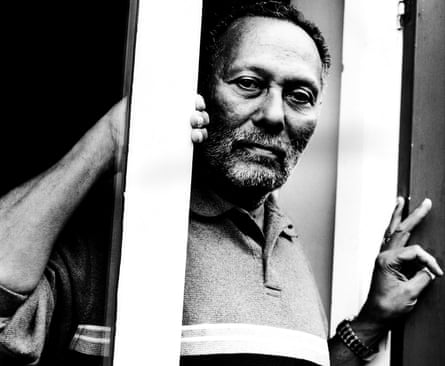
He met Catherine on an anti-nuclear march in 1963; they moved to Birmingham, where their two children were born and where he made his university department a beacon for debate on media, race, politics, Marxism and critical theory.
From 1997 to 2000 he served on the Runnymede Trust’s commission on the future of multi-ethnic Britain, going on to collaborate with young artists and film-makers, and in 2005 he was made a fellow of the British Academy.
Calling the archive “an extraordinary resource”, Prof Daniel McNeil, the Stuart Hall interdisciplinary chair at Birmingham University, said Hall “transformed how we think about culture, identity, power and belonging”.
KioskNews shows a cleaned-up reading view extracted from the publisher’s page — the original always lives on their site, not ours.