115 families still living in tents in Negros Occidental nearly a year after Tino
Already have Rappler+?
to listen to groundbreaking journalism.
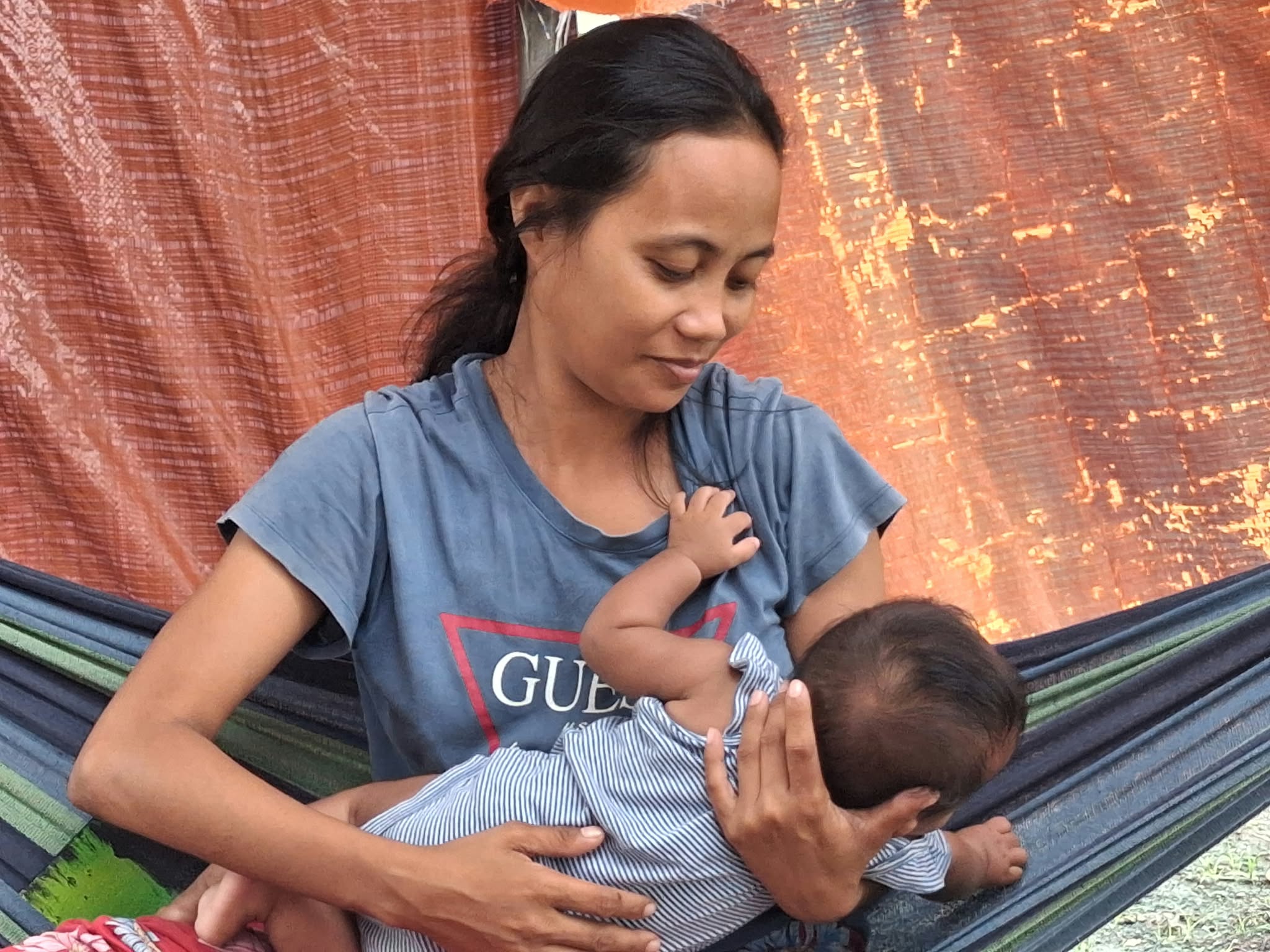
MOTHER AND DAUGHTER. Dorelyn Dagang cuddles her five-month-old daughter inside their tent on the grounds of Colegio de La Castellana.
Ambo Delilan/Rappler
The local government is straining its finances to assist displaced families while awaiting national funding for recovery
AT A GLANCE
- Nearly a year after Typhoon Tino, over 100 families in La Castellana, Negros Occidental, are still living in tents with no clear timeline for relocation.
- The municipal government has purchased land for a new relocation site, but development and permits are still pending, causing delays in transferring the displaced families.
This is AI-generated. Read the article for full context. Report any errors.
NEGROS OCCIDENTAL, Philippines – Nearly a year after Typhoon Tino (Kalmaegi) battered the Visayas, including southern Negros Occidental, over 100 displaced families in La Castellana town are still living in tents, with no clear timeline for their transfer to a permanent relocation site.
For mothers Anna Fernandez, 35, of Lapak-Duldol, and Dorelyn Dagang, 32, of Igpanulong, both in Barangay Robles, the November 4 anniversary of the devastation is a reminder that their ordeal is far from over.
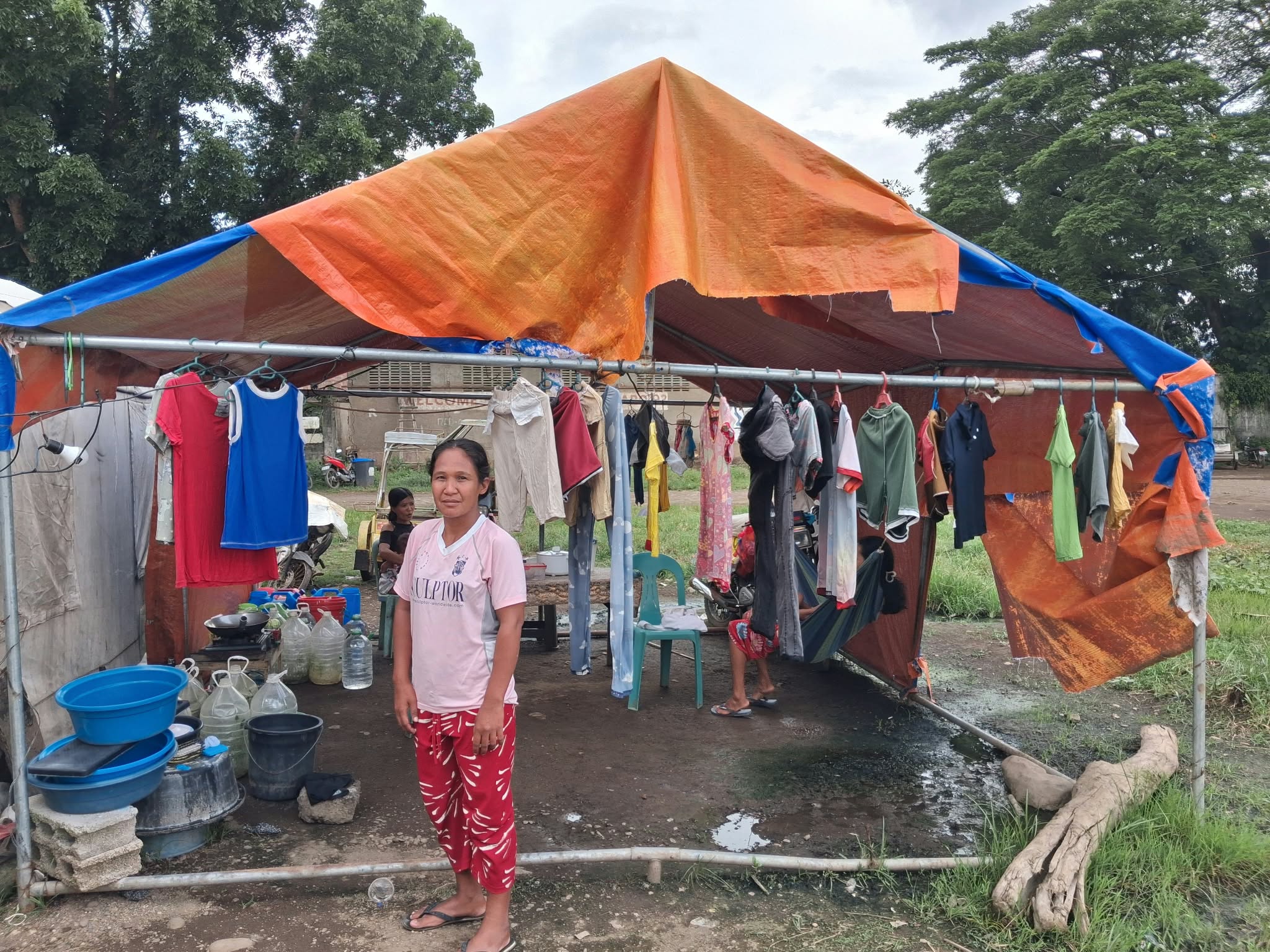
Their families are among 115 displaced households staying in tents provided by the Office of Civil Defense (OCD) on the grounds of Colegio de La Castellana in Barangay Robles.
In an interview with Rappler on Monday, October 12, Fernandez said living in a tent for nearly a year had taken a toll on her family.
“Kainit, kaging-ot, kag tulo sang ulan ang amon gina-antus sa masami,” she said in Hiligaynon.
(We often endure the heat, stuffiness and leaking rain.)
Even meeting their basic sanitation needs has been difficult, she added.
Fernandez has two children, and her husband relies on daily odd jobs as a cement hauler to support the family.
Dagang, meanwhile, gave birth to her youngest child in a tent last May after losing her home and belongings to Tino while she was three months pregnant.
Now a mother of three with an unemployed husband, she said her greatest wish was for her family to have a permanent home.
“Diyos ko, san-o pa ayhan?” she asked in Hiligaynon. (My God, when will it be?)
The municipal government has purchased a six-hectare property in Barangay Robles for a relocation site, but the transfer of the families, comprising 423 people, cannot proceed until the land is developed and the necessary permits are secured, La Castellana Vice Mayor Alme Rhummyla Nicor-Mangilimutan said.
“We need time. We need money. We need help from the national government,” said Mangilimutan, who also heads the town’s Incident Management Team.
Tino displaced about 1,600 families across La Castellana alone, including 600 from Barangay Robles.
“Wala na gid sila sang puli-an. Kalulu-oy gid sila, actually,” Mangilimutan said.
(They really have no home to return to. They are truly in a pitiful state.)
The municipal government spends about P30,000 daily to feed the families in the tent community, Mangilimutan said.
“It’s financially draining, really,” she said. “But we have no choice; we have to face this as a daily challenge.”
To sustain assistance for the displaced residents, the municipality has been realigning its Maintenance, Operating and Other Expenses (MOOE) budget to cover educational allowances for schoolchildren, as well as burial and medical assistance for affected families.
Despite efforts to secure national government funding, Mangilimutan said the municipality was still waiting for assistance.
La Castellana, one of the localities hardest hit by Tino in the province, has submitted a P300-million recovery proposal, said Donato Sermeno III, director of the Office of Civil Defense in Negros Island Region.
The proposal has been included in the OCD-NIR’s post-disaster needs assessment, which Sermeno said had been submitted to the OCD’s central office in Manila for possible funding through the National Disaster Risk Reduction and Management Fund (NDRRMF).
Civil Defense Undersecretary Harold Cabreros pledged to prioritize the endorsement of the OCD-NIR’s assessment for funding through the OCD and the National Disaster Risk Reduction and Management Council (NDRRMC).
Sermeno has yet to disclose the total amount proposed under the assessment for the entire Negros Island Region.
Other local governments seeking assistance for Tino victims through the PDNA include the cities of Bago, La Carlota and Himamaylan; the towns of Moises Padilla, Isabela, Binalbagan, Hinigaran and Pontevedra in Negros Occidental; and Canlaon City in Negros Oriental. – Rappler.com
KioskNews shows a cleaned-up reading view extracted from the publisher’s page — the original always lives on their site, not ours.