In Numbers: How Russia-India Energy Dynamics Are Changing
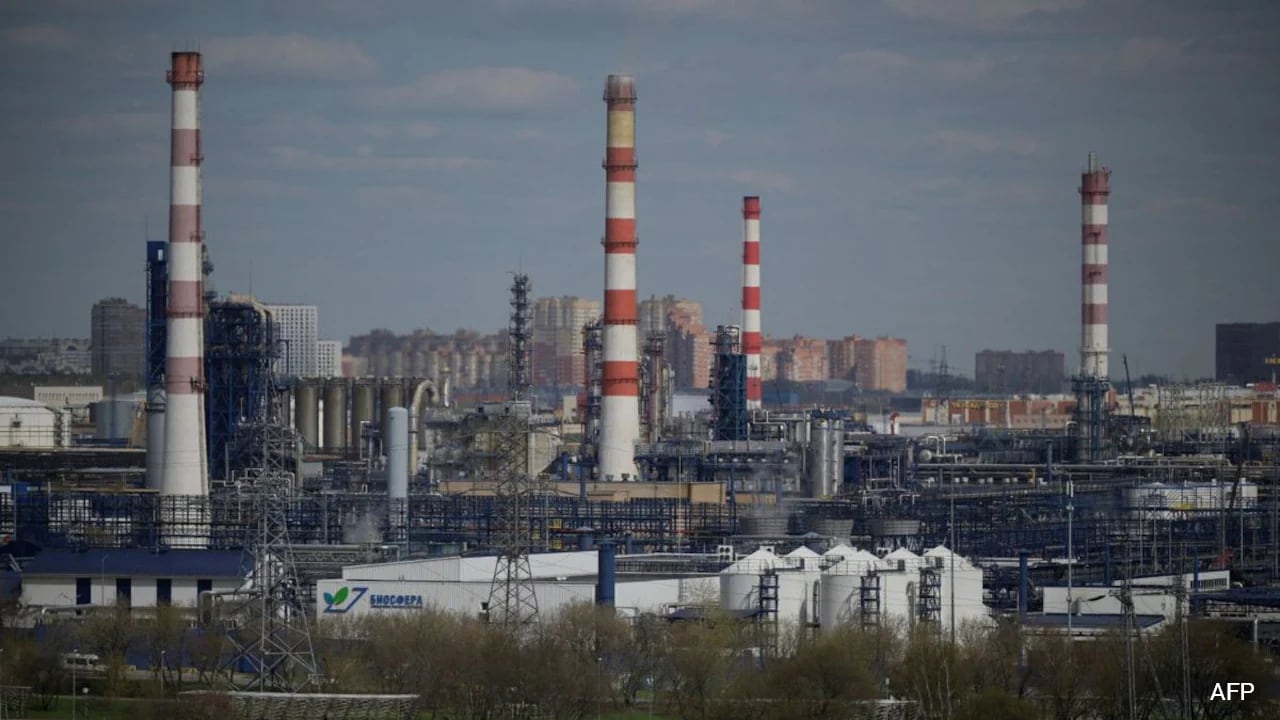
The United States appears to exert pressure on India to abandon its purchases of Russian oil through the threat of sanctions. Despite the threat, the energy relationship between New Delhi and Moscow is showing signs of change.
Russian crude supplies to India fell sharply in August. In an unusual reversal of traditional trade flows, Moscow turned to New Delhi for gasoline as Ukrainian strikes disrupted its refineries and other energy infrastructure.
The movement in both directions offers an early indication of how damage inside Russia could affect its oil trade with India.
The US House has passed a bill targeting Russia's energy exports by seeking to dissuade India and other major buyers through the threat of tariff sanctions. The proposed measures would add external pressure to a Russian energy sector already facing disruption at home.
Russia accounted for more than half of India's crude oil imports in July 2026. But its supplies to India fell sharply the following month.
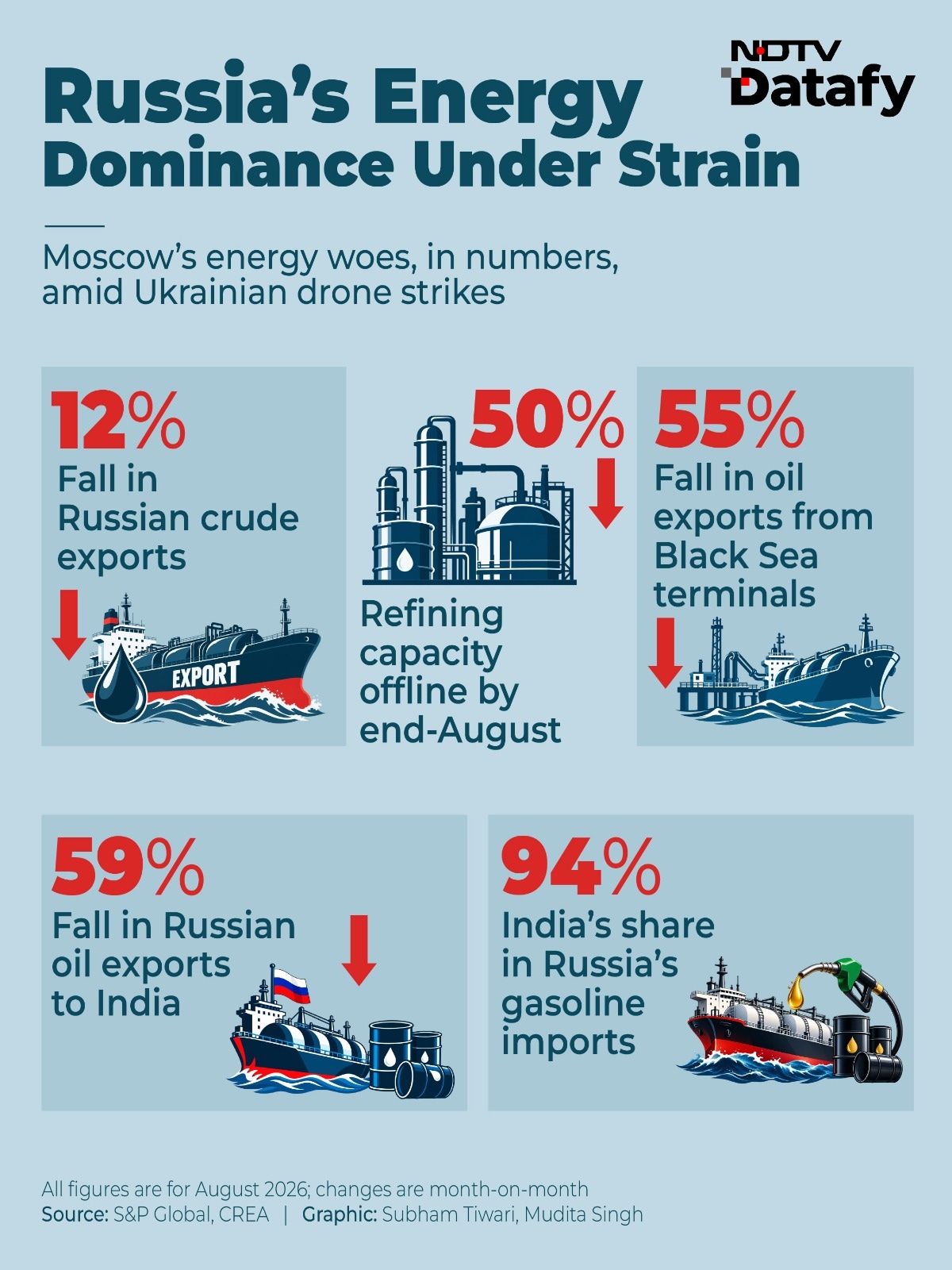
According to commodities intelligence and energy analytics firm S&P Global, Russia's crude oil exports to India fell by as much as 59 per cent to 810,000 barrels per day in August. The figure was also down 38 per cent year-on-year.
The decline cannot be attributed entirely to Ukrainian attacks. Factors including fluctuations in Indian demand, competition for Russian barrels and changes in Moscow's export availability can also affect monthly flows. Nevertheless, the August decline coincided with wider pressure on Russian oil exports.
According to S&P Global data, Russia's exports of Urals crude fell 12 per cent in August compared with July. Crude oil exports from the Black Sea terminals of Novorossiysk and Tuapse fell by 55 per cent during the month. Both export hubs have suffered repeated damage from Ukrainian drone strikes.
At the same time, energy products have begun moving in the opposite direction between India and Russia.
Russia has traditionally been a major exporter of crude oil and refined petroleum products. But damage to its refining infrastructure has forced Moscow to turn to overseas suppliers for fuels that it would ordinarily produce domestically.
India supplied around 1.2 lakh tonnes of gasoline to Russia in August, accounting for nearly 94 per cent of Moscow's total gasoline imports during the month.
The volumes remain small compared with the scale of Russia's domestic energy industry. But the imports represent an unusual reversal for one of the world's major petroleum exporters. They also expose Moscow to additional logistical costs and potentially higher prices for products that were previously available from domestic refineries.
According to the Centre for Research on Energy and Clean Air (CREA), nearly half of Russia's refining capacity was estimated to be offline at the end of August 2026.
Taken together, the figures provide an unusual snapshot of India-Russia energy trade. Russian crude continued to flow to India, but at a sharply lower level in August, while refined fuel moved from India back to Russia.
Long-Range Attacks
The emerging pressure on Russia's energy trade comes as Ukraine expands its campaign against Russian oil and gas infrastructure in both scale and reach.
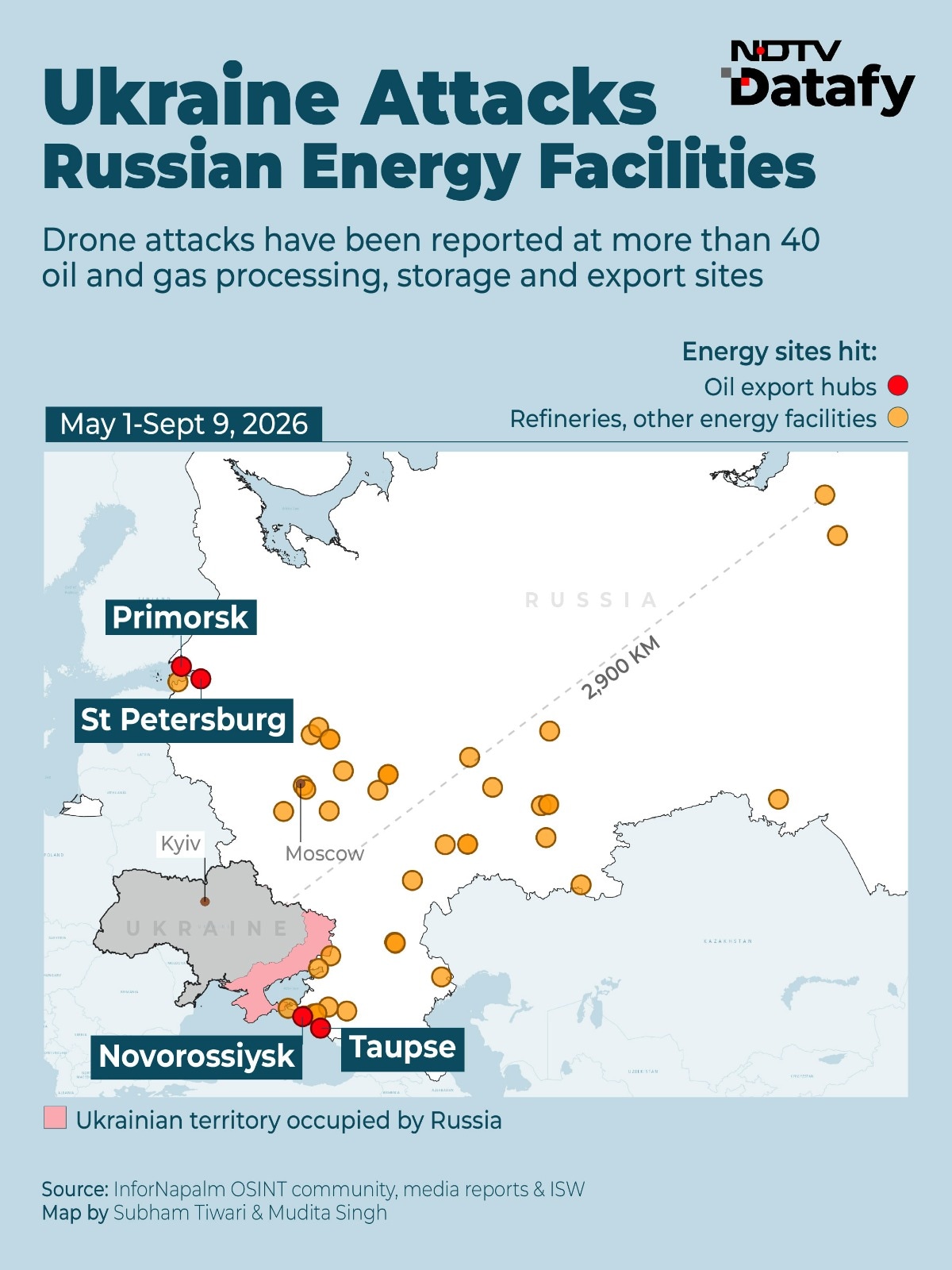
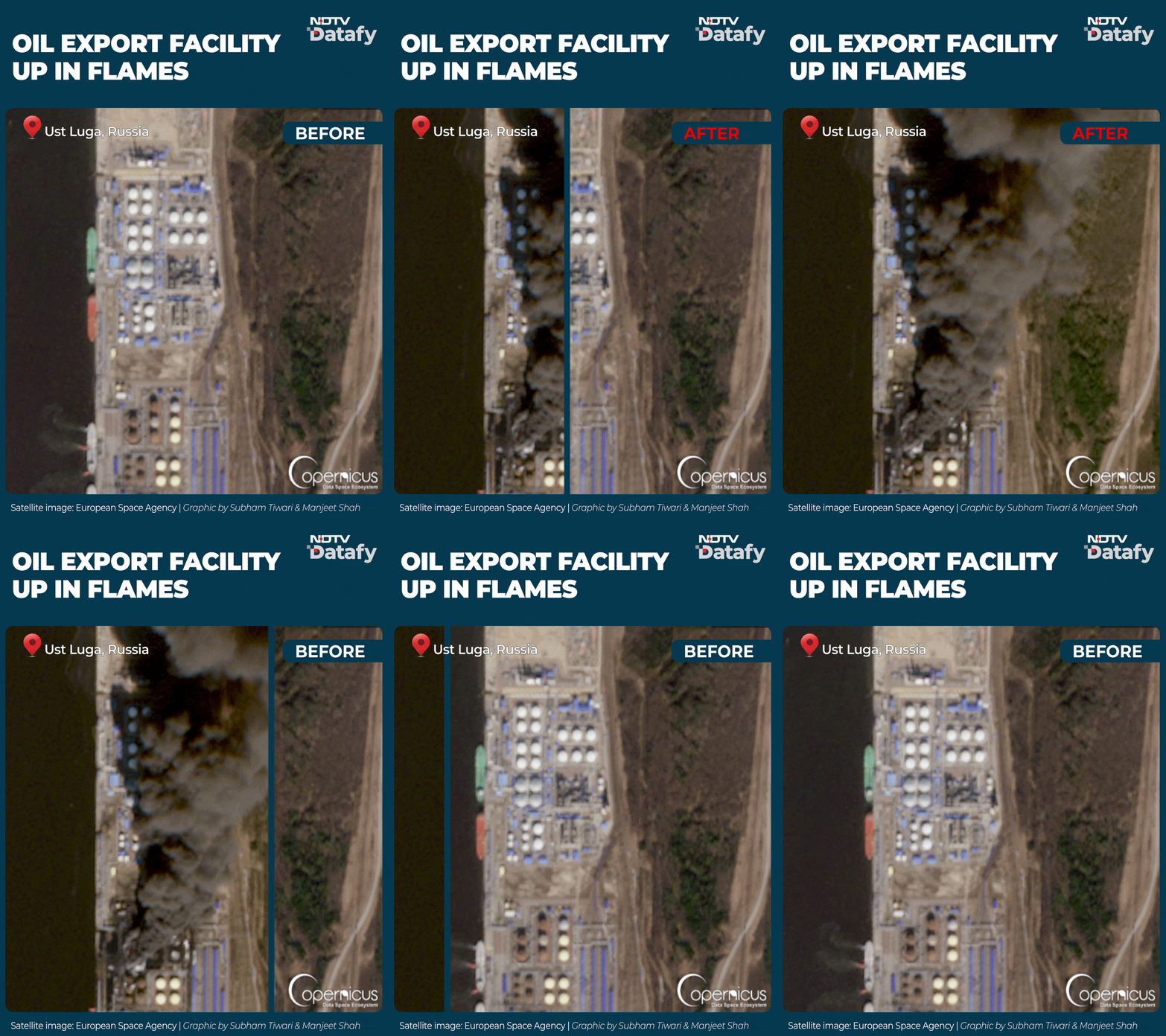
Since May, Ukraine has attacked more than 40 oil and gas facilities, including refineries, storage units, processing facilities and treatment plants. Four major export terminals have also been targeted: Novorossiysk and Tuapse on the Black Sea, and Primorsk and St Petersburg on the Baltic Sea.
Some of the facilities have been attacked multiple times.
Ukraine is increasingly launching waves of drones at refineries, seeking to overwhelm protective netting and other largely passive defences. Its long-range strike capabilities and targeting also advanced rapidly during the first half of 2026, bringing energy infrastructure much deeper inside Russia within reach.
Refineries closer to Ukraine have been attacked as many as 15 times since 2022. Significant damage has been reported to both primary and secondary crude oil processing units across the country.
As of late August, only five major Russian refineries had not been attacked by Ukrainian drones, according to the International Energy Agency. These facilities are located in eastern Siberia and the Far East, between 3,500 and 6,500 kilometres from the Ukrainian border.
Ukraine has also struck Russian energy infrastructure located nearly 2,850 kilometres from its border, further reducing the number of facilities that remain beyond the reach of its long-range drones.
The full impact of Ukraine's strikes on Indian energy imports remains to be seen.
KioskNews shows a cleaned-up reading view extracted from the publisher’s page — the original always lives on their site, not ours.