How Malaysia is shielding lower-income households from the global cost squeeze
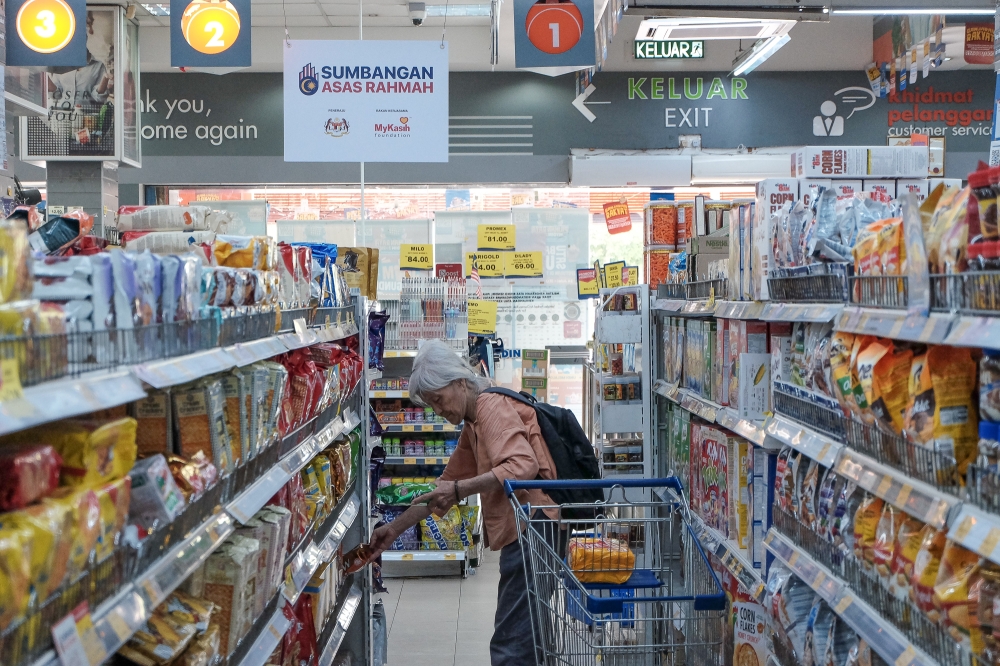

Malaysian households continue to navigate higher everyday costs, with targeted government measures helping to ease the pressure on essential spending. — Picture by Yusof Isa
First Published: Monday, 14 Sep 2026 5:05 PM MYT
Last Modified: Monday, 14 Sep 2026 5:08 PM MYT
KUALA LUMPUR, Sept 14 — When global supply chains come under strain, it is almost always the lowest-income households that feel it first and hardest.
A rise in the price of imported fertiliser or crude oil rarely stays confined to petrol pumps; it filters into bus fares, cooking oil, chicken, and the electricity bill — and for a household already spending most of its income on necessities, there is little room to absorb the shock.
In Malaysia, that shock has been real but comparatively contained.
Since April, the country has been navigating the fallout of the conflict in West Asia and the disruptions it triggered to global energy and shipping routes — yet unlike some nations forced into fuel rationing or emergency measures, Malaysian households have so far continued to buy petrol, cook meals and switch on the lights without major disruption.
Officials say that is the result of early, co-ordinated government intervention rather than chance.
Why the pressure hits harder, and how the government has cushioned it
Lower-income households typically spend a far larger share of their income on food, fuel and utilities than higher earners, leaving little flexibility when global costs rise.
A spike in shipping or crude prices raises the cost of transport; a jump in fertiliser prices raises the cost of growing food; a rise in feedstock prices raises the cost of manufacturing daily goods — and all of it eventually reaches the shelf.
Tan Sri Mohd Hassan Marican, chairman of the Crisis Management Task Force (PPPK) under the National Economic Action Council (MTEN), has cautioned against viewing the crisis narrowly as an oil price problem.
He told Bernama the disruption unfolds in stages, moving from fuel and logistics costs into petrochemical, feedstocks, plastics, fertilisers, manufacturing and construction before it reaches households.
“Eventually, it will reach households through broader cost-of-living pressures,” he said.
To soften that pass-through, the government has relied on targeted subsidies, price controls and direct assistance — including the Budi 95 and Budi Diesel schemes, the Subsidised Diesel Control System (SKDS), support for e-hailing drivers, fishermen, smallholders and agricultural producers, and retail-level measures such as anti-profiteering enforcement, Jualan Rahmah Madani and Jualan Agro Madani.
For example, eligible recipients can receive up to RM4,600 a year through the combined STR and monthly SARA programmes. The government has also introduced a RM15 billion intervention package to help micro, small and medium enterprises secure financing and remain operational.
Hassan Marican has described the underlying approach as balancing immediate relief for households with the need to preserve fiscal resources for the future, shifting policy away from blanket subsidies toward support that is more precisely targeted.
What analysts and consumer groups say
Independent economists broadly credit the measures with keeping costs stable, but flag gaps in how they are targeted.
Mohd Shukor Harun, a senior lecturer at Universiti Sains Islam Malaysia’s Faculty of Economics and Muamalat, reportedly called the government’s continued subsidy commitment a responsible move that eases pressure on B40 and M40 households.
Consumer advocates point to more immediate relief.
On June 9, Dr Saravanan Thambirajah, chief executive officer of the Federation of Malaysian Consumers Associations (FOMCA), welcomed the government’s commitment to continue absorbing fuel subsidy costs.
He had said it eases pressure on transport and logistics costs that would otherwise flow into daily necessities — while cautioning that “fuel prices are not the only factor determining the prices of goods,” pointing to food costs, rents, energy bills and wages as pressures that persist regardless.
A buffer, not a cure
Taken together, the measures illustrate a tension officials themselves acknowledge: targeted support can meaningfully soften the blow of a prolonged global supply crisis, but cannot eliminate it.
Hassan Marican has cautioned that Malaysia’s relative stability should not be mistaken for an absence of risk, and that continued global pressure will require sustained vigilance from both the public and private sectors.
Officials say policy direction ahead will keep emphasising resilience, targeted assistance, fiscal discipline and strengthened buffers across energy, food security, logistics and industrial supply chains.
Authorities have urged households to treat the situation as a prolonged, structural disruption rather than a temporary spike: use fuel, electricity and other essentials more efficiently, spend more deliberately given that cost pressures extend well beyond fuel, and cut unnecessary waste in favour of more planned consumption.
As officials have noted, when millions of households make small daily adjustments, the cumulative effect on national resilience can be substantial.
Malaysians can track how global developments are affecting domestic prices via the government’s monitoring dashboard at pantaukrisis.gov.my, and follow updates from the National Economic Action Council on its official social media channels.
KioskNews shows a cleaned-up reading view extracted from the publisher’s page — the original always lives on their site, not ours.