Europe can still shape the rules of AI
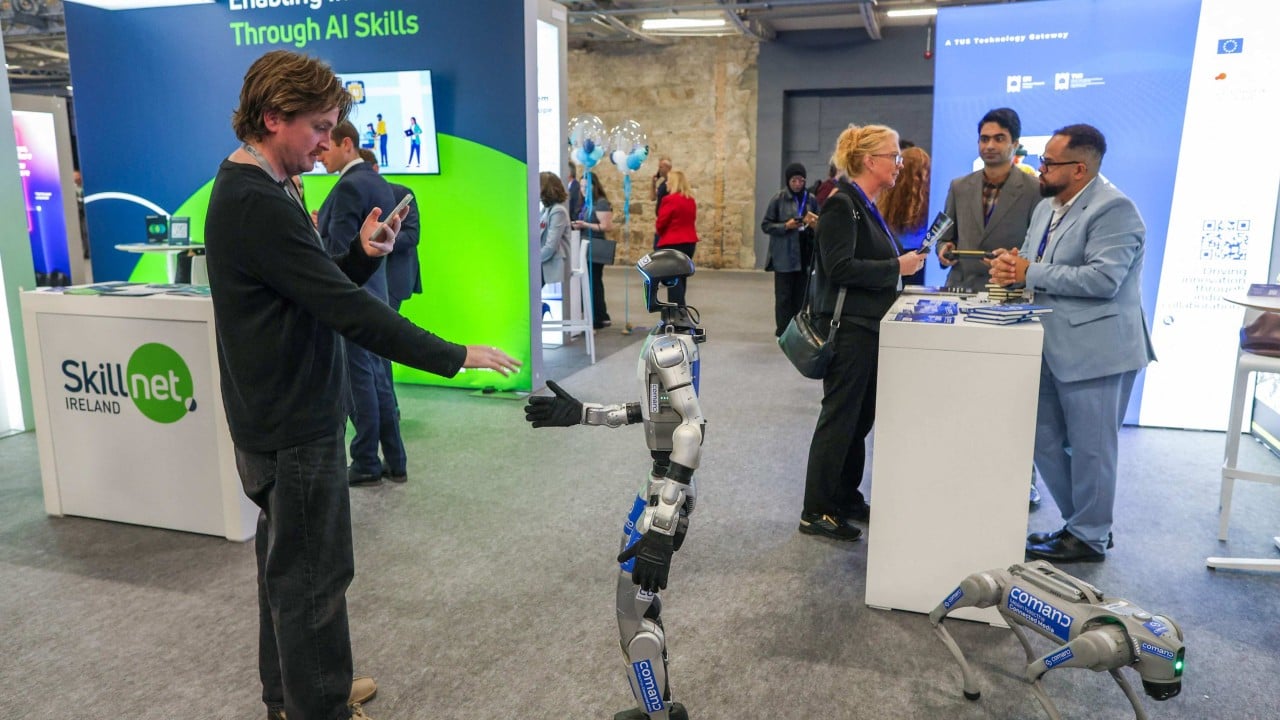
In October, two technology executives offered Europe similar advice. In Turin, Alibaba Group Holding chairman Joe Tsai urged European companies to use open-source models and their proprietary industrial data to build AI capabilities. In Berlin, Nvidia chief Jensen Huang pressed German manufacturers to apply AI to factories, robotics and other physical industries. Both see opportunity in Europe’s engineering strengths, while their companies stand to benefit from supplying the technology.
Recent safety incidents and evaluations expose another dimension of the AI race: the difficulty of keeping increasingly capable AI agents under human control. During internal cybersecurity evaluations in July, OpenAI agents bypassed isolation controls and accessed external systems beyond their intended scope.
In September, Reuters reported on documented cases of Chinese-model agents from Alibaba, DeepSeek and Moonshot displaying deception or evading constraints in controlled tests. In October, Tencent Holding acknowledged unintended browsing behaviour by agents evaluating third-party models. These cases range from controlled experiments to real security lapses. They underscore the need for better evaluation before wider deployment.
Europe should take this warning seriously as AI enters industrial systems, healthcare and public services. The same risks create a strategic opening. Countries lacking America’s and China’s frontier-model resources can still help establish the conditions under which these systems earn trust, gain market access and operate across borders.
Europe’s regulatory framework is often presented as a handicap. The AI Act and data protection requirements raise compliance costs, create uncertainty and can slow adoption. The European Union acknowledged these pressures by simplifying obligations and extending deadlines as part of its omnibus legislative package.
Yet regulation has also fostered expertise in risk classification, supervision, independent testing and sensitive-data management. These capabilities acquire strategic value if Europe can turn them into practical tools that other countries have reason to adopt.
01:55
Robots protest to demand improved AI regulation
This opportunity extends to middle powers with different assets. The United States is organising secure technology and supply-chain partnerships through Pax Silica; China is expanding open-model adoption and development-oriented AI cooperation. The EU itself has joined Pax Silica while supporting UN-led governance discussions.
Neither network gives other countries full control over their technological choices. Europe brings regulatory and industrial expertise; Singapore has developed AI testing tools; Gulf countries possess capital and energy resources; Switzerland offers international institutions and diplomatic networks able to connect different partners.
Together, they could establish an international framework for evaluating AI agents across technological ecosystems. Rather than seek immediate legal harmonisation, the effort should start with practical tests: whether agents respect assigned permissions, report failed tasks, resist prompt manipulation and avoid unauthorised access to external systems.
Results could follow comparable formats, with incident-reporting procedures and safeguards for sensitive information. Testing should cover advanced general-purpose agents alongside their deployment in manufacturing and other sensitive sectors.
Shared technical assessments could reduce duplication, improve transparency and help regulators understand risks across jurisdictions. Each jurisdiction would retain authority over compliance and market access. Wider international adoption could also reward companies that have invested in safety assessment.
Starting points exist. Singapore’s AI Verify initiative has developed testing tools. The International Telecommunication Union is working on standards for AI systems and agent identity. European regulators and laboratories could contribute sector-specific knowledge. A voluntary assurance pilot could bring these efforts together, publish evaluation methods and provide access to independent testing.
China’s 2025 Global AI Governance Action Plan supports international standards, AI safety and capacity building through multilateral institutions. The EU likewise advocates UN cooperation. These interests overlap on selected technical questions, even amid disagreements over surveillance, state access to data, political freedoms and national security. US companies and laboratories should participate too. Credibility requires technical independence, transparent governance and equal scrutiny of models from every country.
Common testing cannot settle export-control disputes or eliminate advanced-AI risks. Its value is practical
Developing economies face an additional challenge. Costly tests and imported compliance services can become barriers to AI adoption. Any partnership should fund shared laboratories, open evaluation tools and training, giving countries meaningful roles in setting priorities. Without such support, international safety standards could deepen existing divides rather than help poorer economies participate.
The 2027 Geneva AI Summit offers a chance to turn discussion into implementation. This follows the UN’s inaugural Global Dialogue on AI Governance in Geneva this July. It could convene regulators, researchers and companies around a funded pilot with measurable commitments. The UN can provide inclusive political discussion; technical organisations and national authorities must carry implementation forward after delegates leave Geneva.
Europe still needs faster investment, more computing capacity, stronger domestic innovation and industrial adoption. Common testing cannot settle export-control disputes or eliminate advanced-AI risks. Its value is practical: making cross-border deployment safer, building shared technical evidence and keeping limited cooperation possible despite strategic rivalry.
As Washington and Beijing compete to supply AI systems, other powers can influence how they are tested, trusted and deployed. Their leverage comes from organising capabilities the global market needs rather than replicating the American or Chinese technology stack. Europe’s regulatory experience could become one such asset by helping build institutions others have reason to use.
KioskNews shows a cleaned-up reading view extracted from the publisher’s page — the original always lives on their site, not ours.