What’s at stake and the battlegrounds to watch as Taiwan heads to the polls
US midterm elections: What the results mean for mainland China, Taiwan and foreign policy
What are the nine-in-one elections?
Held every four years, Taiwan’s nine-in-one elections allow voters to choose officials for nine categories of local government posts, ranging from mayors and county commissioners to councillors and village chiefs.
About 19.65 million people are eligible to vote this year, including an estimated 600,000 first-time voters.
The most closely watched contests are for the leadership of Taiwan’s 22 cities and counties, with 81 candidates competing for the posts.
Independents form the largest group, with 34 candidates, while the KMT and DPP have each fielded 19. The smaller opposition Taiwan People’s Party has nominated just one candidate, and eight candidates are representing other minor parties.
The elections are widely regarded as a midterm test of Lai’s administration, which has repeatedly clashed with the opposition-controlled legislature.
In 2022, the KMT won 14 mayoral and county commissioner seats against the DPP’s five. Its tally subsequently rose to 15 after an independent county commissioner rejoined the party.
The DPP is seeking to expand its local government presence, while the KMT hopes to defend its strongholds and make gains in the south.
Why are Taipei and New Taipei the ones to watch?
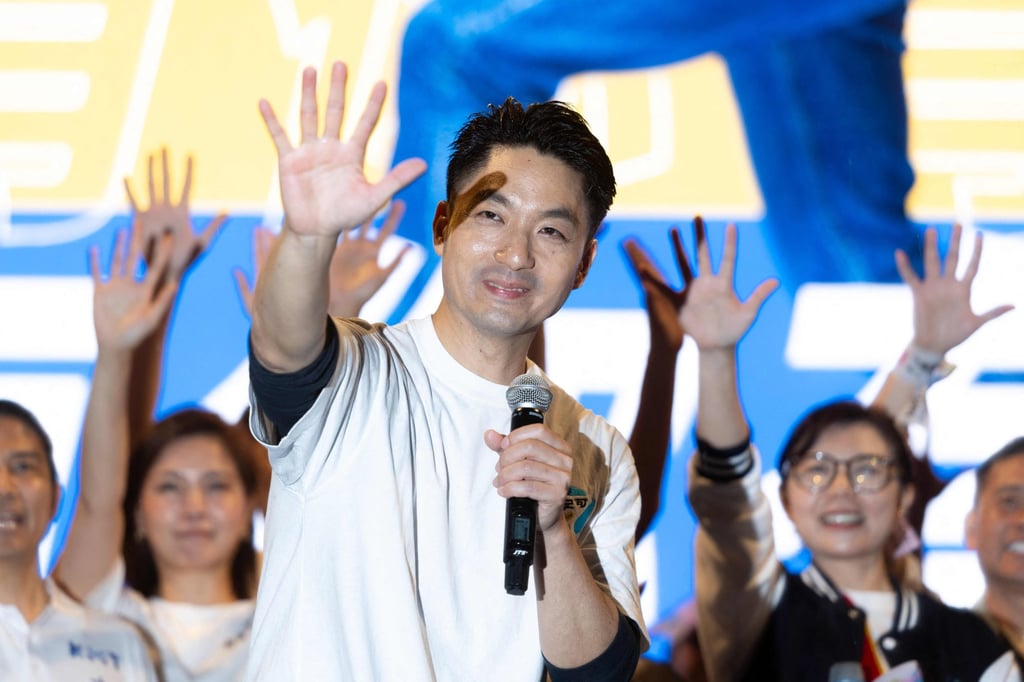
The two northern municipalities have emerged as the most politically significant contests, particularly because of the unexpected momentum from Puma Shen’s challenge to incumbent KMT Taipei Mayor Wayne Chiang Wan-an.
Shen, a legislator and co-founder of the Kuma Academy, has been sanctioned and labelled a “diehard Taiwan separatist” by Beijing for his advocacy of civil defence against threats from mainland China.
He has drawn attention with a campaign emphasising direct voter engagement and social media mobilisation that has been dubbed the Ocean Current or yangliu – a play on his name, Pao-yang.
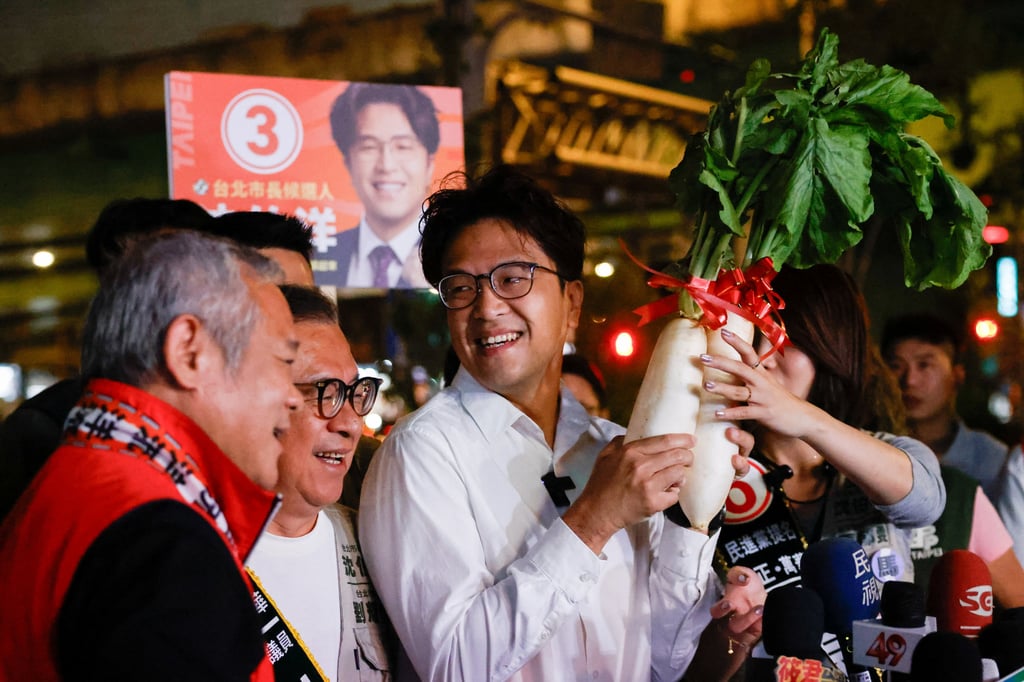
Huang Huei-hua, director of the Taipei-based Taiwan Global Talk think tank, said Shen’s approach had energised voters to think beyond their traditional party loyalties.
“You don’t necessarily have to talk about heavy political issues all the time. Sometimes, you first need to make people feel that being with you is fun,” she said.
“That brings voters’ energy and enthusiasm back. This is what the Ocean Current phenomenon is all about.”
Huang argued that Shen’s campaign had generated momentum beyond Taipei, potentially benefiting DPP candidate Su Chiao-hui in neighbouring New Taipei City, where she faces the KMT’s Lee Shu-chuan.
New Taipei City – Taiwan’s most populous municipality with more than 4 million residents – is widely regarded as a key electoral battleground and a barometer of the island’s political direction.
The KMT has governed the area since 2005, when it was still Taipei county, making the election a test of whether the party can preserve more than two decades of control or the DPP can achieve a significant breakthrough.
With support for the DPP and KMT relatively evenly divided, the contest between Su and Lee – who has secured joint KMT-TPP backing – is expected to be closely watched.
“If the KMT loses both Taipei and New Taipei, it would show that the amplification of the Ocean Current phenomenon through social media has been effective,” said Max Lo, executive director of the Taipei-based Taiwan International Strategic Study Society.
But he warned that the movement could also undermine traditional DPP factions, whose influence depends heavily on local political networks and grass-roots organisers.
He said online mobilisation could overshadow these established organisations, creating tensions within the party even as it energised younger supporters.
What’s at stake for Lai and Cheng?
The results could have important consequences for the leadership of both major parties.
The DPP currently controls the southern municipalities of Kaohsiung and Tainan, while the KMT governs the other four.
For Lai, who also chairs the DPP, a strong performance could consolidate his authority and provide political momentum ahead of his expected re-election bid in 2028.
For Cheng, the elections represent her first major electoral test as KMT chairwoman, amid disagreements within the party over her determined push to restore dialogue and improve strained relations with Beijing.
Huang suggested that losing both Taipei and New Taipei City could threaten Cheng’s leadership and potentially prompt current Taipei mayor Chiang to seek the party chairmanship as a platform for future political ambitions.
Lo, however, cautioned against drawing conclusions from the results in two municipalities alone.
“Of the six major municipalities, if the KMT loses Taipei and New Taipei but wins Kaohsiung while retaining Taichung and Taoyuan, would that really constitute an electoral defeat?” he asked.
Can the KMT and TPP work together?
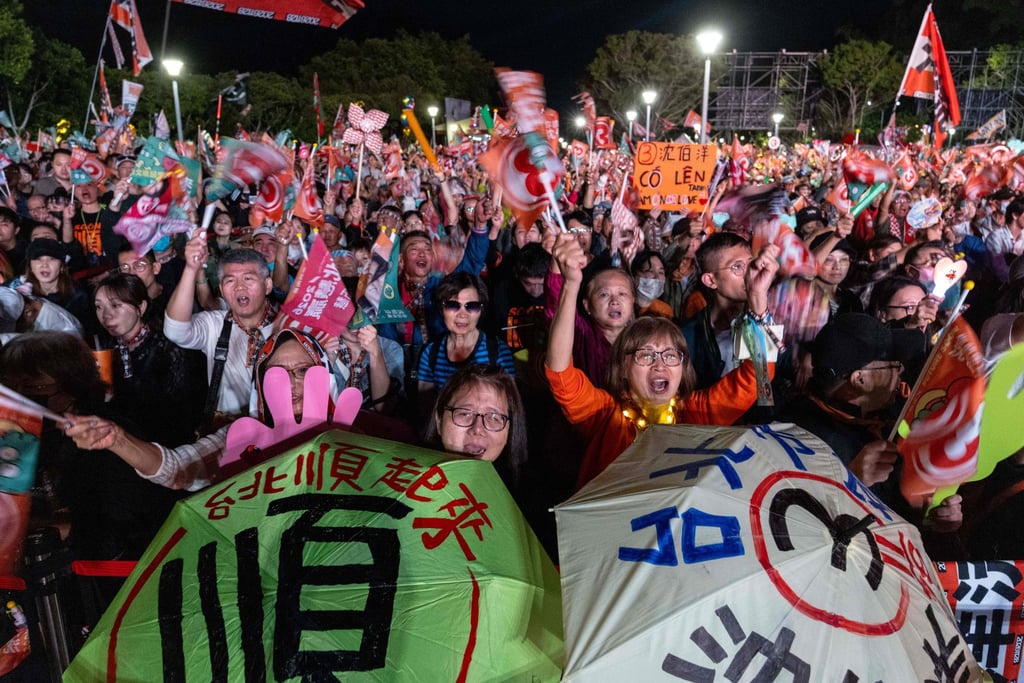
The elections will also test cooperation between the KMT and TPP, whose failed attempt to form a joint ticket exposed deep divisions within the opposition ahead of the 2024 leadership election.
Although TPP chairman Huang Kuo-chang withdrew from the New Taipei City mayoral race and backed the KMT candidate, nomination disputes in places such as Zhubei have highlighted lingering tensions.
Lo said the two parties nevertheless had strong incentives to maintain their alliance ahead of 2028.
“If the blue [KMT] and white [TPP] camps split, they will lose. Only by cooperating will they have a chance of winning in 2028,” he said.
Could the vote affect ties with Beijing?
The Taipei contest has attracted particular attention because Shen has been placed on Beijing’s list of “diehard Taiwan independence separatists”.
Beijing has also imposed sanctions on businesses linked to his father.
But Shen has said he would consider continuing the annual Taipei-Shanghai Twin-City Forum – an exchange event between the two governments – if elected, provided there were no political preconditions or harassment.
He also argued that the election would represent a victory for Taiwan’s democracy regardless of who won, because voters remained free to choose their leaders despite Beijing’s pressure.
Huang said Beijing would be displeased by a Shen victory, and that could potentially contribute to a further deterioration in cross-strait relations.
Lo said if Shen did get elected, Beijing might respond with military exercises or joint patrols but was unlikely to fundamentally change its broader strategy towards Taiwan.
Wang Kung-yi, head of the Taiwan International Strategic Study Society, cautioned against interpreting local election results mainly through the prism of cross-strait confrontation.
He said the KMT’s electoral fortunes should not automatically be equated with Beijing’s political interests.
“The KMT has its own supporters, political traditions and foundations in local governance in Taiwan. It is not an appendage of Beijing’s political strategy,” Wang said.
He stressed that DPP victories in Taipei and New Taipei City would not necessarily signify public endorsement of its cross-strait policies, just as KMT defeats would not mean voters had rejected closer exchanges with Beijing.
Beijing regards Taiwan as part of China to be reunited by force if necessary. Most countries, including the United States, do not recognise Taiwan as an independent state, but Washington is opposed to any attempt to take the self-ruled island by force and is committed to supplying it with weapons.
Will the results determine the 2028 race?
Although Saturday’s vote could redirect political momentum, analysts said the local election results should not be viewed as a definitive guide to 2028.
Wang argued that voters could support one party’s local candidates while backing another party in an island-wide leadership contest.
He said economic conditions, energy policy, cross-strait risks, defence spending and governing competence would ultimately play a greater role in shaping the 2028 election.
Lo agreed that the political environment could change significantly over the next two years.
“Whether these issues will actually affect the 2028 election depends on the political trends and the strength of public sentiment at that time,” he said.
For Wang, the more immediate question was whether candidates could deliver better local governance rather than claim a political victory over Beijing.
KioskNews shows a cleaned-up reading view extracted from the publisher’s page — the original always lives on their site, not ours.