Zinc deficiency could be cause of hair loss: doctor
HAIR REJUVENATION: After six weeks of adding more zinc to his diet, such as oysters, beef and pumpkin seeds, a man saw his hair grow back and his zinc levels rise
By Huang Hsu-lei and Hollie Younger / Staff reporter, with staff writer


About 30 percent of people seeking medical attention for hair loss have a zinc deficiency, a dermatologist said on Monday.
Some people can improve their condition in as little as six weeks by eating zinc-rich foods such as oysters and pumpkin seeds, said Ko Wei-li (柯偉立), head of the dermatology section at Cheng Ching Hospital in Taichung
Citing an example, Ko said that blood tests found a severe zinc deficiency was the primary cause of sudden and rapid hair loss in a 37-year-old male patient whose hair was thinning at the crown and temples.
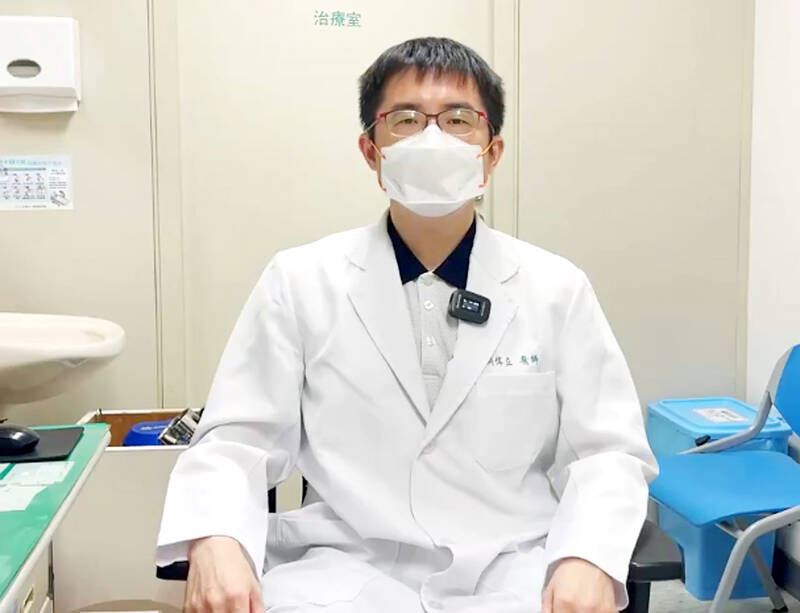
Ko Wei-li, head of Cheng Ching Hospital’s dermatology section, is pictured in an undated photograph.
Photo: Huang Hsu-lei, Taipei Times
The man, an office worker of average height and weight, had been concerned he was developing male-pattern baldness, as his father is completely bald, Ko said.
However, tests revealed that his blood zinc level was 85 percent of the lower limit of the normal range, he added.
After six weeks of adding more zinc to his diet, including oysters, beef and pumpkin seeds, under the guidance of a nutritionist, most of his hair had grown back and his zinc levels had returned to a healthy range, he said.
Zinc deficiencies are often caused by improper dieting or long-term consumption of foods low in zinc, though a small number of patients have conditions that cause the deficiency, such as chronic diarrhea, he said.
About 90 percent of the structure of human hair is protein, or keratin, Ko said.
A zinc deficiency can affect the synthesis of hair keratin, causing slower growth, thinning hair strands and more fragile hair that is prone to breakage, the doctor said.
People concerned about zinc deficiency and hair loss should not take supplements on their own, but should first undergo testing at a qualified medical facility and discuss a suitable zinc supplementation plan with a doctor and a nutritionist, he said.
KioskNews shows a cleaned-up reading view extracted from the publisher’s page — the original always lives on their site, not ours.