7 Times the Movie and the Book Were Both Perfect
In this era of limited series, many novels are getting longer-form adaptations that allow writers, producers, and directors the ability to exhaustively include every detail of their source material. That's not an inherently good or bad thing, and it all depends on the skill and care each adaptation is made with, but it often overlooks the fundamental differences between mediums. Novels are not films or television series. They can examine individual moments, characters or settings with excruciating detail because the format allows for it, while visual mediums must often rely on the driving force of a plot to keep things captivating.
In films, with such limited runtimes, filmmakers have to make creative decisions and excisions when adapting novels, with varying results. There have been great movies made out of bad books and bad movies made out of great books. Then there are those rare perfect movies made out of perfect books. What makes them perfect isn't always the same as what makes their books perfect — some are even so different from their source material that fans don't know what to think. Regardless of how closely they resemble one another, these seven books and the movies made out of them are undeniably perfect.
'The Night of the Hunter' (1955)

The Night of the Hunter is a Southern Gothic novel by Davis Grubb. Inspired by the true story of serial killer Harry Powers, who found his victims through personal ads, the novel is an engrossing thriller set during the Depression that follows a killer preacher who seduces a widow and then stalks her children to find a hidden fortune. It's vividly written, with striking descriptions of its macabre content that make it ideal for a film adaptation. It was adapted in 1955 by actor-turned-director Charles Laughton into an atmospheric horror-thriller that beautifully captures the novel's most haunted moments.
Following the plot of the novel fairly closely, the film introduces preacher Harry Powell (Robert Mitchum), who seeks out the widow Willa Harper (Shelley Winters) and her two children so that he can get his hands on $10,000 stolen by her late husband. The film's stark black-and-white cinematography, coupled with its abstract production design, perfectly evokes the Southern Gothic tone of the novel. Mitchum's performance is among his most iconic as well, giving ruthless life to an irredeemably evil character. Unfortunately, the film was a critical and financial failure, but it has since undergone a reappraisal and is now recognized as one of the most perfect thrillers ever made.
'To Kill a Mockingbird' (1962)
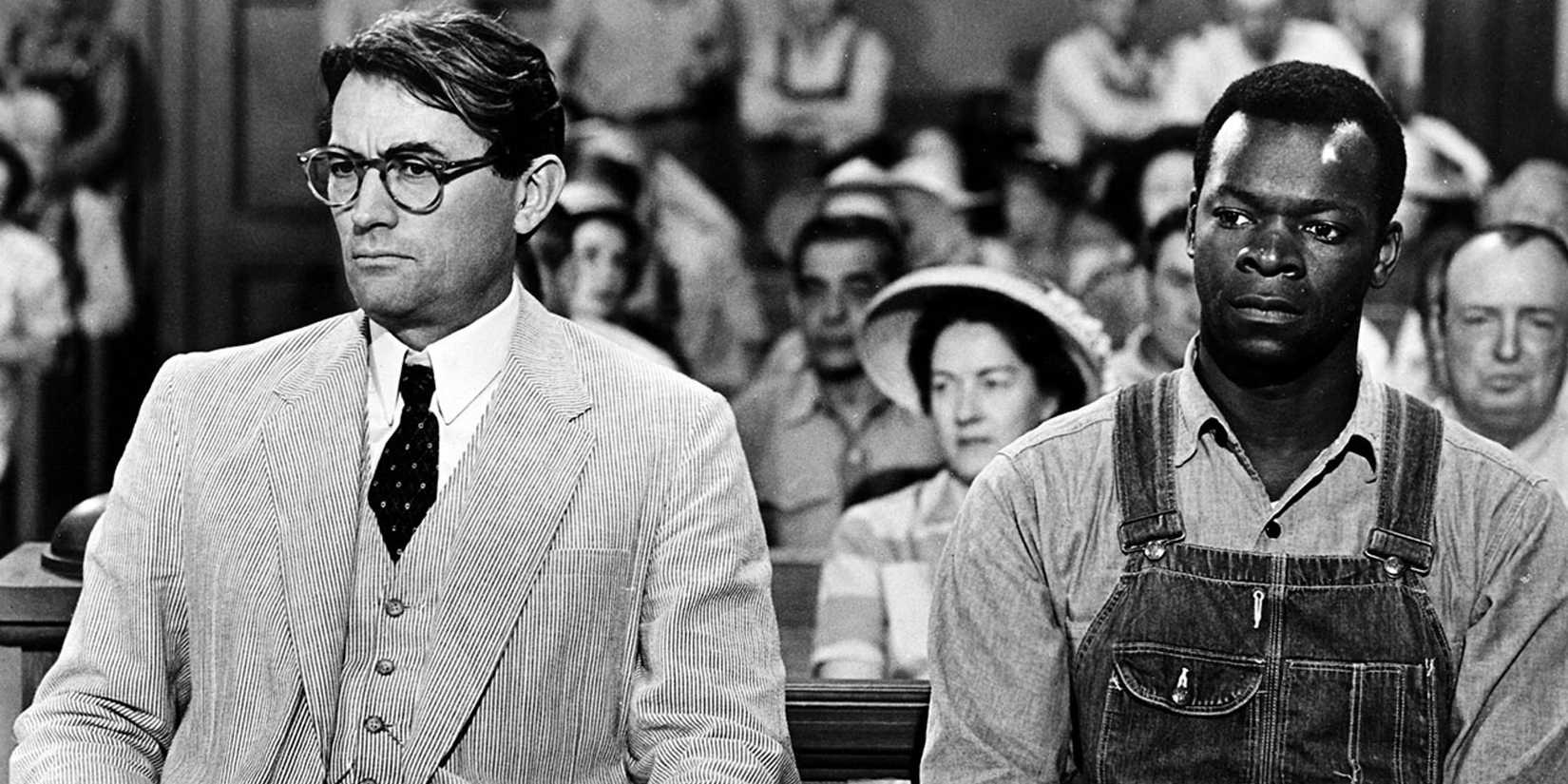
Harper Lee's To Kill a Mockingbird is among the most lauded and beloved novels ever written. A work of deep compassion detailing racial prejudice and injustice that was informed by the author's own upbringing in the South, it has been subject to discourse, controversy and endless discussion. Its place in the pantheon of great American novels is assured, and the character of Atticus Finch has become a paragon of American idealism and moral fortitude. That same level of acclaim has been applied to the film adaptation and the performance of Gregory Peck as Finch within it.
In both the novel and the film, Atticus is the father of young Scout (Mary Badham) in the town of Maycomb, Alabama, where he serves as a lawyer for the impoverished population. While the novel offers a broader examination of the town and the expanded Finch family, and is told exclusively from Scout's perspective, the film narrows its focus to the courtroom drama aspect as Atticus defends an innocent Black man on trial for the sexual assault of a white woman. While that may limit some of the overall impact of the movie, it does provide an incredible showcase for Peck.
'The Last Detail' (1973)

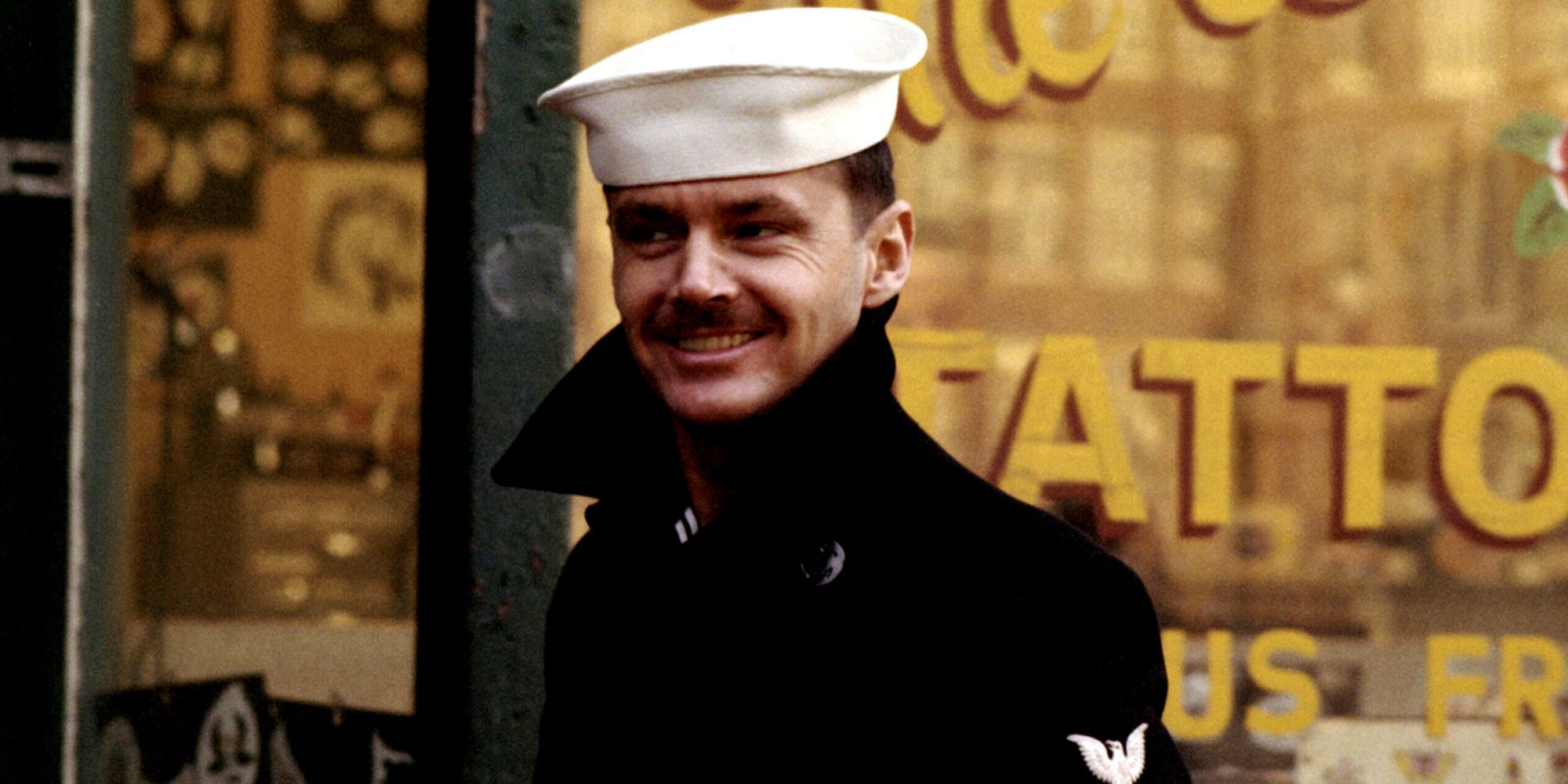
The Last Detail by Darryl Ponicsan is a comic and cynical novel of duty and friendship set against the backdrop of the Vietnam War. It's a story of two Navy men assigned a detail to escort a third to prison to serve a sentence for a petty crime, informed by Ponicsan's time in the Navy. It was adapted only a few years after it was published into a seminal '70s film written by Robert Towne and directed by Hal Ashby. While the film changes the ending of the novel in a drastic fashion, it also captures its melancholy tone perfectly and features three pitch-perfect performances.
Billy Buddusky (Jack Nicholson) and Otis Mulhall (Otis Young) have been given the duty of transporting seaman Larry Meadows (Randy Quaid) from Virginia to a Naval Prison in Maine. Their initial reluctance changes when they meet the young man and decide to show him the time of his life before delivering him for his sentence. The film's snowy setting, along with Ashby's balancing of profane humor with moments of poignancy, gives the film a wistfulness that feels genuinely earned, handled deftly by the three actors. It's a less celebrated '70s masterpiece that does justice to its sharp source material.
'The Shining' (1980)

Another iconic Nicholson performance came in Stanley Kubrick's adaptation of Stephen King's The Shining, which was subject to far more criticism, particularly from the author himself, with Nicholson's performance a particular point of contention. King's 1977 novel was highly personal, rooted in his struggles with alcoholism. The novel offered a great deal of backstory, not only for its central setting of the haunted Overlook Hotel, but also for the family acting as caretakers of it over the winter. Much of that was excised for Kubrick's film, which offered a far chillier ghost story that emphasized atmosphere over emotions.
The differences between the novel and the movie begin with the characters. Jack Torrance (Jack Nicholson) is a man already on a psychological razor's edge in the movie, whereas the novel presents him far more sympathetically and depicts his descent into madness as a slow, methodical process. His wife Wendy (Shelley Duvall) is a far more passive character in the film, completely overwhelmed by her husband's madness and the supernatural hotel she's stuck in with him and their son Danny (Danny Lloyd), whose supernatural powers are also less explored. The result is a film that strays far from its source, while offering distinct and horrific delights.
'Goodfellas' (1990)

Nicholas Pileggi's 1985 non-fiction book Wiseguy is less of a narrative and more of an extended chronicle of the criminal exploits of real-life monster Henry Hill, as told by the man himself. Long stretches of the book are recounted in Henry's own words and are less of an objective account of real events than they are a transcription of the colorful recollections of a wiseguy. It has the effect of feeling like you're sitting next to Henry in a bar while he rambles on about the good old days. That's what makes it such an effective and engrossing book, and what makes Martin Scorsese's Goodfellas such a perfect adaptation.
The film, like the novel, is slightly formless, charting Henry (Ray Liotta) through his years as a work-a-day gangster for a local caporegime for the Lucchese crime family, his descent into drugs, and his arrest, which turned him into an FBI informant. Yet, Goodfellas isn't interested in the specifics of its criminal enterprise; it's about the experience of being a gangster. Scorsese revels in the details of Henry's day-to-day life, and his film glides through its timeline with little concern about grounding the viewer in anything other than what is occurring on screen at any exact moment.
'The Lord of the Rings: The Fellowship of the Ring' (2001)
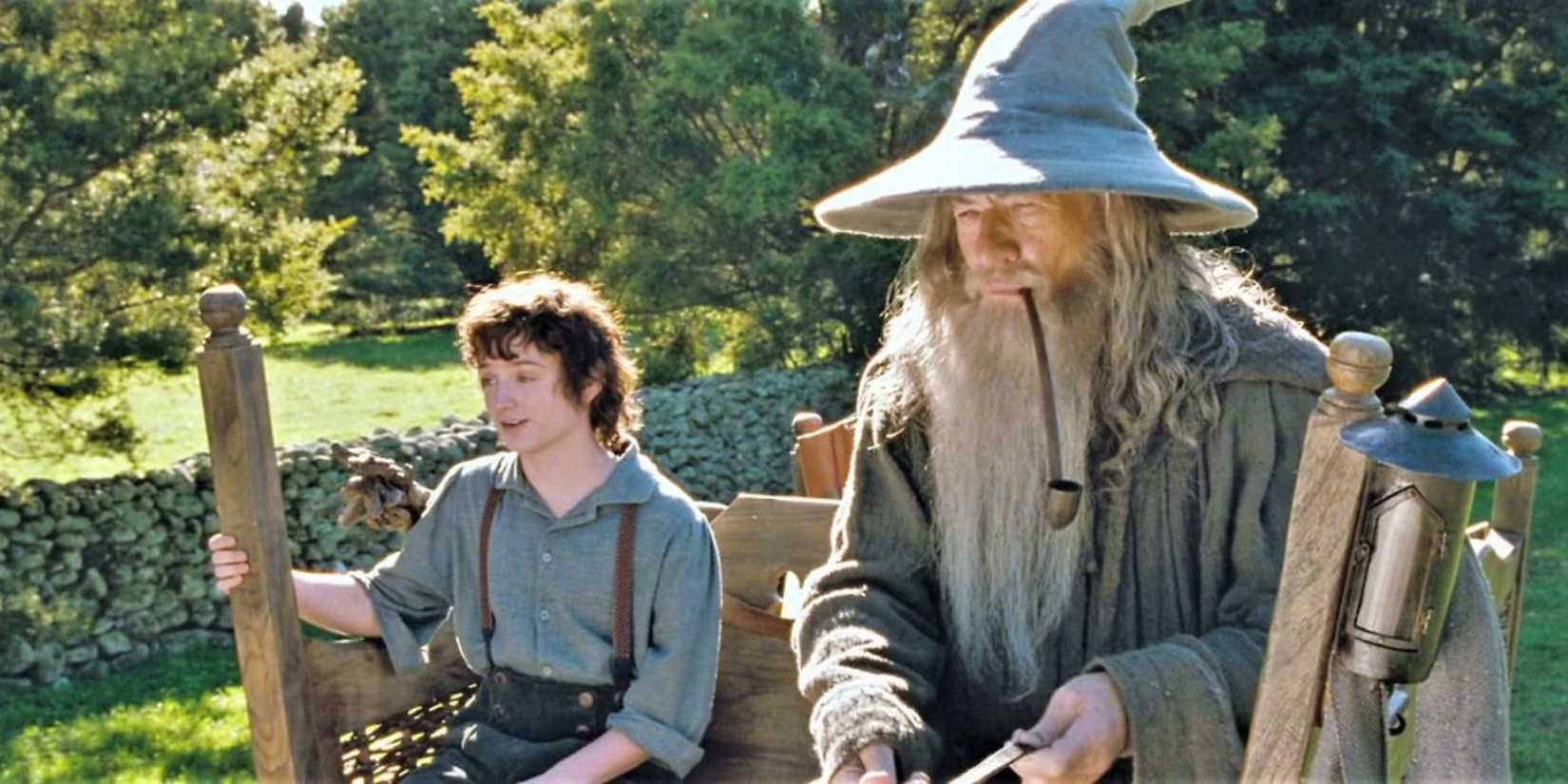
J.R.R. Tolkien's The Lord of the Rings is the perfect example of a beloved novel which could not, and should not, be directly adapted to the screen. It is a heavy tome of fantasy fiction dense with mythology, history and poetry. It includes a lengthy prologue and multiple appendices providing exhaustive detail about the history, races and languages of Middle-earth. Even the narratives are far too expansive to accurately portray, and their interlacing structure can not be supported by a traditional film.
What this amounts to in Peter Jackson's film adaptations is a vastly different experience that may not accurately represent Tolkien's magnum opus, but creates an entirely new vision that often intersects with it and is in constant conversation with it. The first film of Jackson's trilogy, The Lord of the Rings: The Fellowship of the Ring, begins with a dramatic departure from the text, using a battle-filled prologue to introduce the audience not only to the world of Middle-earth but also to the key plot components which will drive its narrative across all three films. Jackson allows all the wonder of Tolkien's world to be told through majestic visuals brought to life through incredible locations, visual effects and all other sorts of movie magic.
'True Grit' (2010)

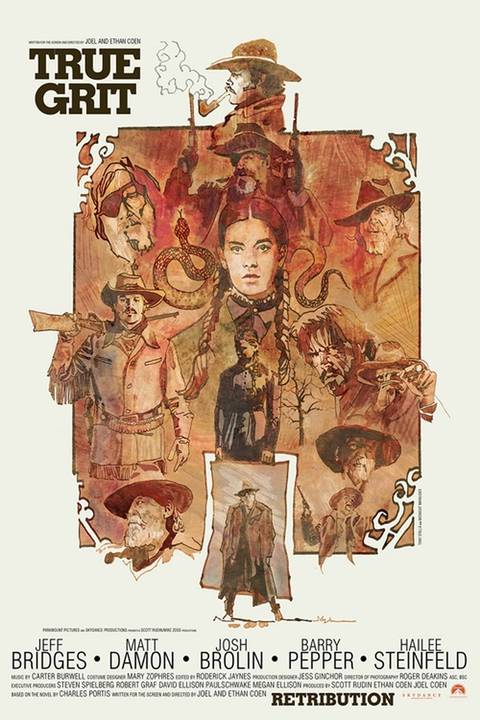
Charles Portis' great American novel True Grit was first adapted in 1969 into a film starring John Wayne. That film changed the perspective of the novel, reduced the level of violence and, overall, diluted the prose and power of Portis's text. It was a John Wayne film in every respect, and it dutifully won the Duke an Academy Award. In 2010, the Coen Brothers decided to make their own adaptation of True Grit with the intent of being far more faithful to the Portis novel. They gave the focus of the narrative back to the young protagonist, transported over much of Portis' beautiful prose, while also adding a dash of dark humor.
In the Coens ' film, Mattie Ross (Hailee Steinfeld) is a fourteen-year-old girl out for revenge against the man who killed her father. To accomplish it, she hires U.S. Marshal Rooster Cogburn (Jeff Bridges), a drunken and violent man of undeniable grit. Their journey together is an immaculately crafted odyssey that captures the eccentricities of Portis' novel while still feeling undeniably like a Coen Brothers movie. It's as perfect a match between author and filmmakers as their previous Western masterpiece, No Country for Old Men.
True Grit
- Release Date
- December 22, 2010
- Runtime
- 110 minutes
- Director
- Joel Coen, Ethan Coen
- Writers
- Joel Coen, Ethan Coen, Charles Portis
KioskNews shows a cleaned-up reading view extracted from the publisher’s page — the original always lives on their site, not ours.