Years in distant lands, back home on firmer ground
At 26, Lim Kai Ning was told by a senior colleague in South Korea that she was the best human resources business partner he had worked with.
Yet, he dismissed another colleague of her age as “too young”, unaware of Kai Ning’s age.
The contradiction showed her how easily assumptions could limit someone’s potential. Watching a Vietnamese colleague speak her mind in Seoul’s hierarchical workplace encouraged Kai Ning to do the same, revealing a more confident side of herself.
For Anni Cai, studying at Harvard and working at investment firms Blackstone and General Catalyst in the United States gave her exposure to different perspectives, global ambitions and a greater appetite for risk.
Lye Junxu absorbed Silicon Valley’s entrepreneurial energy, while Tor Cheng Yao spent years mastering traditional shoemaking in Japan.
Their experience abroad broadened their sense of what was possible but they opted to return – encouraged by the chance to be near their family, Singapore’s work culture, and opportunities, as well as the certainty here, compared with relatively more fluid situations elsewhere.
Anni and Cheng Yao wanted to be near family; Kai Ning had always viewed her Korean posting as temporary; Junxu wanted to raise his children here.
Coming home involved trade-offs but confidence and hope in the opportunities here, and faith in being able to work with people and professionals as well as policies and systems in place, made them optimistic.
Junxu acknowledges that Silicon Valley offers richer opportunities, particularly in artificial intelligence (AI), while Cheng Yao found few suppliers or trained workers to support his craft in Singapore.
Yet, like the other two, they found the chance to start something of their own, let their passions flourish to improve people’s lives and contribute, in their own way, to changing times in the Republic’s evolving horizons – not an easy task, given the country’s exposure to technological and geopolitical upheaval.
The country’s safety, efficient institutions, reliable infrastructure and personal networks can provide the foundation to take chances, the four agree.
Making experience count
Seoul changed Kai Ning’s thinking about money and success, but also about the assumptions people make about age and ability.
Having found the confidence to speak up and challenge her own limitations, she returned to Singapore wanting to help mid-career professionals struggling to find their next chapter.
She believes growing older should not mean fewer opportunities to contribute.
In 2023, she co-founded The Courage Chapter in Singapore.
Today, its community has about 1,500 professionals, and it has placed more than 100 PMETs aged 40 and above in jobs and projects.
Initially, Kai Ning thought convincing employers to hire experienced workers would be enough, but she soon realised that job seekers also needed to demonstrate their capabilities, while companies had to look beyond conventional job descriptions.
The Courage Chapter works on both fronts, helping employers create flexible, skills-based roles rather than judging candidates by age or conventional career paths.
Through Prudential’s PRUPrime initiative, professionals are recruited for their skills rather than a specific position, receiving a retainer between deployments while the insurer draws on their expertise as needed.
More than 20 members had secured retainer projects by May 2026.
Another approach involves three-month trial assignments in social services.
Corporate professionals can apply existing skills, such as business development or finance, to charities, while employers assess their suitability before considering permanent positions.
Tan Mei Yee, in her 40s, joined the PRUPrime pilot initiative more than a year after leaving the pharmaceutical industry.
She says her experience taught her that a career break and ageism do not erase her capability and experience.
“I didn’t doubt my ability to contribute. What I needed was an opportunity to prove it. The programme gave me that, including in an industry and function different from my past experience. It showed that transferable skills and experience still carry real value,” Tan says.
Beyond placements, Kai Ning runs reinvention workshops for professionals who have spent decades building financial security for their families, helping them consider what might bring fulfilment in their next chapter.
She also encourages them to become “builders”: experimenting with AI tools, creating portfolios and cultivating networks rather than waiting for vacancies.
Learning to think beyond the limits
Junxu knew he was leaving behind greater career and financial opportunities when he returned from Silicon Valley.
But he and his wife wanted to start a family in Singapore, where his parents lived and she had a job.
“I loved being in the US, but it’s not home for me,” says the 39-year-old, now a father of four.
Singapore’s safety, access to healthcare and family support gave him confidence to take greater risks as an entrepreneur.
“I want to know that I have a very firm foundation for my family,” he says.
His appetite for taking risks was shaped by his overseas years.
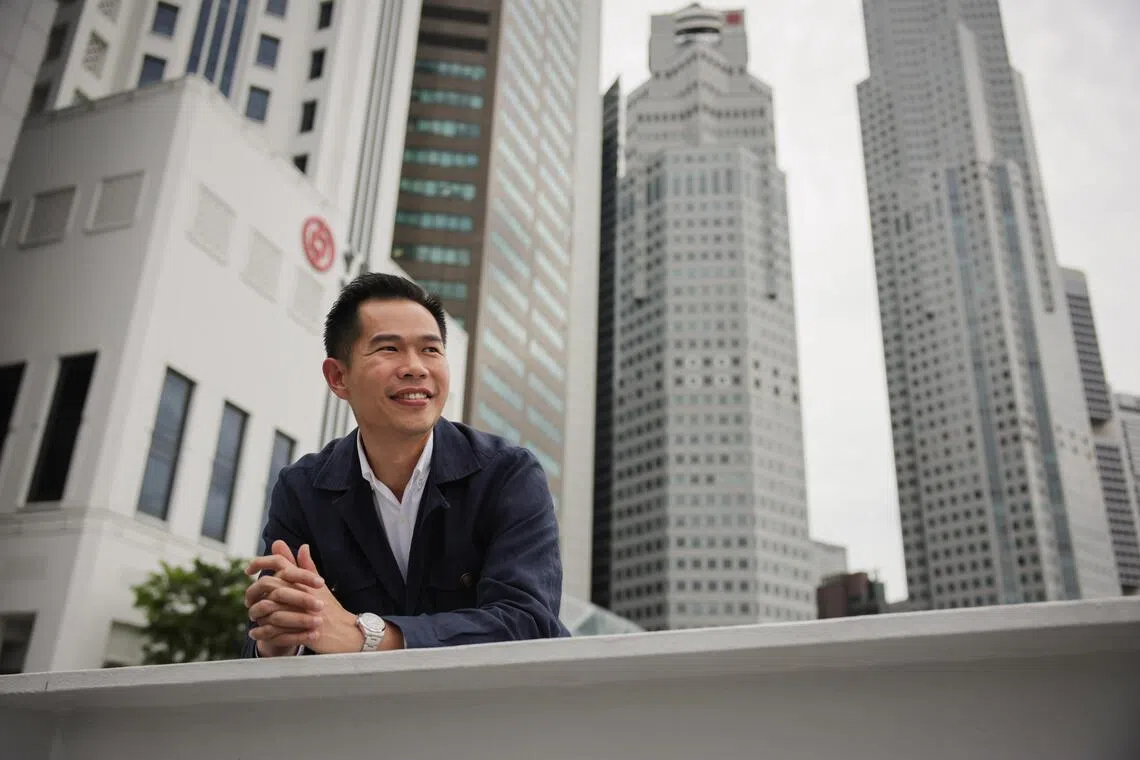
Singapore’s safety gave Lye Junxu confidence to take greater risks as an entrepreneur.
PHOTO: ST FILE
At Stanford, a student so passionate about spoken poetry would perform it around campus, while others pursued interests without worrying where it would lead them, challenging his practical outlook.
That entrepreneurial spirit stayed with him through stints at Dropbox and Lyft, and later at Singapore investment platform Endowus, before he founded Acme Technology, which helps businesses connect their financial systems to banks and automate payments.
He believes Singapore has become a more promising place for home-grown entrepreneurs and start-ups.
Its deep financial sector expertise, reputation as a trusted business hub and access to regional talent offer opportunities to compete internationally, especially when AI makes developing new products easier.
Acme has a staff of about 10 people and hires regional talent, including engineers in Vietnam and operations staff in Indonesia, whose capabilities he believes are underestimated.
Beyond building his business, Junxu wants to create high-quality tech jobs and a company culture that rivals the best overseas firms.
“I want to create jobs that people are excited to come to work every day,” he says.
Keeping a craft alive
Cheng Yao’s journey from economics student in London to bespoke shoemaker in Japan was hardly conventional.
Returning in 2025, the 35-year-old established a Singapore workshop for Fumu, the footwear label specialising in repairable handcrafted shoes.
He believes there is room for the niche business here as Japanese shoemakers visiting Singapore already have a following.
Other advantages of being home are more immediate.
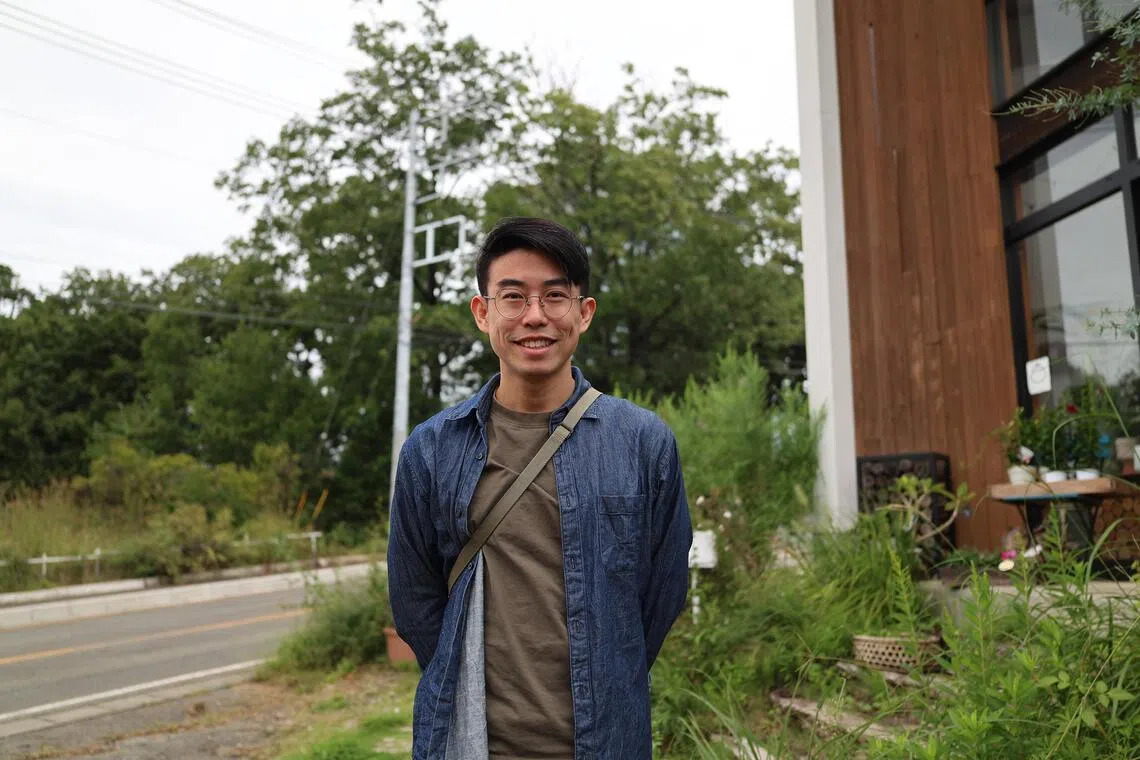
Entrepreneur Tor Cheng Yao’s friends supported him as he tried to build his shoemaking business here.
PHOTO: COURTESY OF TOR CHENG YAO
For instance, while being in quarantine in a Singapore hotel in 2020, he registered his company and set up a bank account within two weeks – a process far harder in Japan. Here, his network of friends and fellow entrepreneurs also provides support.
“Things really do work here,” he says.
Building a local shoemaking industry is harder, though. There are limited suppliers and trained craftsmen so Cheng Yao imports materials and works alone.
That has not stopped him from starting to give lessons and he hopes to offer more hands-on experiences.
Students of beadwork teacher Angeline Kong have approached him about turning their intricately beaded designs into finished slippers.
And Cheng Yao is looking to learn from veteran shoemaker Soong Kwek Choong, who currently makes the slippers, and potentially help preserve the traditional craft.
Building new niches in the AI space
Anni returned during the Covid-19 pandemic without a fixed 10-year plan but saw Singapore’s stability, openness and ease of doing business as strengths for companies with global ambitions.
She now runs Zima Labs, which builds what she calls a “company brain”, or AI systems that put knowledge scattered across an organisation to work.
With the National University of Singapore, Zima developed Nova, a research-commercialisation platform that can assess patents, identify potential licensees and suggest partnerships in minutes, rather than through weeks of manual research.
“My wider aim is to make AI adoption accessible and low-risk, so its benefits reach traditional industries and smaller organisations, not just the tech giants,” Anni says.
To lower barriers, Zima is developing lightweight, plug-and-play data adapters that allow organisations to experiment with AI using historical data without changing their existing systems.
Anni, who is in her 30s, and her co-founder are also preparing practical guides to help organisations get started.
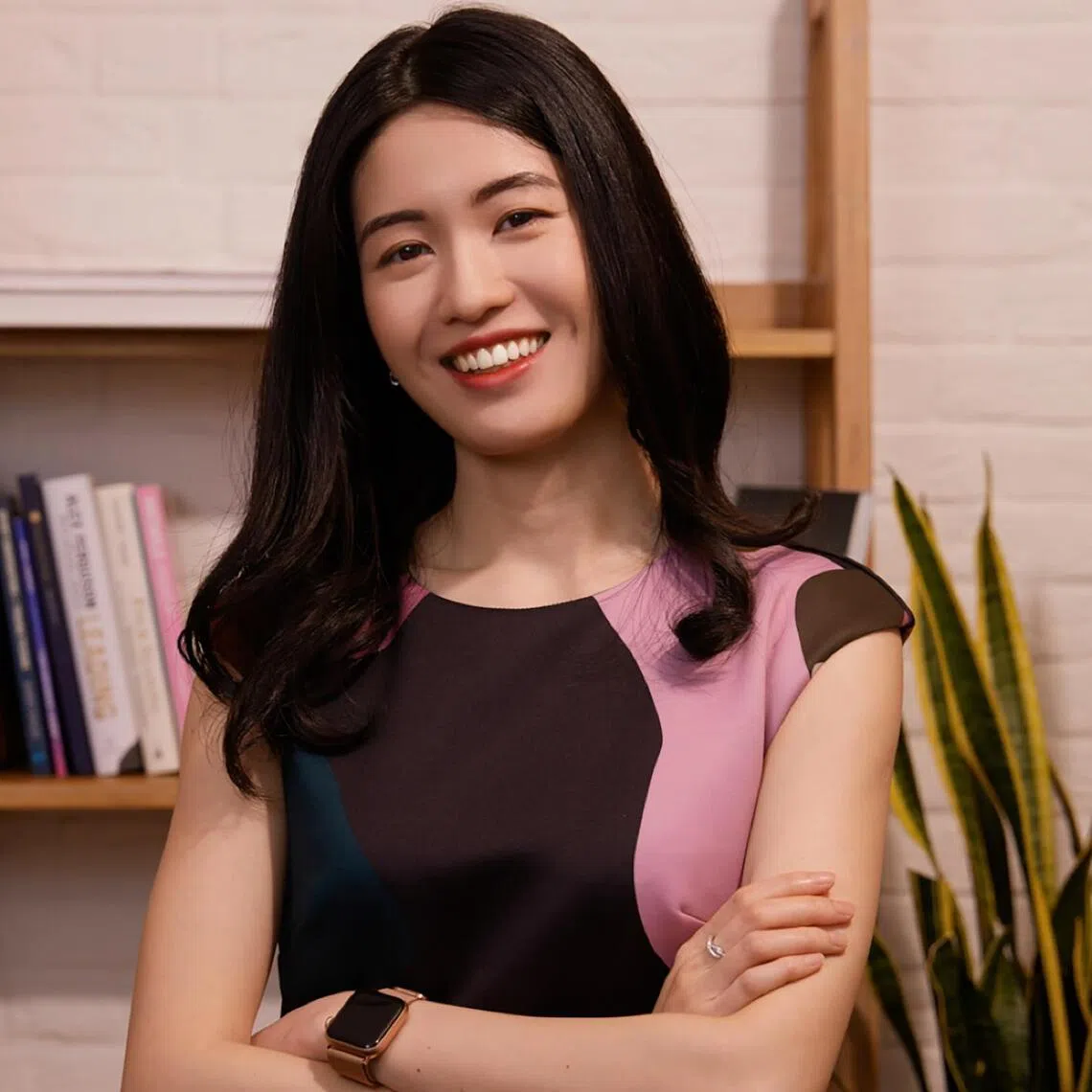
Anni Cai now runs Zima Labs, which builds what she calls a “company brain”, or AI systems that put knowledge scattered across an organisation to work.
PHOTO: COURTESY OF ANNI CAI
While her co-founder leads the technical infrastructure, Anni matches business problems with suitable AI solutions. “My own strength is translation,” she says.
This strength is put to good use as she advises entrepreneurs looking to transform traditional industries and connects Singaporean founders with her overseas venture capital network.
Anni believes Singapore’s opportunities lie in applying AI to practical problems, drawing on its strong digital infrastructure and links with businesses in East and West to reach international markets.
Beyond AI, she sees potential in sustainability and healthy longevity, where Singapore’s experience in water, urban development and ageing could generate solutions for global markets.
But this requires attracting the right kinds of jobs, not merely more jobs.
More product, engineering and design roles, she argues, would help develop future founders.
“Singapore’s stability is the ideal foundation for taking risks,” she says, adding that she hopes entrepreneurship becomes a mainstream career choice as AI reshapes conventional career paths.
The four are now pursuing possibilities that may be small beginnings but they point to something larger – a Singapore where success can take different forms when different faculties are applied, where experience remains cherished at every age, and ideas have room to grow.
As Singapore moves ahead, its sharpest edge will not be the foundations which it has laid but what its people dare to build.

Elevated insights from seasoned perspectives. Crafted by journalists. Powered by Purpose: The Straits Times Signature Series is a new editorial project helmed by experienced journalists to shine a light on people, themes and ideas that rarely get the attention they deserve in everyday news cycles.
This article is part of a special collaboration between The Straits Times and Nexus – the lead agency that drives Singapore’s national education and Total Defence efforts – to spotlight national issues.
The writer was a journalist at The Straits Times’ business desk.
KioskNews shows a cleaned-up reading view extracted from the publisher’s page — the original always lives on their site, not ours.