China’s carmakers overtake Japanese rivals in 6 markets this year amid high EV demand
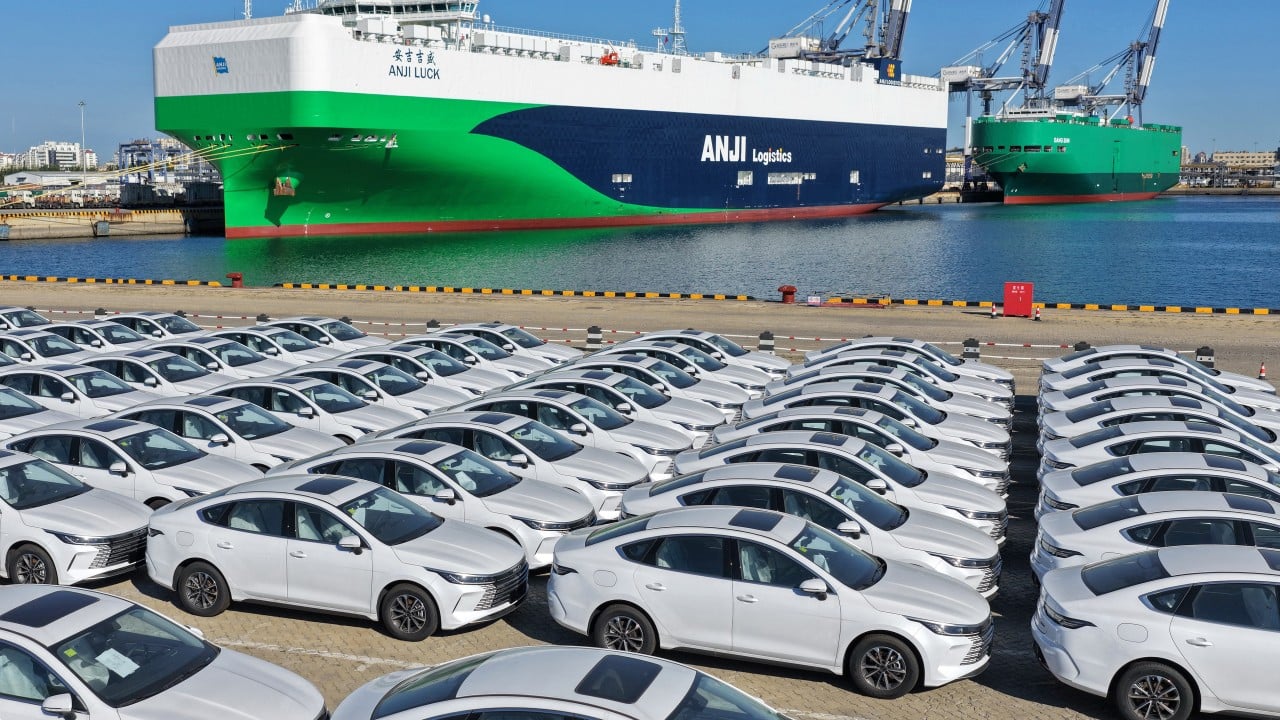
Chinese carmakers now hold a larger share of new-car sales than their Japanese rivals in 39 markets, amid surging electric vehicle (EV) exports as the Middle East conflict drives up global energy prices and reshapes vehicle demand.
Chinese brands overtook Japanese competitors in 14 new markets between January and September this year, according to data from American automotive data firm Mobility Global, as cited by Japanese news outlet The Nikkei.
Those markets comprised eight European nations including Germany and Italy, alongside Brazil, South Korea, the United Arab Emirates, Iraq, Kuwait and Tunisia. Japanese carmakers held a larger share in 54 markets.
“Soaring oil prices have made EVs more attractive to consumers, while renewed concerns about energy security are pushing governments to accelerate electrification,” said Xu Tianchen, an economist at the Economist Intelligence Unit.
“Chinese brands benefit in particular because they are normally cheaper, so they are more attractive to consumers who are increasingly price sensitive under the oil shock.”
While Japanese brands were still perceived as more reliable and enjoyed stronger customer loyalty in some countries, Chinese brands were increasingly challenging Japan’s dominance with their competitive advantage in manufacturing costs, rapid product development and battery technology, Xu said.
In Europe, Chinese EV giant BYD’s share of new-car registrations in the first nine months of 2026 more than doubled from a year earlier to 2.7 per cent, overtaking Japanese rivals Nissan, Suzuki and Mazda, according to the European Automobile Manufacturers’ Association (Acea).
Geely Group maintains the biggest presence among Chinese carmakers on the continent, with its share of new-car registrations reaching 3.3 per cent of the total in the same period.
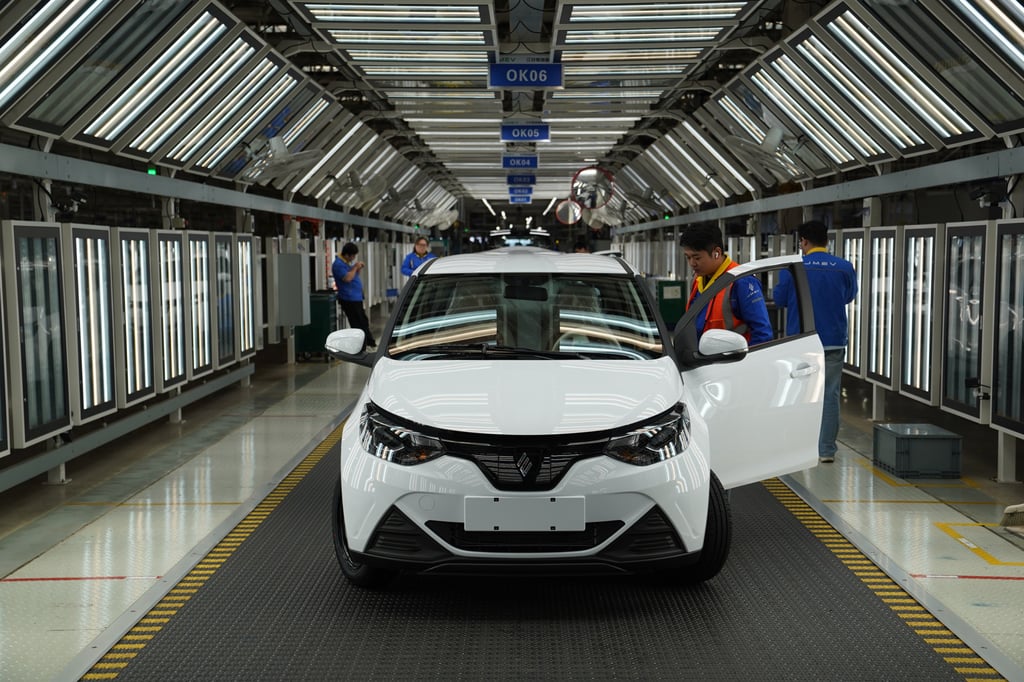
Meanwhile, Japan’s Toyota Group saw its share of new-car registrations fall 0.4 percentage points from a year earlier to 6.7 per cent, Acea data showed.
Overseas markets have become a vital growth avenue for Chinese carmakers as they contend with sluggish consumer demand and intense price competition at home.
Domestic retail car sales in October fell 21.4 per cent in value terms from a year earlier, according to data from the National Bureau of Statistics. By contrast, total vehicle exports over the same period surged, driven by soaring EV demand.
The rapid expansion of Chinese carmakers, however, has also drawn pushback from some trading partners.
China and the European Union agreed last month to cap imports of hybrid cars – to which Chinese carmakers have increasingly pivoted since Brussels raised tariffs on pure EVs from the country – into the bloc for four years. The limit starts at 350,000 units a year and will rise 6 per cent annually from the second year.
SCMP Plus is a new premium news platform that gives you an
all-inclusive edge to stay ahead on China news.
To access our exclusive content you’ll need to subscribe.
Already a subscriber?
LOG IN
Chinese exports of hybrid passenger cars to the EU last month rose 159.3 per cent year on year to over 86,500 units, according to Chinese customs data, as manufacturers rushed to front-load shipments before the quota takes effect on December 1.
Alicia Garcia-Herrero, chief economist for the Asia-Pacific region at French investment bank Natixis, said underlying demand and price competitiveness would continue supporting sales growth for Chinese hybrids in the European market even after the cap was in place.
China’s total exports of hybrid cars in October rose 86.9 per cent year on year to 309,900 units, while shipments of pure electric passenger cars rose 77.6 per cent from a year earlier to 302,900, led by shipments to the EU, Australia and Brazil.
KioskNews shows a cleaned-up reading view extracted from the publisher’s page — the original always lives on their site, not ours.