China is building power plant that runs on molten salt and CO2
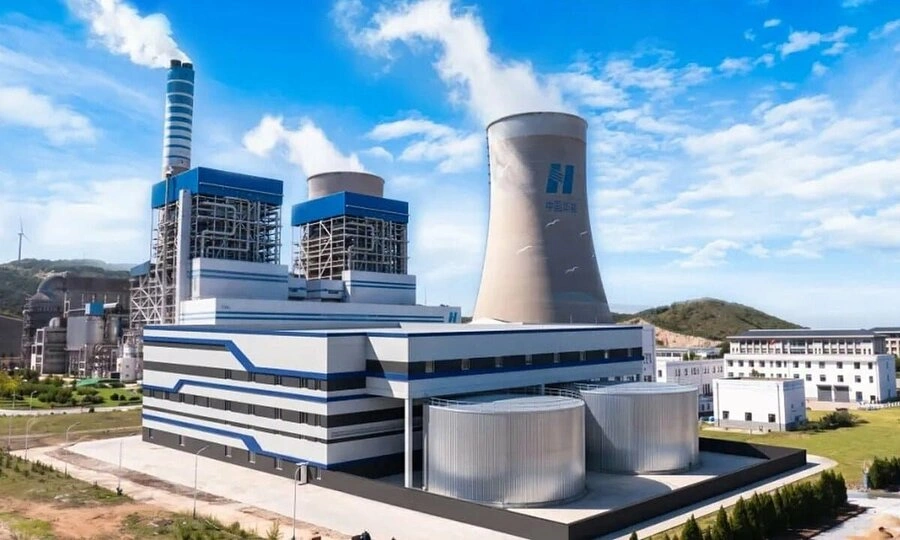
China Huaneng, one of the five largest state-owned electricity generation enterprises in China, is building the country's first plant that stores surplus coal power as heat in molten salt and uses it to drive a turbine with carbon dioxide instead of steam.
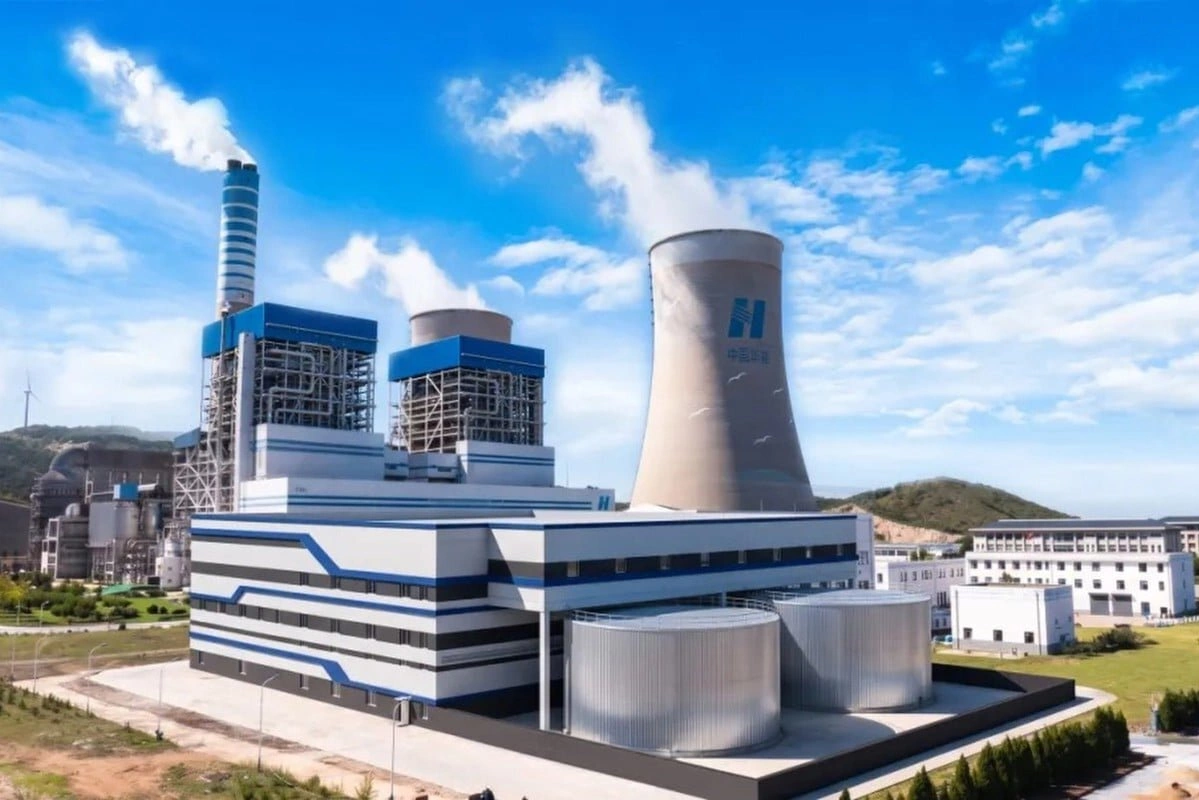
The Ruitan demonstration project, at the Bajiao power plant in Yantai, Shandong Province, broke ground on Sept. 16 and is scheduled to begin operating in 2027, according to Xinhua.
Its first phase pairs a 50MW supercritical CO2 generating unit with a 100MW/400MWh molten salt storage system, China News Service reported.
Once running, the unit will be the world's largest commercial demonstration of the technology, according to Shuimu, the news site of the Yantai Daily Media Group.
When demand is low, surplus electricity from the plant's coal-fired combined heat and power units will heat molten salt to 560 degrees Celsius, deputy plant director and project manager Wang Lin told Shuimu.
At peak hours, the hot salt will heat carbon dioxide to drive the turbine and heat water into steam for outside supply, he said.
The arrangement lets the units cut the power they send to the grid while still supplying heat.
 |
|
The Ruitan demonstration project at China Huaneng’s Bajiao power station in Yantai City. Photo courtesy of China Huaneng |
Carbon dioxide instead of steam
Supercritical systems replace the steam that spins turbines in conventional plants with carbon dioxide held above 31 degrees Celsius and about 73 atmospheres of pressure, CNNC chief scientist Huang Yanping told Xinhua in December 2025.
In that state, carbon dioxide is dense like a liquid but flows like a gas, he said.
Such units are more compact than steam units, use almost no water and run 3 to 5 percentage points more efficiently at the same capacity, Ke Bo, Party secretary and executive director of the Bajiao plant, told Shuimu.
They can also ramp between zero and full load at four times the adjustment rate of conventional coal units.
China's first commercial supercritical CO2 plant, CNNC's Chaotan One, began commercial operation on Dec. 20, 2025, at a steel plant in Liupanshui, Guizhou Province, where it generates electricity from waste heat, Xinhua reported.
CNNC launched its own project combining molten salt storage with supercritical CO2 generation in 2024 and plans to begin demonstration operations in 2028, according to Xinhua.
The EU-funded SOLARSCO2OL project set out to demonstrate a 2MW supercritical CO2 cycle driven by molten salt, according to researchers on the project.
Molten salt, which stores energy as heat rather than chemically as batteries do, is cheaper and easier to scale for large projects, according to RPow, a Seville-based engineering firm that builds molten salt storage systems.
Batteries, however, are more versatile and better suited to mobile uses, the company says.
KioskNews shows a cleaned-up reading view extracted from the publisher’s page — the original always lives on their site, not ours.