Gov't prioritizes emergency waste areas for WTE plants: Minister
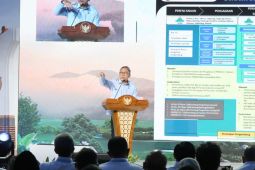
Jakarta (ANTARA) - Coordinating Minister for Food Affairs Zulkifli Hasan said the government is prioritizing areas facing waste emergencies in developing waste management facilities.
One of the priority areas is Greater Bogor, where the government is constructing a Waste-to-Energy (WTE) power plant and a pyrolysis facility at the Galuga Final Waste Processing Site (TPAS) in Bogor District, West Java.
“The Galuga site is among those in an emergency condition. That is why we are prioritizing areas that are in an emergency state and have a negative impact on the public,” Hasan said in an official statement received here on Friday.
He made the remarks at the inauguration of construction of the Greater Bogor 1 Waste-to-Energy (WTE) power plant at the Galuga site in Bogor District, West Java.
“A problem of this scale cannot be solved by Bogor alone. The central government must step in, and we need to work on this together,” he said.
Waste management at Galuga will be carried out through two schemes. First, the WTE facility will convert newly arriving waste into electricity each day. Second, pyrolysis technology will be used to process the existing waste stockpile.
“This is the first of its kind in Indonesia. We turn daily waste into electricity through the WTE. However, we do not stop there. Old waste piled up over the years must also be resolved through pyrolysis,” the minister said.
The Greater Bogor WTE facility is targeted to process around 1,500 tons of new waste per day generated in Bogor District and Bogor City.
The waste will be converted into electricity with a capacity of around 20 to 30 megawatts (MW), with state-owned electricity company PLN serving as the offtaker.
Meanwhile, pyrolysis technology is intended to process around 700 to 1,000 tons of old waste stockpile per day from the Galuga site, gradually reducing the accumulated waste burden.
According to the ministry, Bogor District generates around 3,000 tons of waste per day, while Bogor City generates around 700 to 1,000 tons per day.
Related news: President Prabowo urges regions to join Indonesia ASRI green movement
Related news: Environment Ministry prepares waste roadmap, updates producer rules
Translator: Aria, Kenzu
Editor: Primayanti
Copyright © ANTARA 2026
KioskNews shows a cleaned-up reading view extracted from the publisher’s page — the original always lives on their site, not ours.