8 Movies To Watch if You Love Ken Russell's 'The Devils'

Diego Pineda has been a devout storyteller his whole life. He has self-published a fantasy novel and a book of short stories, and is actively working on publishing his second novel.
A lifelong fan of watching movies and talking about them endlessly, he writes reviews and analyses on his Instagram page dedicated to cinema, and occasionally on his blog. His favorite filmmakers are Andrei Tarkovsky and Charlie Chaplin. He loves modern Mexican cinema and thinks it's tragically underappreciated.
Other interests of Diego's include reading, gaming, roller coasters, writing reviews on his Letterboxd account (username: DPP_reviews), and going down rabbit holes of whatever topic he's interested in at any given point.
Sign in to your Collider account
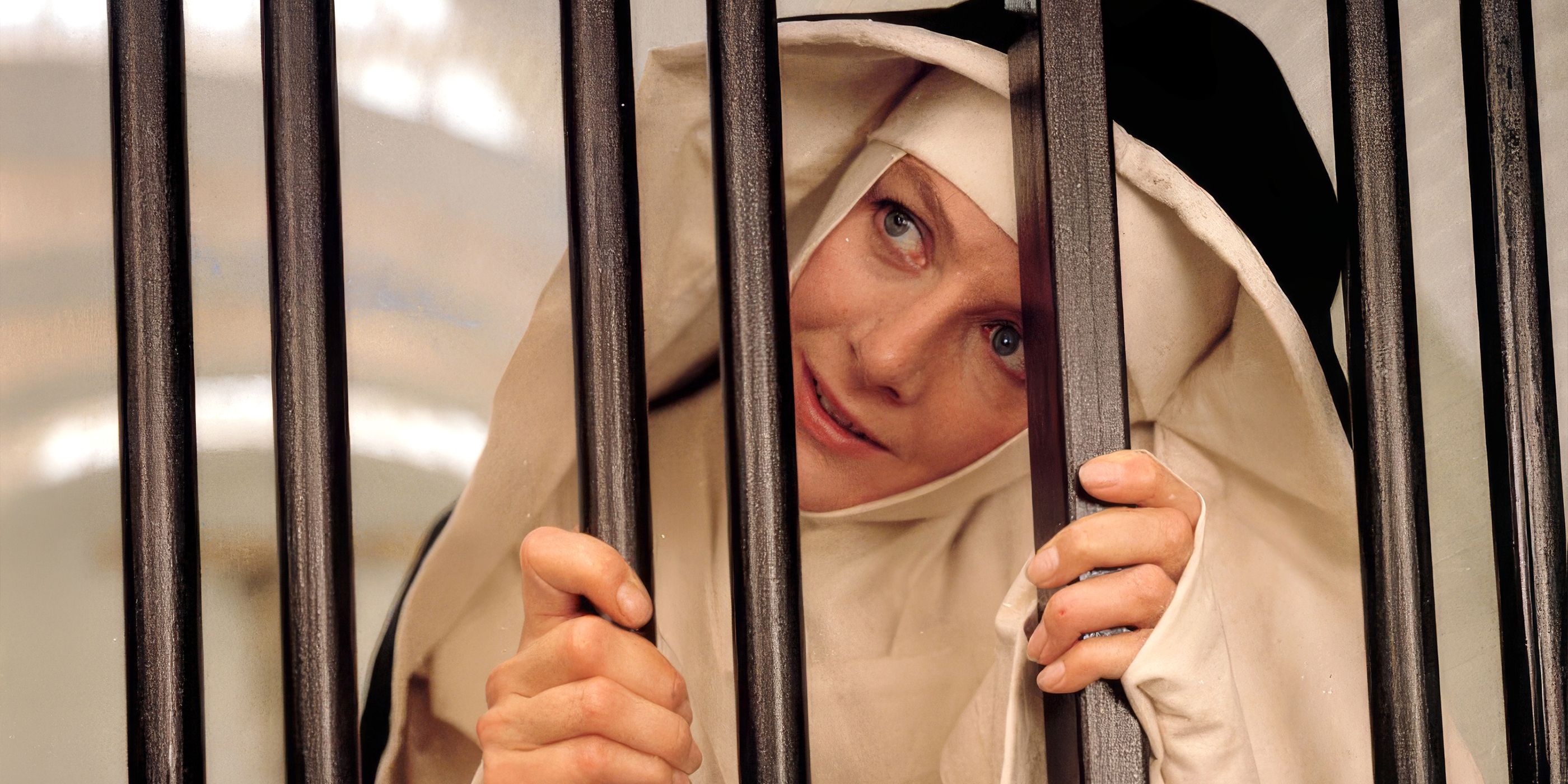
In 17th-century France, Loudun became the site of the Loudun possessions, a gruesome case of alleged mass demonic possession that is now understood as a landmark study in mass hysteria. The "possessions" were blamed on Urbain Grandier, a charismatic but womanizing local priest who was then executed for political purposes. This event became the inspiration for Aldous Huxley's 1952 non-fiction book The Devils of Loudun, and then John Whiting's 1960 stage play The Devils. In 1971, Ken Russell took both of these works as inspiration and made The Devils.
One of the most notoriously heavily-censored horror movies in film history, The Devils was massively controversial upon release for its graphic sexual imagery and blasphemous content, but has since come to be recognized as one of the greatest films of its time. With the recent release of the 4K restoration of the film's 114-minute director's cut, now's about as perfect a time as any to watch the eight most noteworthy films that feel remarkably similar to The Devils for one reason or another.
8 'Viridiana' (1961)

As far as deliberately and calculatedly blasphemous films go, it doesn't get much more iconic than Viridiana, made by one of the most notoriously anti-clerical auteurs in film history, Luis Buñuel. Arguably the greatest of Buñuel's Mexican movies, Viridiana is one of the greatest movie classics of 1961, following a devout novice nun who abandons her vows to shelter local vagrants after the suicide of her fetishistic uncle.
Its surrealistic imagery is about as brilliant as you'd expect from any Buñuel film.
A must-see for all those whose favorite part of The Devils is the scathing study of The Profane as a philosophical concept, Viridiana is an unforgiving critique of religious dogma and naive idealism. Its surrealistic imagery is about as brilliant as you'd expect from any Buñuel film, and Silvia Pinal's lead performance is a tour de force. It's definitely more overtly sacrilegious than The Devils, but it's every bit as much of a hyper-influential must-see.
7 'Häxan' (1922)

Before The Wizard of Oz came around to revolutionize fantasy cinema forever, there were many fantasy films that are also still remembered among the greatest of all time, including the horror essay film Häxan. This silent Swedish masterpiece is a semi-documentary blends scholarly literature and phantasmagoric horror, charting the history of witchcraft and Satanism from the Middle Ages to the 20th century.
It's one of the clearest and strongest cinematic ancestors to Ken Russell's magnum opus, and one of the most important documentaries in the history of cinema. Insightful without ever feeling didactic and atmospheric without ever sacrificing its scholarly dimensions, Häxan laid the foundations for horror cinema to explore themes of religious hysteria, state control through religion, and institutional persecution. Both through its visuals and its mere premise, it was far ahead of its time.
6 'The Wicker Man' (1973)

Robin Hardy's The Wicker Man is one of the greatest and most influential British horror movies of the 20th century, as well as one of the most important folk horror films of all time. It's based on David Pinner's horror novel Ritual, and it follows a devout Christian cop who travels to a remote Scottish island to investigate a young girl's disappearance, only to discover that the local pagan community has lured him there as a human sacrifice for a failing harvest.
Much like The Devils, The Wicker Man explores how sexual repression can be weaponized and exploited by oppressive forces; and much like The Devils, it forces the sacred and the profane to clash visually, narratively, and thematically throughout. It's one of those movies unlike anything you've ever seen before, a genre-defining masterpiece that shows how dogmatic self-righteousness can be little more than a self-destructive trap.
Collider Exclusive · 8 Questions · 2 Minutes What Is Your Biggest Horror Nightmare? Elm Street · Chucky · Scream · The Conjuring
Four horror franchises. Four completely different ways of scaring you. One waits until you fall asleep. One makes sure nobody believes you. One is already in your group of friends. And one is in the house with your family. Answer eight quick questions about how you actually watch horror, and find out which nightmare was built for you.
😴Elm Street(Freddy Krueger)
🧸Chucky(Child's Play)
📞Scream(Ghostface)
🕯️The Conjuring(The Warren Files)
01
Which horror scene makes you cover your eyes? Four classic images. One of them is worse than the others for you.
02
You are home alone and you hear a noise. First thought? Everybody has one. It arrives before you have decided anything.
03
Which horror movie rule would you break first? Everybody thinks they would survive. Almost nobody actually does.
04
Something genuinely frightening happens. What do you do? Not in a film. In your actual living room, tonight.
05
How do you actually watch a horror film? Be honest about this one. Nobody is checking.
06
Somebody offers you serious money. Which do you still refuse? The amount does not matter. There is one on this list you are not doing.
07
Which feeling stays with you a week after the film? Good horror does not stop when the credits do.
08
Something wakes you at 3am. What is the worst possibility? Eight questions in, this is the one that decides your nightmare.
The Lights Just Went Out Your Nightmare Is…
Four franchises, four completely different ways of getting underneath your skin. This is the one built out of your particular fear, why it works so well on you, and what it would leave behind.
Elm Street
Your nightmare does not wait outside the door. It waits for you to close your eyes, which you are going to have to do eventually, because nobody has ever won that particular argument.
- Freddy is horror's cruellest idea: a threat that lives in the one place you cannot guard, cannot lock, and cannot avoid forever.
- You are the one who is fine during the film and wide awake at two in the morning. Your own head is where this does its damage.
- These films understood exhaustion as a horror engine. The kids on Elm Street do not lose because they are weak. They lose because they are tired.
- You can lock every door in the house. You still have to sleep.
Chucky
Your nightmare is not really the doll. It is the face of the person you tell, and the way they decide, very kindly, that you have imagined all of it.
- Chucky works precisely because he is absurd. That is the trap: the more accurately you describe him, the less anybody is going to believe you.
- You are the one shouting at the screen because the characters are not listening. You know that feeling from real life too.
- The franchise is at its best when the adults in the room are the real obstacle, and you have met those adults.
- By the time somebody finally believes you, you will have handled most of it on your own.
Scream
Your nightmare has your number, knows your name, and has almost certainly been inside your house before. The worst part is that you already know them.
- Scream is the only one of these where the killer takes the mask off and turns out to be somebody who was at the party.
- You are the person who calls the twist out loud before it lands. You watch people the same way you watch films.
- The franchise made the rules of horror part of the plot, which means the survivors are the ones paying attention. You would be paying attention.
- Everybody is a suspect, including the person who just offered to walk you home.
The Conjuring
Your nightmare is not really about you. It is about the people asleep down the hall, and the feeling that whatever is here is not interested in leaving.
- The Conjuring films are domestic horror. The house, the family, the perfectly ordinary room that quietly stops feeling ordinary.
- Your instinct is to get everybody into one room. Your fear is protective rather than personal, which is rarer than it sounds.
- This is the one franchise where belief is the weapon. The people who come through it are the ones who are not alone and refuse to be.
- Whatever is here did not come for you. It came for the household, and you are the one standing in the hallway.
5 'Altered States' (1980)

What better recommendation for people who loved Ken Russell's The Devils than the rest of Russell's impeccable filmography? As it happens, after making one of the best horror movies of the 1970s, he made one of the best hard sci-fi movies of the 1980s: Altered States, based on Paddy Chayefsky's 1978 novel. In it, a Harvard psychophysiologist uses sensory deprivation tanks and powerful tribal hallucinogens to explore alternate states of consciousness, unwittingly triggering a dangerous devolution into a primitive ape-man.
Brilliantly experimental and surrealistic from beginning to end, Altered States is anchored by unparalleled visuals and sound design, creating a true aesthetic supernova further bolstered by John Corigliano's avant-garde score. Like all auteurs worth their salt, Russell had a collection of themes that were most interesting to him over the course of his career, and Altered States thus explores many ideas similar to those found in The Devils. Instead of 17th-century religion and politics, this film explores 20th-century scientific hubris, exploring ideas of repressed biological impulses through intentionally grotesque images.
4 'The Holy Mountain' (1973)
Chilean-French avant-garde auteur Alejandro Jodorowsky is one of the biggest and most influential names in the history of surrealist cinema, and there are many who would point to The Holy Mountain as his magnum opus. After the underground success of the acid Western El Topo, Beatles manager Allen Klein agreed to produce Holy Mountain, and John Lennon and Yoko Ono also contributed financially. The result is one of the most delectably strange and fascinatingly impenetrable Mexican movies of all time, about seven people led up a sacred mountain by a powerful alchemist so they can steal the secret of immortality.
The Holy Mountain is certainly not for those who prefer their fantasy movies straightforward, and it's probably not the most accessible introduction to cinematic surrealism for those unfamiliar; but it's a must-see masterpiece nonetheless, especially for those who love the provocative blasphemy and hyper-stylized colors of The Devils. One of the best international masterpieces of all time, The Holy Mountain is just as fiercely anti-authoritarian as Russell's masterpiece, rejecting institutional corruption and repressive state control through a bunch of deliberately shocking moments.
3 'Women in Love' (1969)

There is perhaps no better Ken Russell film for people to watch after seeing (and loving) The Devils than Women in Love, which is also anchored by a powerhouse performance by Oliver Reed. This is not a horror movie, though it is a period piece, this one a romantic drama following the relationships between two sisters and two men in a mining town in post-World War I England. Based on the 1920 novel of the same title by D. H. Lawrence, the film obtained an impressive four Academy Award nominations, including Glenda Jackson's victory in the Best Actress category.
This was the movie that established Russell as a major force in world cinema, and it was its huge commercial and critical success that gave Warner the confidence to give Russell a blank check to make The Devils. These two films couldn't possibly be more different in terms of tone, with Women in Love being an uncompromisingly dense and philosophically profound adaptation of the source material. However, since Women in Love directly preceded The Devils, you can see many of the blueprints for Russell's next film there: eroticism, theatricality, and characters trapped between society's expectations and their own physical and psychological impulses.
2 'Saló, or the 120 Days of Sodom' (1975)

Directed by Pier Paolo Pasolini and loosely adapted from the 1785 novel The 120 Days of Sodom by the Marquis de Sade, Salò, or the 120 Days of Sodom is perhaps one of the most controversial major films in the history of cinema. Taking the basis of the Marquis de Sade's story from 18th-century France to World War II Italy, it's about four wealthy fascists who kidnap a group of teenagers and subject them to 120 days of systemic mental, physical, and sexual torture inside a secluded villa. For its unapologetic approach to topics that continue to be taboo today, the film has been widely banned and censored across the world throughout history.
It isn't the least bit hard to see why. Much like The Devils, this is one of the heaviest movies of the 20th century, an absolutely unrelenting political allegory of fascism's cold cruelty shot with high-art anti-sensationalism that nonetheless doesn't make the film any easier to stomach. It's a remarkable feat that Pasolini was able to take such an inflammatory premise and manage to treat it with such care that it doesn't feel exploitative at all, a compliment that can also be directed at The Devils.
1 'Mother Joan of the Angels' (1961)

There are only two major feature films directly depicting the Loudun possessions, and the first one came out a decade before The Devils. It is, of course, the Polish horror art film Mother Joan of the Angels, directed by Jerzy Kawalerowicz and based on a novella of the same title by Jarosław Iwaszkiewicz. Winner of the Special Jury Prize at the 1961 Cannes Film Festival, Mother Joan of the Angels is one of those near-perfect horror movies that nobody remembers anymore, but which should be essential viewing for anyone even slightly interested in the story and context of the Loudun possessions.
Most would agree that the film isn't quite as masterful, timeless, or hard-hitting as The Devils, but it's still very much worthy of praise. With some incredibly striking black-and-white cinematography that stands in stark contrast to the vibrancy of Russell's masterpiece, Lucyna Winnicka's transcendental performance as Mother Joan, and a tremendous level of intellectual and existential depth, Mother Joan of the Angels is to the '60s what The Devils is to the '70s. Both are among the greatest "demonic possession" movies in the history of horror cinema.

The Devils
- Release Date
- July 16, 1971
- Runtime
- 114 Minutes
- Director
- Ken Russell
- Writers
- Ken Russell, Aldous Huxley
-

Sister Jeanne des Anges
-

Oliver Reed
Father Urbain Grandier
-
Dudley Sutton
Baron de Laubardemont
-
Max Adrian
Ibert
KioskNews shows a cleaned-up reading view extracted from the publisher’s page — the original always lives on their site, not ours.