Kit Harington Addresses the Devastating ‘A Tale of Two Cities’ Finale and Its “Horrific” Impact
Editor's note: The following contains major spoilers for A Tale of Two Cities.
Summary
- It's the intimate love triangle of 'A Tale of Two Cities,' and not the grand spectacle of the French Revolution that makes the story resonate today.
- Lucie gives Sydney hope, but his addiction causes him to spiral toward self-destruction.
- Sydney knowingly swaps his life for Charles to save Lucie's family.
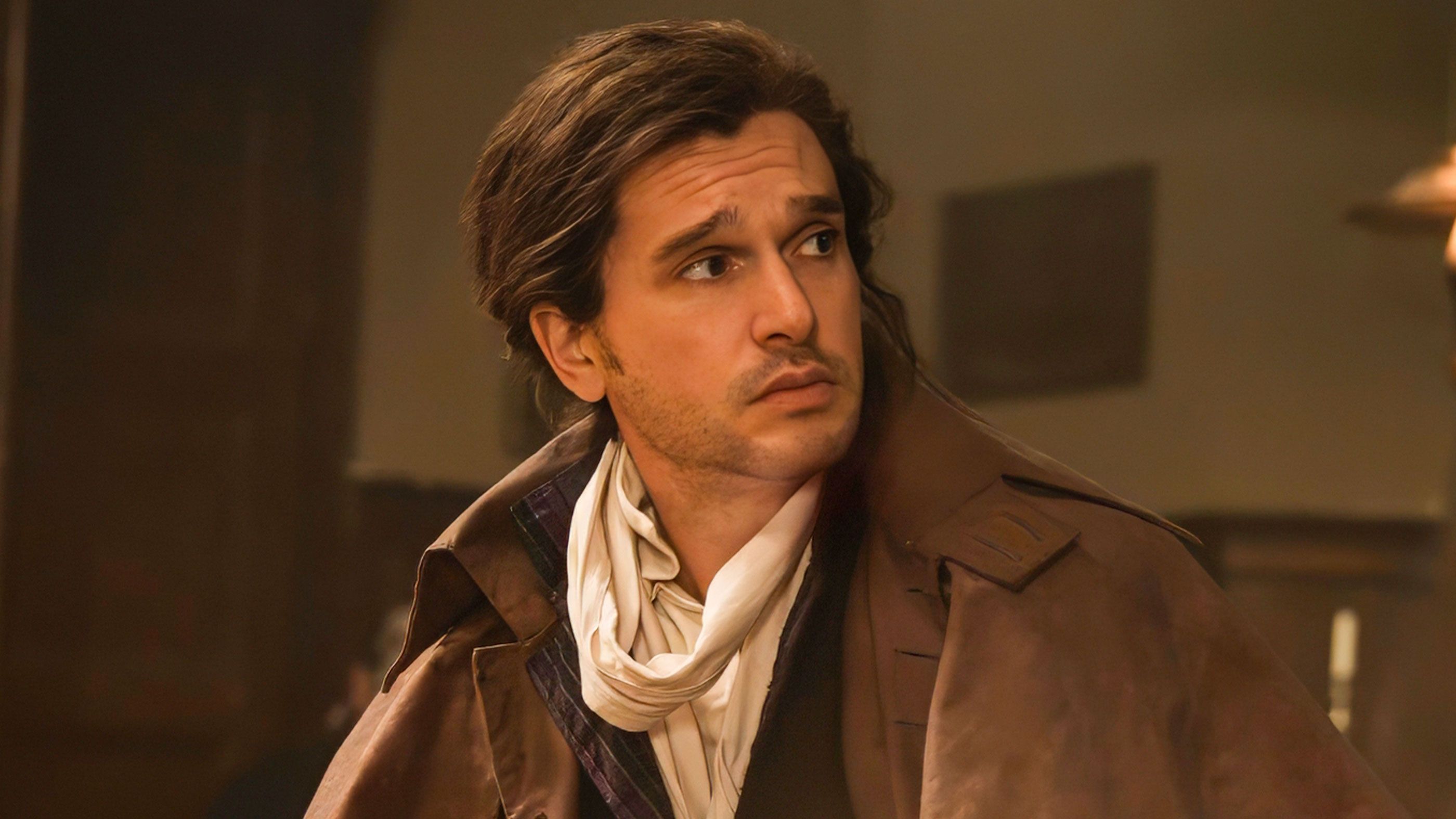
In the finale of the MGM+ series A Tale of Two Cities, entitled “Resurrection Man,” Sydney Carton (Kit Harington) made the heartbreaking decision to sacrifice himself so that the one he loved could have the family that would have otherwise been impossible. After Charles Darnay (François Civil) is arrested in Paris at the height of the Revolution and his trial uncovers shocking revelations that tear him away from Lucie Manette (Mirren Mack) and sentences him to death, Sydney realizes that he’s going to have to take matters into his own hands to stop it.
After watching the season of this classic adaptation, Collider got the opportunity to chat with Harington about the key to making it relatable now, fleshing out the characters, exploring the love story between Sydney and Lucie, Sydney’s heartbreaking self-destruction, his decision to trade places with Charles in the finale, and what it was like to work with a guillotine. He also discussed joining the Harry Potter TV series in Season 2, and how he feels about the final season of Industry.
Focusing on the Love Triangle Was the Key to Adapting ‘A Tale of Two Cities’ for a Modern Audience
"As it happens, the love story is more affordable to do than the French Revolution."
COLLIDER: When you’re telling a story like this, that is set against the backdrop of the French Revolution, is having a love triangle that modern audiences can connect with the key to its success?
KIT HARINGTON: Yeah, very much so. It’s something that we talked a lot about in the development of it, which was that you can do the French Revolution as big as you want, if the love triangle at the heart of this story doesn’t work and people won’t care about it. And as it happens, the love story is more affordable to do, as well, than the French Revolution. Hopefully, we got a bit of both.
There were challenges in the adaptation. I think there’s a reason that this show has not been adapted for a while, which is that the character of Lucie needs to be modernized from the book, and the character of Charles Darnay needs to be fleshed out for you to really believe that she would struggle to choose between these two people. I think Charles Dickens fell in love with Sydney Carton when he was writing it and somewhat forgot some of his other characters. A lot of Dickens fans will hate me for saying that, but I think it’s true. So, we worked a lot on Lucie Manette and on Charles Darnay because it’s all there with Sydney already.
This is such a tortured love triangle, but it feels like all romance was tortured in some way during this time period. I actually love that Lucie was the one to go to Sydney and that she initiated their intimacy. Do you think Sydney would have pursued her if she hadn’t done that? How did you view their dynamic?
HARINGTON: I don’t know whether he would in our version. Certainly, when she walks into his life, he gets this huge shock to the system. I think if she never walked in, he would drink himself to death in 10 years and just go further and further down that rabbit hole and is more and more anarchic. But when she walks in, I think what helped with our adaptation is that he sees someone who is driving forward. A completely unexpected female force walks into his life, and it’s one that he cannot avoid thinking about and that completely trips the matrix for him. But for him to pursue it, she has to keep pursuing him, I think.
That’s a choice that we leaned into. Where he falls down with Lucie in the arc that I found really interesting and the one that I was interested in pursuing was that she changes things for him. He sees hope in the world. But in his addict-y way, he gets confused that she is his fix and that she is going to fix him. Rather than her being her own self and him going along with her in tandem, he needs her in a way which is quite scary for her, and in the end, isn’t going to be the love that she needs.
That really does play out in that moment in Episode 3, when they’re standing outside after dinner and he’s telling her that that he wants to be better for her. It’s lovely to have someone you love say that they’ll give you anything and everything, but it takes something away from that when you put the pressure of being the one to save you on someone else. What was all of that like to shoot and to find the right levels of emotion for?
HARINGTON: It’s heartbreaking because he has self-destructed in the meal they had prior to it. Everything was going well, and then one little error confirms everything in his head that he’s paranoid about and that he thinks is wrong and he self-destructs. He’s mean and horrible at this dinner. And then, he realizes this and he comes back to her and says, “If you just give me another chance, you can be everything for me.” He’s digging himself a deeper hole. That’s his fatal flaw. It’s only when it’s too late that he realizes what he needed to do, and that’s our fourth episode and the final decision he makes.
Sydney Carton Makes the Ultimate Sacrifice in ‘A Tale of Two Cities’ Because He Knows It’s What Needs To Happen
"He's always two steps ahead of you."

How did you feel about that moment when Sydney goes to Charles, set on trading places with him? What does all of that say about Sydney, by that point? Do you feel like he really did become a better man because of Lucie and what she taught him about love?
HARINGTON: Yeah, I think so. When he makes the ultimate sacrifice at the end, it’s clear as day to him, what needs to happen. The thing I find fascinating about Sydney and what was fun to play with in this is that he’s always two steps ahead of you. He’s got this wonderful lawyerly brain. What’s fun about that is that he’s always two steps ahead of the audience as well. He knows what he’s going to do at the end of the trial scene, where Charles gets whisked off and it’s all gone wrong. We don’t know, but he knows there’s only one thing that can be done.
He’s made his decision, and now it’s just about bravery. It’s all because earlier in the episode, he finds out she’s pregnant. The decision is clear as day. There is a man that needs to live and is the father of this child. That’s the most heartbreaking thing. He knows there’s one way out of this. If it’s not through the court, it’s through the swamp. That’s what should be the gut punch for us at the end. We also know that he’s right. Yeah, he’s smarter than us. He’s right. This is what needs to happen.
It was just announced that you’re joining Season 2 of the Harry Potter TV series to play a character (Gilderoy Lockhart) that you’ve already voiced. What are you most excited about with that, when it comes to bringing a character to life that you are already familiar with, but doing it in physical form as well?
HARINGTON: Yeah, you’re the first person I’m talking to about this. It just got released. I’m thrilled. I’ve said a million times, for anyone who cares, that I’m a huge Potter fan. I’ve got to be honest, he’s one of my favorite characters. So, to be offered to play him is a real dream. I think he’s going to be so fun. You said, I got to play him in the audiobooks. That’s not the exact way I’ll play him in the show because it’s an audiobook, but I’ve had a taste of him and felt my way around him. He’s just a wonderful creation.
Industry is coming back and you’re returning. It’s exciting that we’re getting another season, but sad that it will be the last season. How are you feeling about Season 5? Is that a show and a character that you’ll be sad to say goodbye to? Do you know how things end for him?
HARINGTON: Yeah, we’re filming it at the moment. I can’t tell you anything about the story, really, obviously. It would have had to have been a great story to bring me back. I said to them, “I don’t know where else you’d take this.” He’s gone through the ringer, for me, personally. And they came back with this amazing idea. I’m really excited about it. We’re in the midst of filming it at the moment. It’s astonishing. They’re really just incredible writers, Mickey [Down] and Kon [Kay]. I think they’re going to see this season out the right way, having read it. I think everyone is going to love it.
It’s one of those shows where I don’t understand the financial world at all, but I am so engrossed in the relationships that I don’t care. I’m obsessed anyway.
HARINGTON: Yeah. The final season is no different. It’s no different in that respect. You will be hurtled along, understanding maybe half of it, but just completely whisked away by the story. It’s fantastic.
Kit Harington Reveals That His Final Moments in ‘A Tale of Two Cities’ Were Hauntingly Terrifying
"It was actually really horrific."

Is it a weird day at work, when you have to put your head in a gallows? How did it feel to have that experience and to stay in that for what felt like a long time?
HARINGTON: It was actually really horrific. It’s weird, when it’s so far in the past, you feel like you can be a bit more lighthearted about it. But actually facing that and putting your head in the gallows and seeing this bloody, stained basket really brought home, “Oh, this was the last image of thousands of people.” It’s a terrifying thing. Even with a fake guillotine above your head and the stalks going on, it was haunting. It was very haunting, actually.
A Tale of Two Cities is available to stream on MGM+.
- Release Date
- 2026 - 2026-00-00
- Network
- BBC One
- Directors
- Richard Clark
- Writers
- Daniel West
KioskNews shows a cleaned-up reading view extracted from the publisher’s page — the original always lives on their site, not ours.