News24 | Rand hits best level in months after surprise US Treasury move
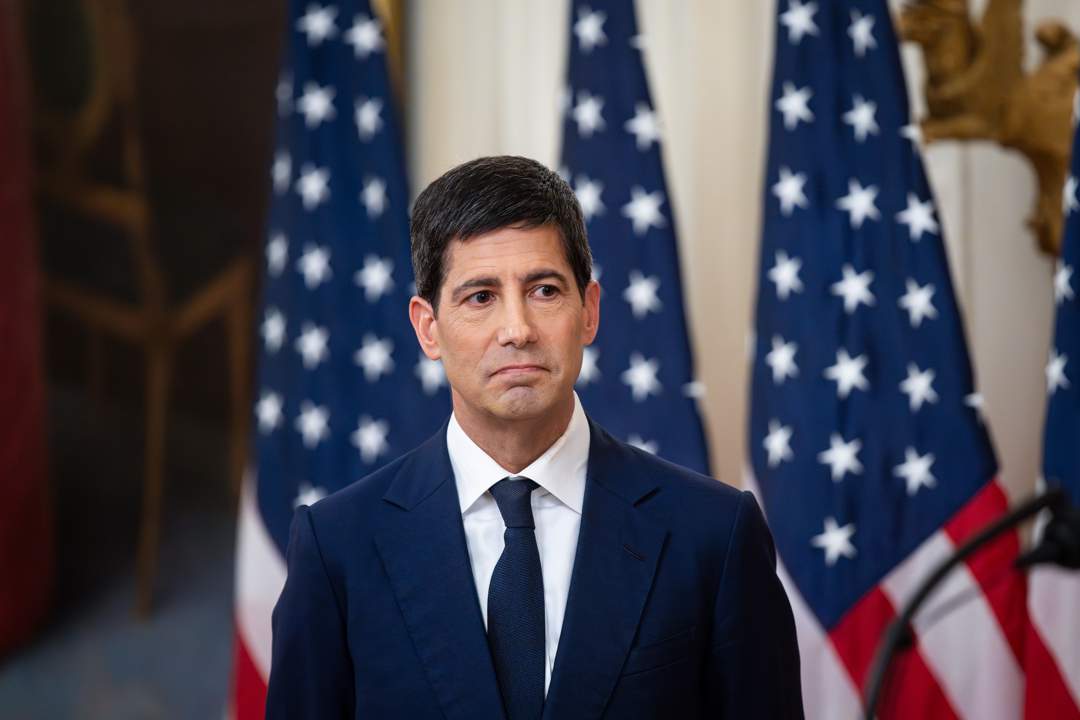
Kevin Warsh, chair of the US Federal Reserve. The dollar has been dragged down by speculation that the Fed is unlikely to start raising interest rates before December.
Al Drago/Bloomberg via Getty Images
- For more financial news, go to News24 Business.
The dollar tumbled by the most in three weeks to its weakest level since mid-May, after the bond market rallied on the US Treasury Department’s unexpected announcement that it is increasing buybacks of long-dated bonds.
The Bloomberg Dollar Spot Index dropped as much as 0.7% as the US currency lost ground against all of its major counterparts, including the yen. The Swiss franc and Swedish krona were among the biggest gainers.
The rand strengthened from R16.25/$ to below R16.08 – its best level in more than five months – within minutes of the announcement on Wednesday afternoon.
By late afternoon, it was trading around R16.10.
The Treasury’s move signalled concern about the steady bond-market selloff that had pushed 30-year yields to their highest level since 2007 amid mounting investor angst over surging federal debt, the war in Iran, a flood of corporate borrowing for artificial intelligence, and inflation that’s held above the Federal Reserve’s target since 2021.
The move at least temporarily helped to reverse that trend by fueling a rally in longer-dated Treasuries, pulling down 30-year yields by about 8 basis points.
That’s adding to the pressure on the dollar, which has also been dragged down by speculation that the Fed is unlikely to start raising interest rates before December. Traders are awaiting the release of the minutes from the latest Fed meeting later on Wednesday to gauge whether calls for further tightening gained traction and how officials assessed inflation risks.
“A more settled bond market today has allowed the dollar to fall back,” said Jane Foley, head of FX strategy at Rabobank. “This is against the backdrop of inflation and supply risks in addition to fears that higher hedge fund ownership of government debt could make the market more jittery.”
“The hit to the dollar from the Treasury’s announcement, even with front-end rates little changed, suggests markets are interpreting the move as merely artificially cushioning stress further out the curve. While the Trump administration has maintained that it espouses a strong dollar policy, its combination of actions – be it coordinated intervention, Treasury Secretary Scott Bessent’s comments on undervalued currencies, or the Mar-a Lago Accord – suggests otherwise,” said Brendan Fagan, Bloomberg’s macro strategist.
The yen jumped as much as 0.9% to trade at 158.17 per US dollar, its strongest level in more than a week. The yen has been struggling to hold on to gains from the US-Japan joint intervention in the foreign-currency market at the turn of the month. It has lost 0.7% against the dollar in August so far.
“The dollar is broadly lower on the back of the US Treasury headline,” said Howard Du, a strategist at TD Securities in New York. “The signalling shows Treasury is closely monitoring the long-end Treasury selloff that has been happening this week.”
KioskNews shows a cleaned-up reading view extracted from the publisher’s page — the original always lives on their site, not ours.