The one change that worked: I was burnt out and lonely – until I started ice skating

In 2024, I decided to return to England after four and a half years in Lisbon. My first winter back in the UK was psychologically challenging. Working alone on my next book didn’t feel as enjoyable in cold, grey London as it had abroad. The 10th anniversary of my father’s death was approaching and I felt a profound loneliness which, much like the cold, began to seep into my bones. I was struggling, too, to readjust to London’s cost and pace of living.
During this time, I was diagnosed with combined-type attention deficit hyperactivity disorder (ADHD). I used to think I was depressed, but my diagnosis made me realise that part of how I felt was burnout – my brain’s ability to regulate stress was depleted. I felt overwhelmed and would shut down, which would lead to cycles of anxiety, depression and self-criticism.
I needed a new hobby, so I chose ice skating. The effect it had on my quality of life was immediate. I skated twice a week, once in a private lesson with a friend and once in a group lesson. The social connection and sense of progress added structure and joy to my sometimes shapeless weeks. Friends who had always said I was “all or nothing” joked that I would drop my new hobby when things got tough, but I persisted.
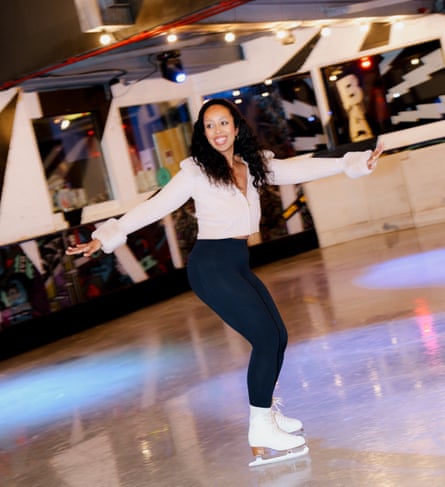
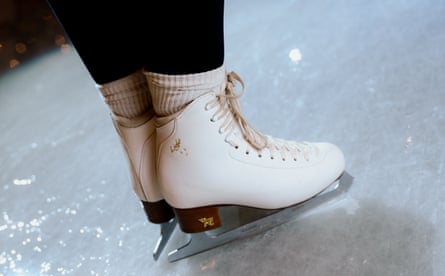
After just a few weeks, I was hooked. I went for a professional fitting and bought my first pair of proper skates: white boots with a smattering of diamante studs along each side. I made friends with skaters aged 15 to 60. The sense of achievement that washed over me when I mastered backwards crossovers (crossing your feet as you skate backwards) or completed a waltz jump (I can hop about 1cm off the ground as I rotate) felt like stepping back into the warmth of the Lisbon sun.
I am not a talented skater, but the fun comes from allowing myself to be a beginner. I’m privileged in that I have the time and the money to invest in this expensive hobby, but as a single, childless woman, learning to skate purely for the unbridled happiness it gives me feels freeing. Doing something poorly – just for the fun of it – is often discouraged in a culture that worships mastery, output and productivity. Ice skating has also allowed me to indulge an inner playfulness that is sometimes buried beneath deadlines and responsibilities.
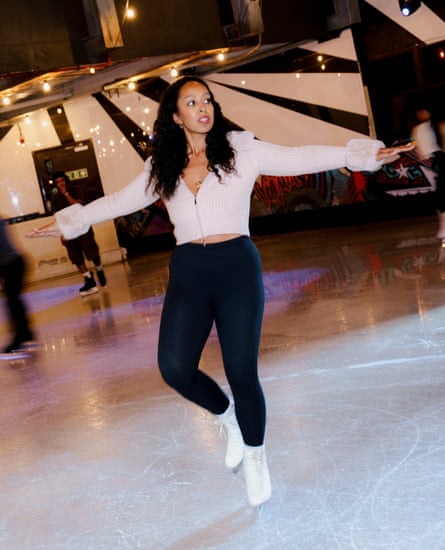
Being burnt-out felt like having a million tabs open in my brain. But skating helped me quiet the background noise. The only downside was that skating dominated my spare time and I often spent hours on the rink after my lessons, practising alone in a full state of hyperfocus (common in those with ADHD). I quickly learned that a distraction could result in serious injury. While practising my crossovers, I fell on my neck, winding myself. I was tentative on the ice for weeks afterward.
The highs have greatly outnumbered the lows. Each week on the rink, I was at peace as I focused on micro-movements and adjustments to my technique that would have a huge impact on how I moved. My worries melted away and my concentration improved. People with ADHD often need extra accountability to help them complete tasks. Having a weekly lesson with my friend anchored my attention and kept me motivated.
I now split my time between London and Lisbon, a decision that probably says as much about my ADHD as it does about my love of both cities. Lisbon has no decent ice rinks but that only makes me appreciate them all the more when I’m in London.
Learning to skate has taught me that an activity doesn’t have to be productive to be worth prioritising and that, even with my attention span, I can commit to a hobby. Now, when faced with a decision, I ask a question that may once have felt indulgent: what kind of life makes me happiest? For me, it’s about feeling rooted in the life I’m living. Part of that comes from doing things purely for the love of them and finding satisfaction in that alone. To me, that’s peace.
KioskNews shows a cleaned-up reading view extracted from the publisher’s page — the original always lives on their site, not ours.