Tiny two-headed turtle found in Cape Cod
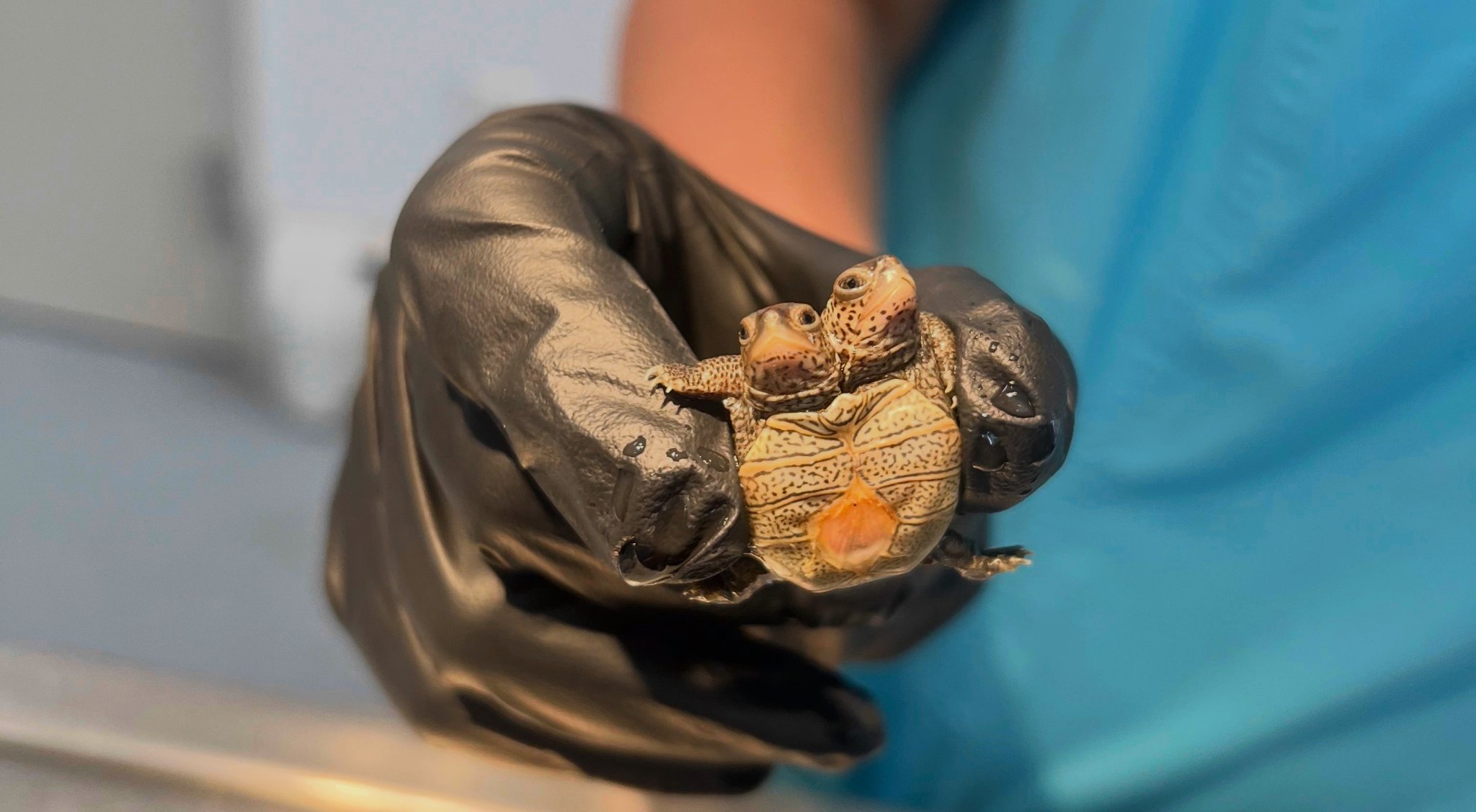
Last week, something strange arrived at the Cape Wildlife Center. Not one turtle, not two turtles—something in between. A tiny two-headed turtle weighing less than a nickel ended up at the Cape Cod facility.
The bicephalic (two-headed) reptile is a diamondback terrapin (Malaclemys terrapin), aquatic turtles found in brackish waters along the United States’ Atlantic and Gulf coasts. Diamondback terrapins are classified as Threatened by the Massachusetts Endangered Species Act, and their broader conservation status at the federal level is currently under review.
The two-headed turtle hatched in a protected nesting site in Wellfleet, Cape Cod, after which the Mass Audubon Wellfleet Bay Wildlife Sanctuary transferred it to the Cape Wildlife Center. Its arrival didn’t come as a complete surprise to the staff because it’s not the first time they’ve cared for a two-headed diamondback terrapin, Zak Mertz, CEO of New England Wildlife Centers (including the Cape Wildlife Center), tells Popular Science.
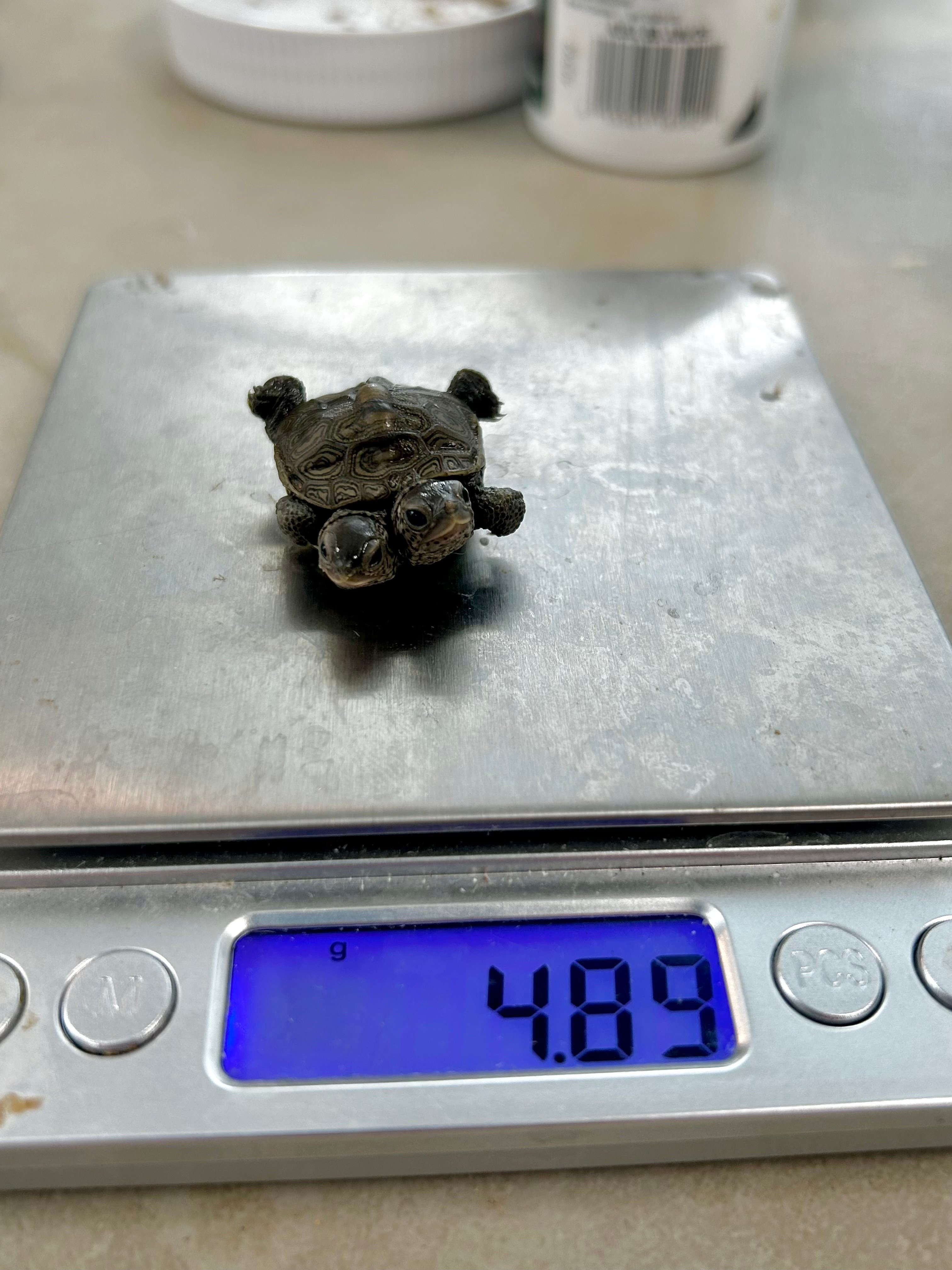
“This is actually the third set we have seen within the last six years,” he explains. “The belief is that bicephaly happens when an embryo goes to split—like it would for twins or something—but doesn’t separate fully. And because of that, each case might have a slightly different orientation, they might have more or less overlapping anatomy.”
The team’s impression is that this recent case involves slightly more shared anatomy than previous pairs, which Mertz thinks is a good thing. While the team hasn’t conducted advanced imaging to see what’s going on beneath the shell yet, the hatchling appears to be in good health, and needs to grow a little more before they can determine its sex.
“We are monitoring and making sure they’re bright and alert, they’re reactive. We’re making sure that we’re offering food and that both heads are active and looking around and trying to eat. So far they are, which is awesome,” says Mertz. “And so we kind of use that as a barometer for comfort.”
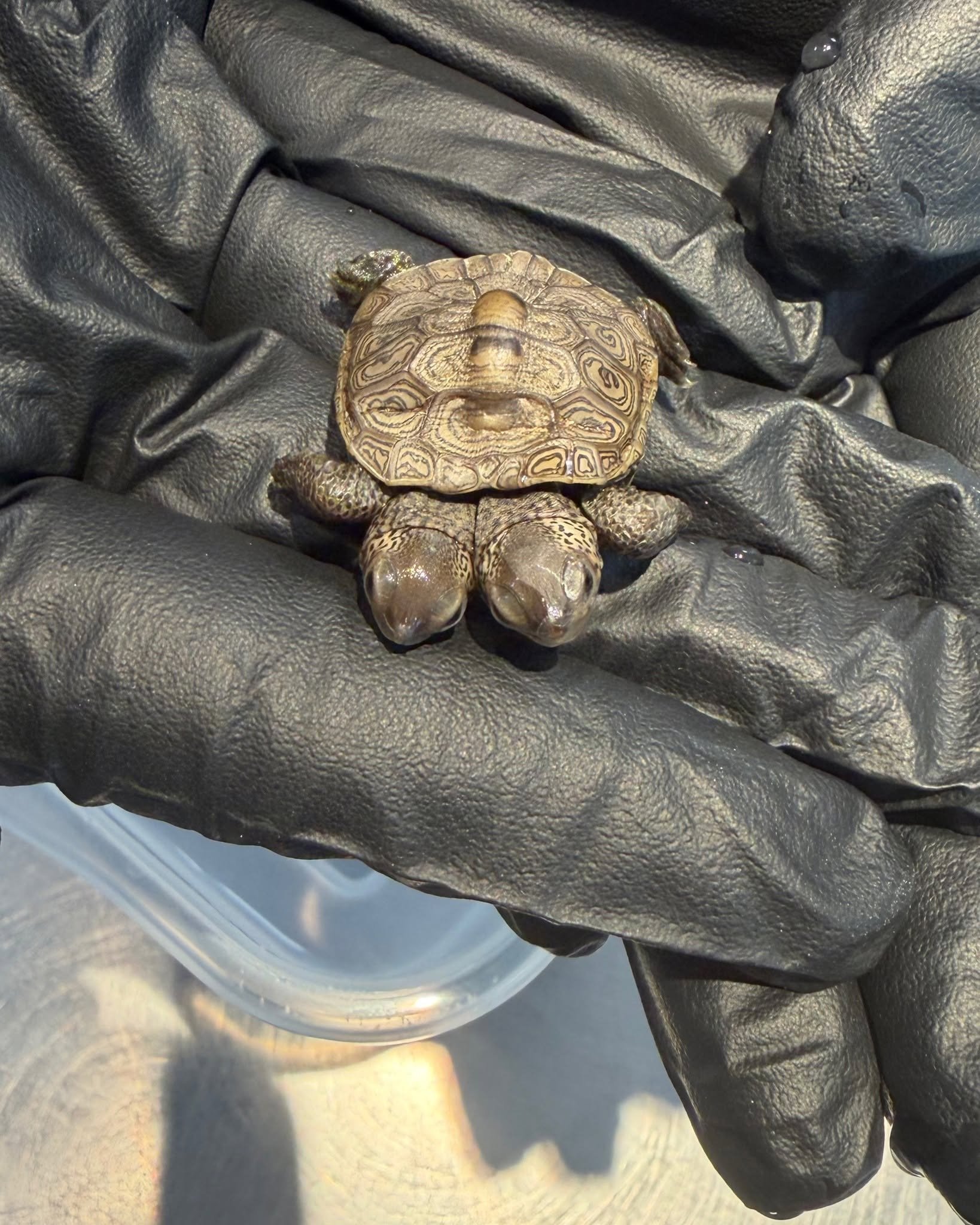
The team is still deciding whether the turtle(s) can return to the wild. For now, they plan to execute advanced imaging, which would reveal the exact anatomy shared and help inform the type of care required.
KioskNews shows a cleaned-up reading view extracted from the publisher’s page — the original always lives on their site, not ours.