Edcom: Learning gap can be fixed even before Grade 1
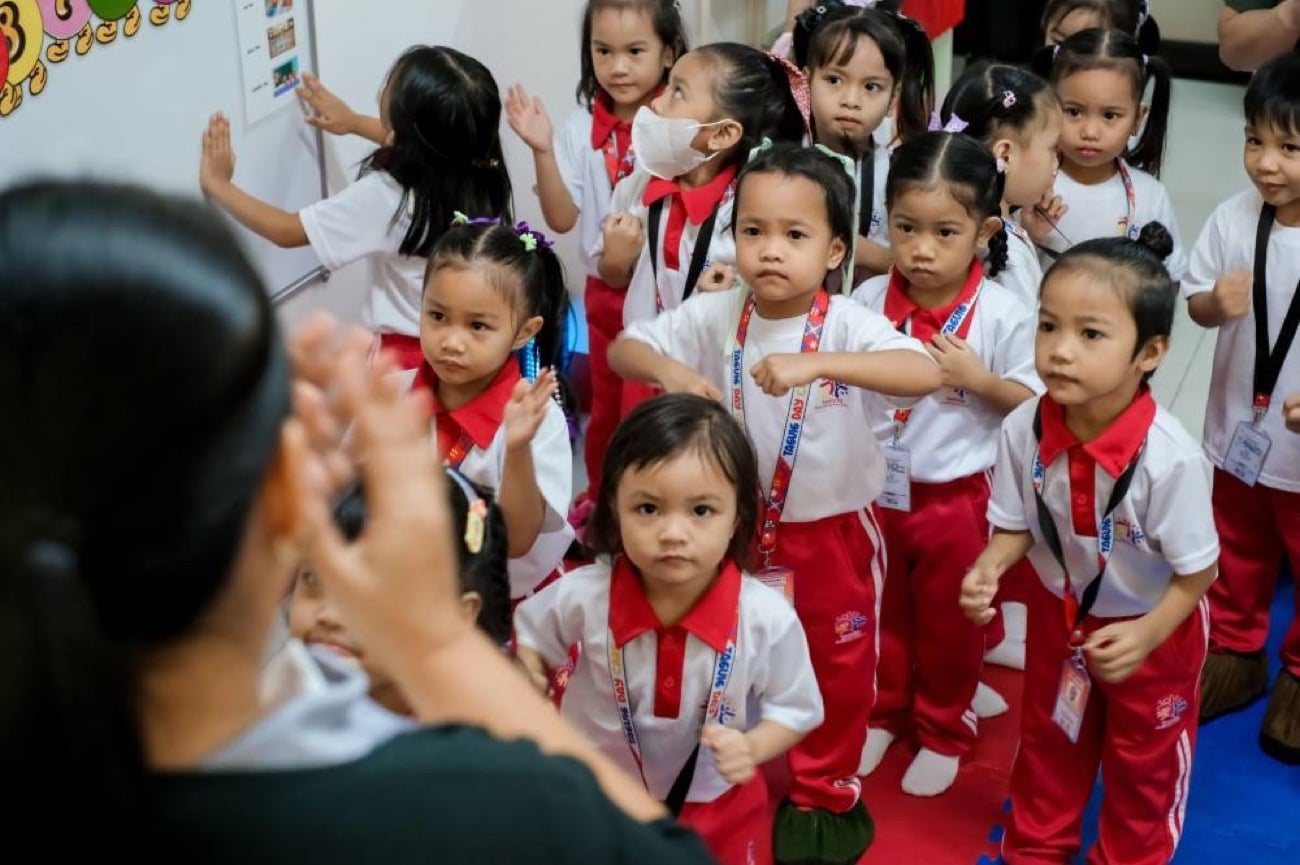

MANILA, Philippines — The Second Congressional Commission on Education (Edcom 2) has called on the Department of Education (DepEd) to strengthen early childhood and primary education curricula to address the growing number of “struggling readers” among Grade 1 students.
Edcom 2 made the call after the DepEd’s Comprehensive Rapid Literacy Assessment for the start of School Year 2026 to 2027 showed that 75 percent of Grade 1 learners have been found as struggling readers.
The commission added that this school year, 45 percent, or about 2.2 million, from Grades 1 to 3 struggled with reading.
Article continues after this advertisement
Critical thinking
It pointed out that students have to catch up in Grade 2 and Grade 3 levels, before they proceed in primary education to prevent a wide reading gap.
FEATURED STORIES
NEWSINFO
NEWSINFO
NEWSINFO
READ: Edcom 2 turns to youth for insights on education reform
It urged the DepEd to ensure a stronger link between the curriculum of early childhood care and development (ECCD) in child development centers and daycares, up to kindergarten and Grade 1.
These recommendations emerged from the “Global Evidence, Local Action,” session organized by Edcom 2 on early childhood development and foundational literacy held on Oct. 29 at the UP BGC Campus, in partnership with Khan Academy Philippines.
During the forum, Dr. Nonie K. Lesaux, Dean of the Harvard Graduate School of Education, said addressing the issue of low reading comprehension among children must start in early education.
Article continues after this advertisement
“We need to mount a much more intensive kindergarten and first grade experience, both in time and in the intensity of the curriculum,” Lesaux said.
She urged educators to raise the “cognitive press” from the earliest years.
Article continues after this advertisement
“Young children are very capable, and actually wired to learn about big ideas,” she said. “We have to stay age-appropriate but drive up cognitive press: the big ideas, the rich, active learning, right from the earliest days. What you’re doing is jumpstarting critical thinking.”
Senate President Win Gatchalian, who served as Edcom 2 cochair from January 2023 to June 2025, said the disconnect begins with who sets the curriculum.
Learning continuum
“Right now, early childhood is run by local government units, and it’s largely the mayors who dictate what to teach. It’s not connected to DepEd,” Gatchalian said.
But he noted that Republic Act No. 12199, enacted last year, now places responsibility on the DepEd for children aged five to eight and directs it to recognize early childhood education as the foundation of the learning continuum.
This, according to Edcom 2, will help address the current challenge faced by students wherein there is no clear progression between what is taught in daycares and what is later learned in school.
Intervention program
“Under our law now, DepEd has authority over the curriculum. The vision is that the entire Philippines will have a DepEd-led curriculum [for ECCD in daycares] that is connected to Kindergarten and elementary,” Gatchalian said.
The DepEd secretary also serves as cochair of the ECCD Council for the ECCD Curriculum and all matters related to early childhood education.
Edcom 2, citing the 2024 Annual Poverty Indicators Survey, said that although 90 percent of Filipino children enroll in kindergarten, only 34 percent of children aged 3 to 4 have access to early childhood education.
It also pointed to data from the Department of the Interior and Local Government that 4,604 barangays still have no child development centers.
While Edcom 2 noted that gains have been made through intervention programs, it said these were “fragile.”
“An independent evaluation presented by DepEd’s Monitoring and Evaluation Office found that the Aral (Academic Recovery and Accessible Learning) Program helped move an estimated 1.37 million learners out of struggling reader levels in its first year, yet the new school year again opened with a large share of early-grade learners behind,” it said.
Your subscription could not be saved. Please try again.
Your subscription has been successful.
The DepEd has established the Aral Program in October 2024 as a learning intervention initiative to address learning gaps, recover from pandemic-related or general learning losses, and help K-10 students reach minimum grade-level competencies. /cb
KioskNews shows a cleaned-up reading view extracted from the publisher’s page — the original always lives on their site, not ours.