He chose cows over foreign shores, at 22, builds a Rs 40-lakh dairy business
At a time when many young people in Punjab are looking abroad for better opportunities, 22-year-old Jashanpreet Singh Sidhu has chosen a different path. A graduate from Dhan Singh Khana village in Bathinda district, he has decided to build his future not on foreign shores but on his family’s dairy farm.
What began as a childhood routine of helping his father in the fields and tending to a small herd of cattle has, in five years, grown into a business worth around Rs 40 lakh, with monthly milk sales of approximately Rs 2.80 lakh.
Jashanpreet was just 17, and still in school, when he decided to turn the family’s modest dairy activity, then largely meant for household consumption, into a commercial venture. The family owned five to six cattle, but they were not of the quality required for commercial dairy farming. He gradually acquired knowledge of the trade, sold three of the existing animals and invested in better-quality Holstein Friesian (HF) cows.
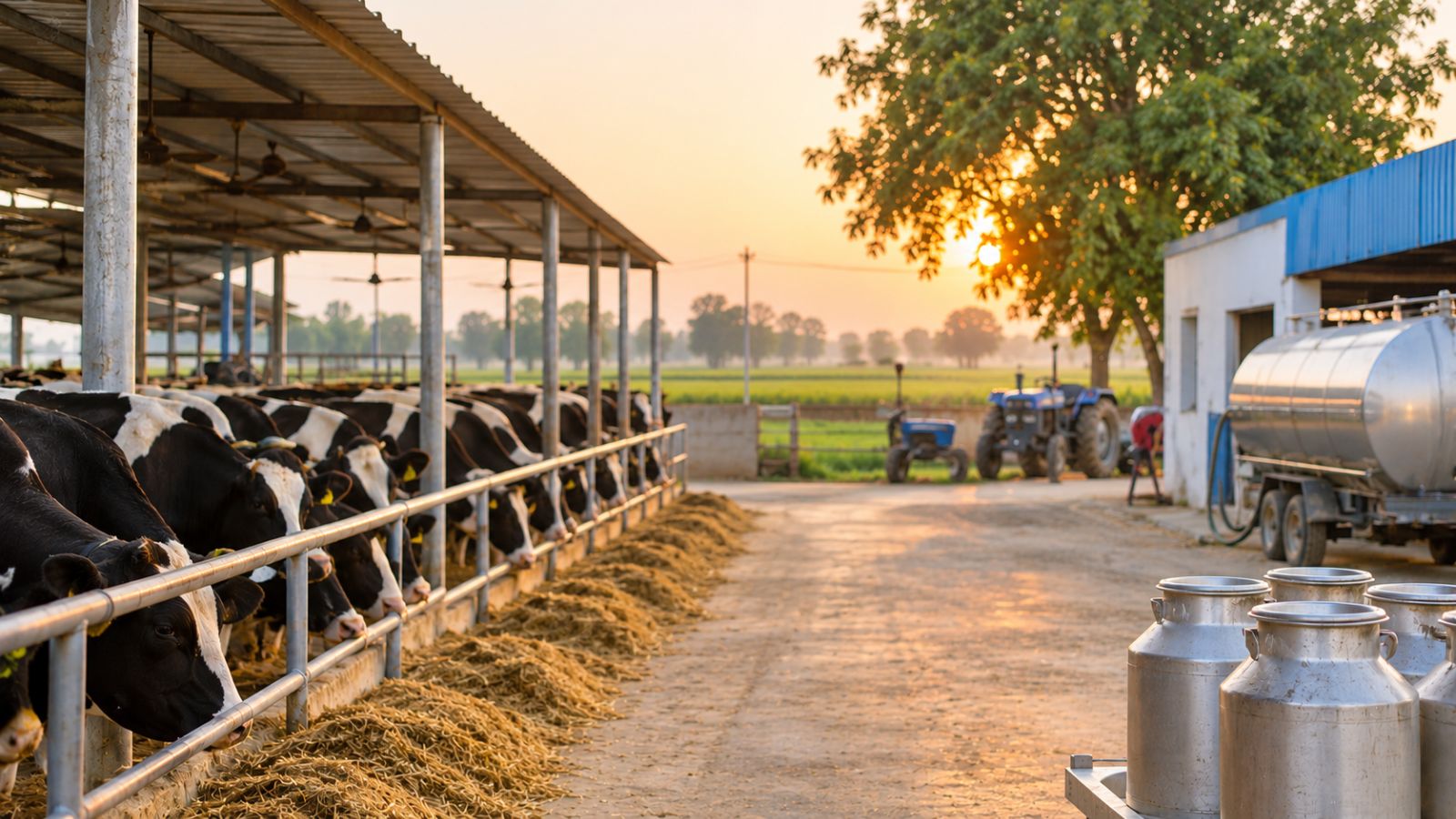
Today, he runs a 25-cow dairy farm, built around high-yielding animals, improved management practices and a regular milk-supply arrangement with Verka.
His decision was driven as much by his father’s influence as by the economics of conventional agriculture. Davinder Singh, who has been farming for years, encouraged him to explore an independent venture.
“From working alongside my father while studying to managing a dairy operation, his encouragement remains my biggest inspiration,” Jashanpreet says.
The family owns four acres and had earlier cultivated another 100 acres on lease. However, as input costs and rental expenses mounted, Jashanpreet began questioning the returns from conventional farming. The family has since reduced its leased landholding to 30 acres while gradually expanding the dairy business.
Story continues below this ad
“We used to take a lot of land on rent. But when I started calculating the returns, I realised that a good-quality cow could generate more income than one acre under wheat and paddy. Why should we keep taking land on rent when leased agricultural land costs around Rs 75,000 to Rs 92,000 per acre, and dairy farming could offer better returns?” he says.
Building the business, however, required more than investing in better cattle. Jashanpreet learnt the basics of animal care, including administering injections and providing primary treatment, through practical training and experience. Veterinary assistance is sought whenever necessary, while milking machinery has helped streamline daily operations.
The farm follows an open-shed system, with the cows not tied up. Milk production varies from 10-20 litres a day in some animals to 30-40 litres in the higher-yielding ones, with the herd averaging around 21 litres per animal daily. Around half the cattle are in milk at any given time, helping ensure a regular supply.
The family currently sells more than 2.5 quintals of milk daily to Verka at Rs 37 per kg. The arrangement, Jashanpreet says, provides the assurance of regular procurement, with milk collected directly from the farm, besides access to the cooperative’s wider marketing network and dairy infrastructure.
Story continues below this ad
Like many young people in Punjab, Jashanpreet too had once considered moving abroad. His elder sister is settled in the UK, where she had gone for studies, and he had thought of following a similar route.
“I also wanted to go to the UK. I thought I would earn by working there on an hourly basis, according to someone else’s requirements. But here, in my own business, I can work as much as I want and take it forward according to my capacity. I also do not have to leave Punjab and my parents,” he says.
His wife, 21-year-old Arashdeep Kaur, who has completed Class XII, had also aspired to go abroad. The couple married with their own plans and ambitions but have now decided to channel their energies into building the dairy business together.
Their next ambition is to move beyond selling raw milk. They have begun preparing ghee and khoya on demand, particularly during winter, and plan to gradually expand their range of dairy products. Jashanpreet says they do not add sugar to their products and hope to establish a market for fresh, quality dairy products under the name Sidhu Dairy Farm.
Story continues below this ad
He estimates that 50-60 per cent of the income goes towards farm expenditure, including animal maintenance and other operational costs. The business currently has no outstanding debt.
For now, the ambition is to expand the herd to several hundred quality animals and build a stronger market for value-added dairy products. For a young man who once contemplated earning abroad, the idea of success has taken a different shape — one that allows him to stay close to his family while building an enterprise of his own in Punjab.
KioskNews shows a cleaned-up reading view extracted from the publisher’s page — the original always lives on their site, not ours.