How farm laws broke the SAD-BJP alliance, and what brought it back
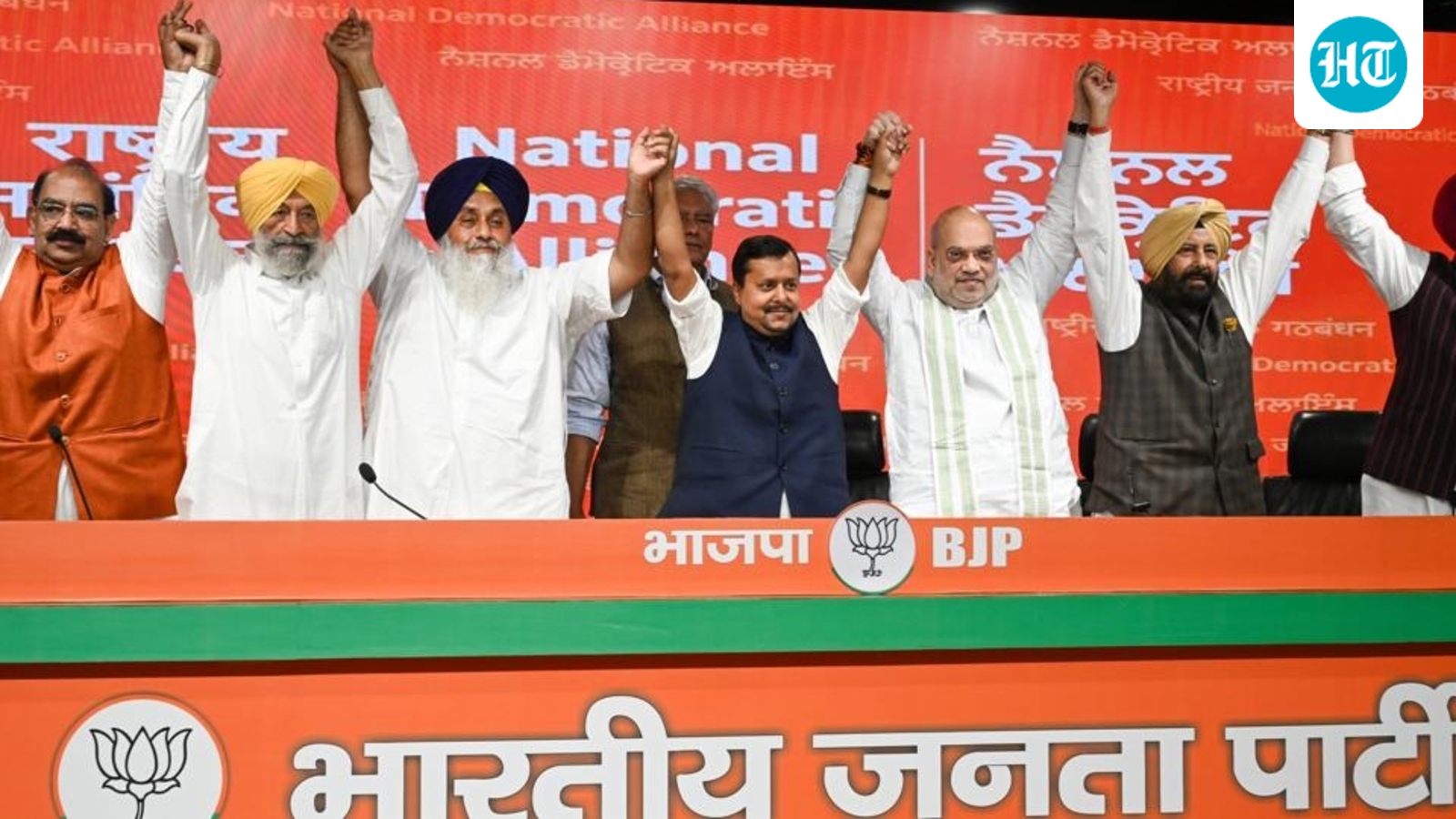
Farm laws ended the SAD-BJP's nearly 24-year alliance in 2020. After electoral setbacks, the parties have reunited to contest the 2027 Punjab polls.

Thirty years after they first joined hands to fight an assembly election in Punjab, the Shiromani Akali Dal (SAD) and the Bharatiya Janata Party (BJP) are set to contest the state polls together for the sixth time, reviving on Tuesday a partnership that had endured for nearly 24 years before breaking over the Centre’s three farm laws in 2020.
The alliance, forged in the aftermath of decades of militancy in Punjab and built around the idea of “Punjab, Punjabi and Punjabiyat”, was revived for the 2027 assembly elections at a joint press conference in New Delhi by Union home minister Amit Shah, BJP president Nitin Nabin and SAD president Sukhbir Singh Badal. The announcement came on Guru Nanak Jayanti, the 557th birth anniversary of Guru Nanak Dev.
The two parties have fought five assembly elections together — in 1997, 2002, 2007, 2012 and 2017 — and won three of them. Their only separate contest in the past three decades was in 2022, when both were reduced to the margins as the Aam Aadmi Party (AAP) swept Punjab.
At the SAD’s Moga convention in February 1996, the party broadened its political identity from one centred on the Sikh community and the Panth to one representing all Punjabis, under the slogan “Punjab, Punjabi and Punjabiyat”.
Former chief minister Parkash Singh Badal, the key architect of the alliance, often described the relationship as “Nau-Maas da Rishta”, or a relationship akin to that between a mother and her child.
The partnership delivered its biggest early success in 1997, when the alliance won 93 seats — 75 for the SAD and 18 for the BJP — and formed the government. It returned to power in 2007 and 2012. In 2012, it became the first alliance to win a second consecutive term in Punjab after the state’s reorganisation in 1966.
Why the alliance broke
The alliance broke in 2020 after farmers, particularly in Punjab and Haryana, protested against the three farm laws introduced by Prime Minister Narendra Modi-led government.
SAD leader Harsimrat Kaur Badal resigned from the Union cabinet in September 2020, and days later Sukhbir Singh Badal announced that the party was leaving the National Democratic Alliance (NDA), saying the Centre had ignored farmers’ concerns.
The laws were repealed in November 2021, but the parties remained apart.
The separation proved costly to both. In the 2022 assembly election, the AAP won 92 of 117 seats. The SAD, fighting in alliance with the Bahujan Samaj Party (BSP), won three seats, while the BJP, which fought alongside the Punjab Lok Congress and SAD (Sanyukt), won two.
In the 2024 Lok Sabha elections, both again contested separately. The BJP fought all 13 seats and won none, while the SAD also contested all 13 and won only Bathinda.
Together, the two parties secured 31.98% of the vote in 2024, higher than the Congress’s 26.30% and AAP’s 26.02%. Yet they won only one seat between them. That gap between their combined vote share and their individual electoral performance is among the key arguments for the reunion. Both parties hope that a renewed alliance will help convert votes into seats in the 2027 assembly elections.
First test without Parkash Singh Badal
The 2027 election will be the first joint assembly contest without Parkash Singh Badal, who died in April 2023.
All five previous joint contests were fought under his influence — as SAD chief, chief ministerial face and a key link between the Akali Dal and BJP leaders such as Atal Bihari Vajpayee and LK Advani.
The next election will be led by Sukhbir Singh Badal on the SAD side, while the BJP is expected to have a greater say in the alliance’s seat-sharing arrangement and power structure than it did in the past.
From 1997 to 2017, the SAD was the senior partner, contesting 94 of Punjab’s 117 assembly seats, while the BJP contested 23. The SAD largely focused on rural seats and the BJP on urban constituencies.
That balance is now expected to change.
According to functionaries in both parties, the BJP is likely to contest 47-48 seats in 2027, nearly double its earlier share. The broad division is expected to remain the same, with the BJP focusing on urban seats and the SAD on rural constituencies.
The alliance’s revival on Guru Nanak Jayanti also carries political significance in Punjab. The Kartarpur Corridor was inaugurated on November 9, 2019, ahead of Guru Nanak’s 550th birth anniversary. On November 19, 2021, also on Gurpurab, Prime Minister Narendra Modi announced the repeal of the three farm laws.
ABOUT THE AUTHOR
Assistant Editor with the Punjab Bureau of Hindustan Times, based in Chandigarh. With nearly two decades of experience in journalism, I report on politics, governance, national security, law enforcement, elections, health and public policy, with a special focus on Punjab.Over the years, I have covered major political developments, policing, organised crime, anti-drug operations, and legislative affairs, delivering several exclusive and investigative reports. Having experience of covering Punjab with permanent postings at Bathinda, Patiala, Ludhiana and Jalandhar in various capacities before moving to Punjab Bureau in 2017. Headed Doaba Bureau for three years at Jalandhar.Before joining the Hindustan Times in Punjab worked as a stringer in journalist in Himachal Pradesh, building extensive experience in grassroots reporting. Hold postgraduate degrees in Journalism and Mass Communication from Himachal Pradesh University, Shimla.
KioskNews shows a cleaned-up reading view extracted from the publisher’s page — the original always lives on their site, not ours.