With over 1,000 posts vacant, Delhi High Court orders early recruitment in government hospitals
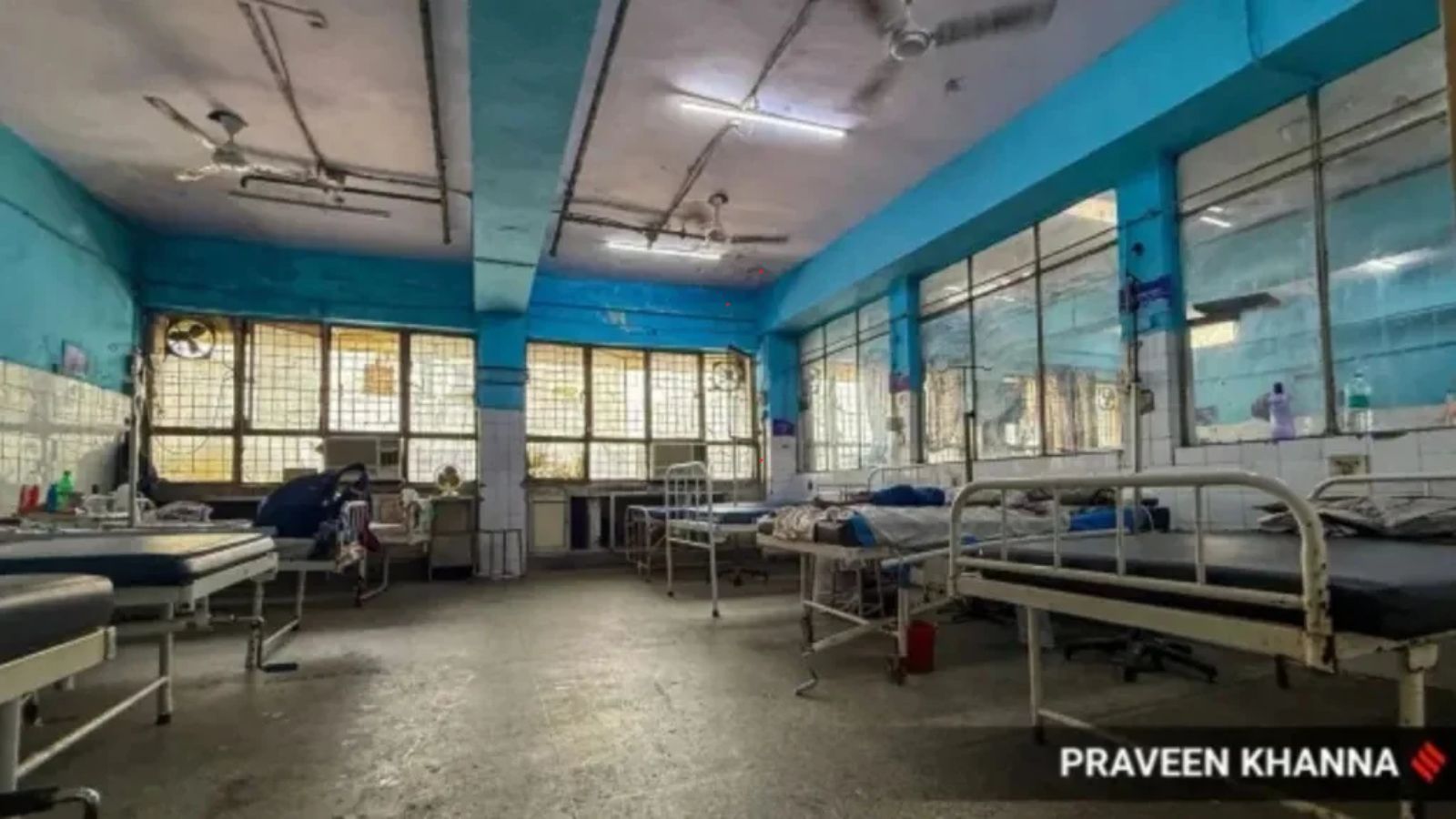
In a bid to fill over 1,000 vacant posts of general duty medical officers (GDMO) and non-teaching staff (NTS) across Delhi government hospitals, the Delhi High Court has directed the Union Public Service Commission (UPSC) to begin recruitment without waiting for the regular annual cycle, “as an exceptional case”.
The direction, issued by a division bench of Justices Prathiba Singh and Manmeet Pritam Singh Arora on October 30 – it was made public on November 3 – came while hearing a 2017 suo motu public interest litigation (PIL) instituted to monitor facilities in Delhi hospitals.
The Delhi government, in a status report submitted to the HC on October 29, had admitted that over one-third (645) of its sanctioned posts (1,785) for GDMO and over 40% of its sanctioned posts (926) for NTS are vacant.
The recruiting agency for both these posts is UPSC, which, as per policy, accepts requisitions for filling the vacant posts from January to March every year.
The government told HC that while it had sent the requisition to UPSC for recruitment to 654 GDMO and 417 NTS posts, UPSC had raised some observations, and that it will resubmit the requisition between January and March 2027.
 According to it, during the last recruitment cycle, against 279 NTS vacancies, UPSC forwarded only 154 dossiers.
The government attributed the vacancies to a shortage of eligible candidates, non-joining of selected candidates and resignations after appointment. It also said UPSC often recommended fewer candidates than the number of vacancies reported.
“It is pertinent to mention that the number of candidates recommended/forwarded by the UPSC against the vacancies requisitioned by the department is often considerably lower than the number of vacancies reported,” the report noted.
Story continues below this ad
According to it, during the last recruitment cycle, against 279 NTS vacancies, UPSC forwarded only 154 dossiers. Further, against 234 GDMO and 279 NTS posts, only 161 doctors and 82 non-teaching staff joined the Delhi Health department.
The HC directed the government to send revised requisitions for the vacant posts to UPSC within two weeks. “The UPSC, as an exceptional case, shall commence the process of recruitment without waiting for the annual cycle of submission in January to March, 2027,” it said.
It also directed UPSC to file a status report on whether it has received the said requisition and whether the process of recruitment has been initiated or not by December 17, the next date of hearing.
Paramedical vacancies
Meanwhile, 804 of the 4,462 posts sanctioned for paramedical staff also remain vacant in government hospitals. The recruitment to these posts are made through the Delhi Subordinate Services Selection Board.
Story continues below this ad
Paramedical staff vacancy also includes radiographers, senior radiographers, and tech officer in radiology — the combined vacancies currently stand at 122.
In the interim, the HC directed the medical superintendents or medical directors of individual hospitals to take steps to engage contractual employees for these three positions within two months.
Shortage of radiographers
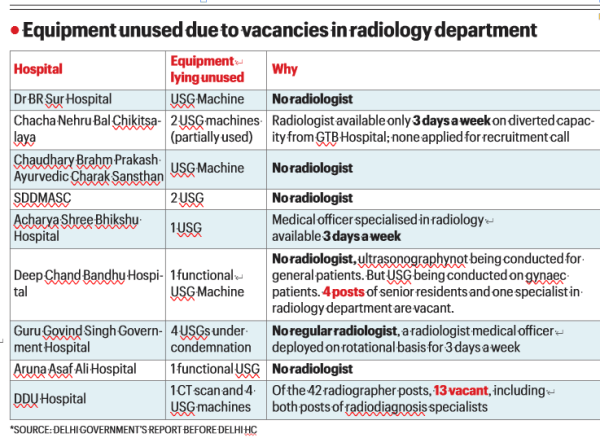
Further, the HC noted a shortage of radiologists in the government hospitals. The government’s report shows machines lying unused or only partly used in at least 9 of its 38 hospitals owing to lack of qualified personnel, including specialists in radiology departments.
With the government earlier suggesting that radiology-related tests can be outsourced to the private sector — with it funding the cost — the HC directed medical superintendents and directors of the 38 hospitals to hold a joint meeting and suggest steps that can be taken to ensure availability of equipment or staff.
Story continues below this ad
It also asked the Health Secretary to assess the expenditure on outsourced MRI, ultrasound and other scans, and examine whether contractual salaries could be increased to attract more candidates.
KioskNews shows a cleaned-up reading view extracted from the publisher’s page — the original always lives on their site, not ours.