Just Like That: What is Hanuman Ansh telling us about India’s spiritual hunger?
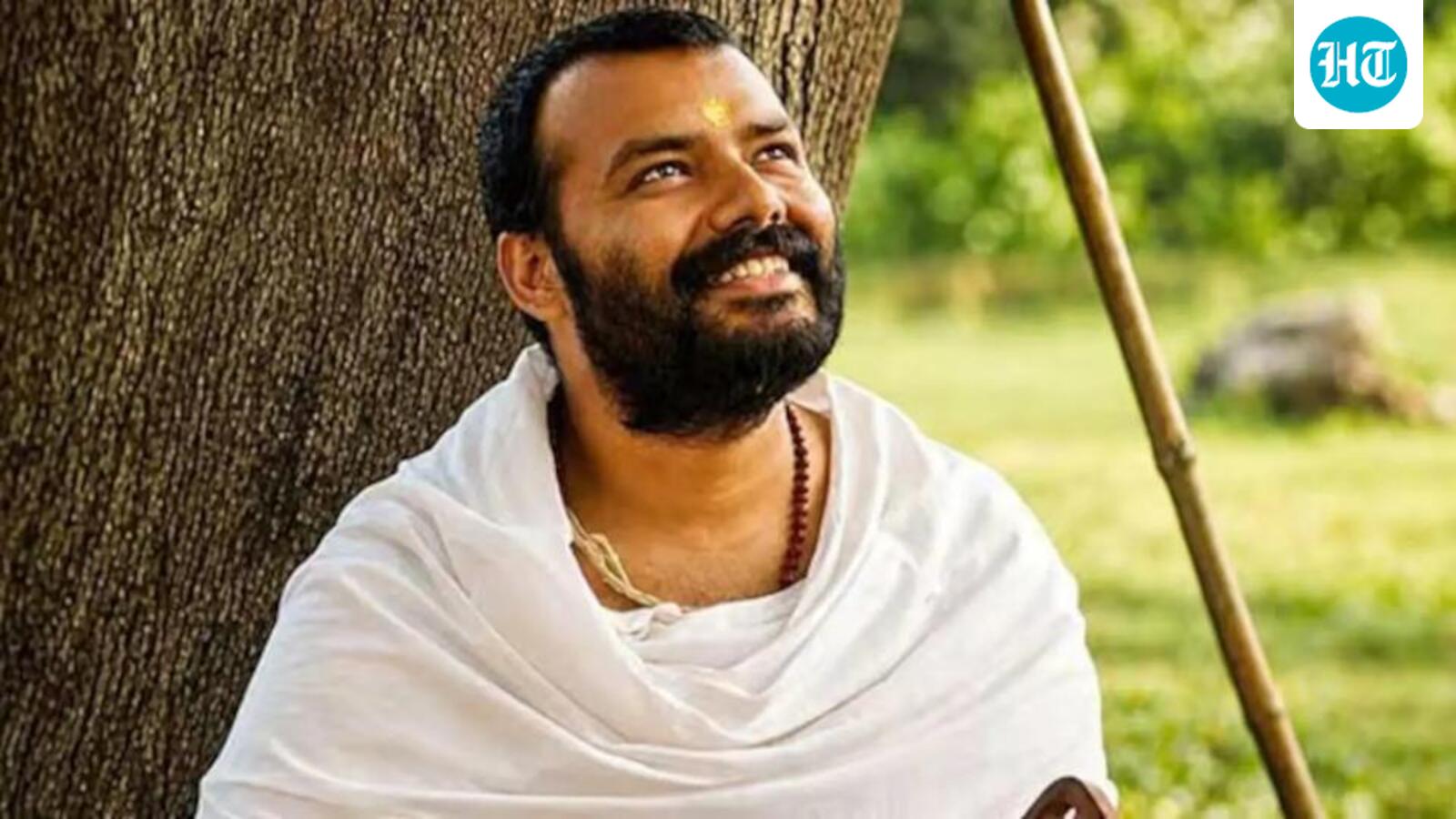
There are moments when the box office behaves less like an accountant and more like a philosopher. It throws out the calculations of the industry and asks an inconvenient question: do audiences really want what the industry assumes they want? Hanuman Ansh, the low-budget Hindi film inspired by the life of Neem Karoli Baba, may be one such moment.
Made for roughly ₹2 crore, released on 7 August 2026 without the machinery normally associated with a major Hindi film, and opening to a remarkably modest ₹10 lakh, the film appeared destined to disappear quietly. Instead, something unusual happened. Its collections accelerated dramatically after the first two weeks, propelled largely by word of mouth and social media. By September 13, it had reportedly crossed ₹236 crore worldwide. The arithmetic is astonishing.
The young producer whose story has attracted attention is Anupriya Nagar, who was only 21 when she joined the project. She says she put a substantial part of her savings into the film because she felt an emotional connection with Neem Karoli Baba. She has also acknowledged that she was one of three women producers and did not finance the entire film herself.
That distinction matters because the story of Hanuman Ansh is, in some ways, itself a rejection of the conventional Bollywood hierarchy. There is no superstar at its centre, no gigantic production budget, no conventional action spectacle and, initially, no great publicity machine. There was instead a story in which the makers appear to have believed. And belief, in cinema, can sometimes be more valuable than money.
Neem Karoli Baba, also known as Maharaj-ji, was a 20th-century Hindu spiritual teacher and ardent devotee of Hanuman ji. Born around the beginning of the 20th century in Uttar Pradesh, he became a wandering ascetic and eventually established a network of ashrams and Hanuman temples. He died in 1973.
What made him unusual was not merely his reputation for miracles. His teaching was strikingly uncomplicated: love, service, feeding others, remembering God. He did not construct a philosophical system requiring intellectual initiation. Spirituality, for him, was not primarily an exercise in argument. It was something to be lived.
That simplicity may explain part of his extraordinary international appeal. Among those who came into his orbit were the American spiritual teacher Ram Dass, physician and humanitarian Larry Brilliant, and, famously, Steve Jobs and Mark Zuckerberg, who visited Kainchi Dham. This only proves that technology and devotion, rationality and spirituality, are not necessarily antithetical. Rationality can take you up to a point. To reject that which is not rationally comprehensible is a sign of mental conservatism, because there are so many mysteries about our life and the cosmos that go beyond that which is mechanically explicable.
Kainchi Dham lies in the Kumaon hills of Uttarakhand. Neem Karoli Baba established the ashram there, with the Hanuman temple being consecrated in 1964. It subsequently became the principal centre associated with his memory and teaching. The physical setting is itself significant. In an India increasingly overwhelmed by noise, speed and distraction, Kainchi Dham represents a soothing contrast: a mountain retreat, simplicity, prayer, community and service. Its annual bhandara has become especially famous, feeding more than a lakh people.
Hanuman Ansh follows the spiritual journey of a young seeker who becomes Neem Karoli Baba. The film’s own makers describe it not as a conventional biopic or sermon but as a spiritual journey centred upon bhakti, surrender and seva. The narrative is therefore not only about a holy man who performed miracles. Its deeper proposition is: what happens when a human being moves beyond the obsession with the self? The answer offered is service and faith.
This is important because contemporary spiritual hunger is often misunderstood. A young person may not want to spend hours performing rituals but may nevertheless be asking searching spiritual questions about the purpose of life. Why, despite material success, am I restless? What is happiness? What does service mean? Is there something beyond consumption, competition and individual achievement? The spiritual impulse does not disappear because a generation uses smartphones.
I have watched the film. The story is told with conviction, but there is nothing exceptional in the direction or other cinematic markers. What it does demonstrate, however, is that a spiritual story, presented in an accessible cinematic form, can find an unexpectedly large audience because it has what money cannot easily purchase: authenticity. A spiritual film made because someone has been personally transformed by the subject has a different quality.
I congratulate the team of Hanuman Ansh for their faith and courage of conviction. They have also conveyed an important message to the film industry: spectacle, violence, glamour and vulgarity have not lost their appeal, but Indian audiences should never be taken for granted.
Pavan K Varma is an author, diplomat, and former member of Parliament (Rajya Sabha). The views expressed are personal
KioskNews shows a cleaned-up reading view extracted from the publisher’s page — the original always lives on their site, not ours.