The 8 Most Influential Soft Sci-Fi Books of All Time, Ranked

Jeremy has more than 2800 published articles on Collider to his name, and has been writing for the site since February 2022. He's an omnivore when it comes to his movie-watching diet, so will gladly watch and write about almost anything, from old Godzilla films to gangster flicks to samurai movies to classic musicals to the French New Wave to the MCU... well, maybe not the Disney+ shows.
His favorite directors include Martin Scorsese, Sergio Leone, Akira Kurosawa, Quentin Tarantino, Werner Herzog, John Woo, Bob Fosse, Fritz Lang, Guillermo del Toro, and Yoji Yamada. He's also very proud of the fact that he's seen every single Nicolas Cage movie released before 2022, even though doing so often felt like a tremendous waste of time. He's plagued by the question of whether or not The Room is genuinely terrible or some kind of accidental masterpiece, and has been for more than 12 years (and a similar number of viewings).
When he's not writing lists - and the occasional feature article - for Collider, he also likes to upload film reviews to his Letterboxd profile (username: Jeremy Urquhart) and Instagram account.
He has achieved his 2025 goal of reading all 13,467 novels written by Stephen King, and plans to spend the next year or two getting through the author's 82,756 short stories and 105,433 novellas.
Sign in to your Collider account
You're welcome to find the distinction between hard and soft science fiction silly, if you want, but if you're okay with the split, then some definitions are in order. Hard science fiction puts an emphasis on science, basically, and you get an emphasis on realism or a sense of things being grounded/speculative, as a result. If you want heavy-hitters, as far as the hard side of science fiction is concerned, you only need a look at the likes of 2001: A Space Odyssey, Ringworld, Contact, and The Andromeda Strain, among others.
The sci-fi stories that don’t focus on science as much, or get a bit more fantastical? They might count as soft science fiction, or at least softer sci-fi. And some of the best and most influential soft sci-fi books are outlined below. Not all are unrealistic, necessarily, but they're distinguished by not focusing too much on things like physics, biology, and technical stuff, and might well be more focused on things like psychology, politics, and various social issues/topics.
8 'Slaughterhouse-Five' (1969)

There’s probably the best argument to be made here, out of all these books, that Slaughterhouse-Five is underrated, but it still wouldn’t be a good argument, because this one has – at least by now – graduated beyond being “just” a cult classic. Even if just a cult classic, then what a cult classic. And it’s also easier to appreciate as time goes on. Maybe it’s more inspirational than influential.
Wait, no, not inspirational like Rocky (1976) or something. But inspirational in the sense that it’s one of those books that’s all like, “Yeah, this is what you can do within the confines of a novel, and a not particularly long one at that.” It’s hard to find influence from it by remixing or reworking certain ideas, since Slaughterhouse-Five is so distinctly its own thing as a satirical and semi-autobiographical book about war, time travel, and various other things, but it did push things forward quite substantially, as far as psychological (and somewhat soft, or at least not hard) science fiction was concerned.
7 'A Clockwork Orange' (1962)

Another psychologically intense sci-fi book, A Clockwork Orange also functions as a dystopian novel, with crime being the main thing that seems to have torn society apart. If not, other bad things have clearly happened, and that’s led to crime increasing. Whatever the case, things are getting worse on a societal level, and then Alex, the book’s protagonist/narrator, finds life getting worse for him personally, too, after an arrest puts a stop to his crime spree.
This book’s more focused on social and justice-related issues, using a dystopian world – and some lightish sci-fi elements – to explore such things.
There is experimental technology used in A Clockwork Orange to make him feel sick whenever he might be about to commit an act of violence, yet the novel’s not really interested in how that stuff works, at least not in an intensely scientific or analytical way. This book’s more focused on social and justice-related issues, using a dystopian world – and some lightish sci-fi elements – to explore such things in an incredibly interesting, compelling, and troubling fashion.
6 'The Long Walk' (1979)

Almost right from the start, The Long Walk is brutal, since it’s another book with a dystopian setting, but here, the premise involves an extreme endurance-related competition. Young men walk and walk until all but one of them can’t walk anymore, with that one still walking being declared the winner. Oh, and everyone before him, who had to drop out, was shot on the spot.
One person lives, and everyone else dies, with the dystopian setting making The Long Walk just sneak its way into the sci-fi realm, and then the popularity of future stories about deadly (and sometimes televised) competitions being the reason it’s getting considered influential. It’s also one of the newer books here, technically speaking, because it feels appropriate to only look at books that are at least a few decades old if you want to talk about influence, given that influence will have been felt/noticed all those decades later (compared to saying a book from last year is influential… it’s kind of hard to tell, at that point, and the book probably needs to be given time to prove itself).
5 'The Hitchhiker's Guide to the Galaxy' (1979)
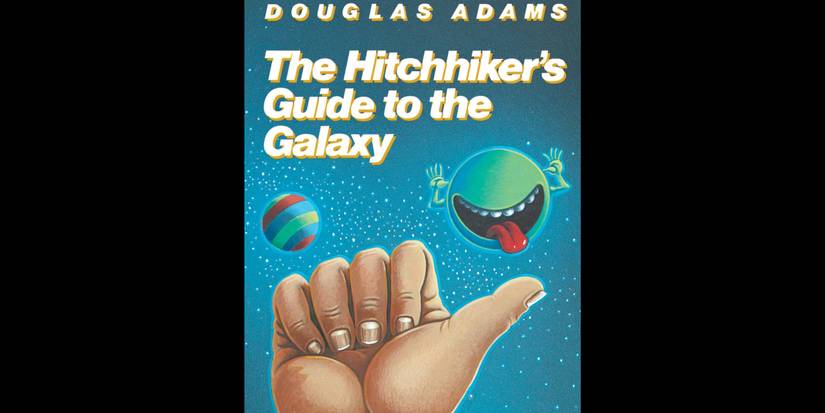
The Hitchhiker's Guide to the Galaxy is mostly concerned with being funny, and sometimes being philosophical at the same time it’s trying to make you laugh, so hard sci-fi it ain’t. This first book in what became a series involves Earth being destroyed incredibly early on, and anticlimactically, with Arthur Dent surviving the destruction of his planet by being whisked away alongside a friend who, it turns out, technically isn't a human being like Arthur.
And then misadventures begin, with there being some desire to find the meaning of life, and various other things that might sound weighty, but also, The Hitchhiker’s Guide to the Galaxy isn't shy about being episodic and very weird, at least when it so desires. It’s a good time and a surprisingly breezy read, and it’s being included here because it went a long way in establishing – or redefining – just how funny science fiction books could be.
4 'Fahrenheit 451' (1953)

For present purposes, Brave New World is going to be counted as hard science fiction, but it does still have to be mentioned if you're talking about early and groundbreaking works of dystopian fiction. It came earlier than Fahrenheit 451, and earlier than another dystopian book from around the middle of the 20th century, but Fahrenheit 451 and that other book de-emphasize the science, to some extent, and have more of a focus on social issues.
The big issue/point of conflict in Fahrenheit 451 is the status of books in the future, with the main character being someone tasked with burning them, but then he has a change of heart and finds other like-minded people to rebel with, thereby protecting the books that are ordered burned. If you read it, it’s likely to have some kind of impact on you, and thereby if you want to write something that’s dystopia-themed yourself, it’s going to be kind of hard to ensure Fahrenheit 451 has absolutely no influence on the words you're putting to paper.
3 'Frankenstein' (1818)

Written so long ago that “hard science fiction” wasn’t even really a thing, Frankenstein… yeah, sure, admittedly, it’s more of a horror book than a sci-fi one. Still, it’s a scientist who ends up bringing dead body parts back to life through an experiment, and the whole thing is bizarre and difficult to explain, which is where some of the horror comes in.
Then, of course, Frankenstein uses this premise to explore a whole bunch of things regarding life, death, human nature, existence, and finding meaning/purpose, or suffering without it. And there’s a whole cycle of revenge that makes it work remarkably well as a psychological drama and a character study, both of a man and the creature he’s brought to life. If a novel was written after 1818 and had some combination of sci-fi and horror elements, there’s a very good chance it took at least a little inspiration from Frankenstein (or was, potentially, influenced by something that itself was influenced by Frankenstein).
2 'Nineteen Eighty-Four' (1949)

Between Brave New World (1932) and Fahrenheit 451 (1953), there was Nineteen Eighty-Four (1949), which is arguably the most influential of the bunch, mostly on account of it having had an impact well beyond the world of literature and storytelling. Like, there are various terms used throughout this novel that people know even if they’ve never read Nineteen Eighty-Four, and saying some kind of real-life event or point in history “feels like Nineteen Eighty-Four” has become its own cliché.
As for the book, it does a lot that now feels very familiar, but Nineteen Eighty-Four is many decades old at this point, and it established “staples” of dystopian fiction before it was cool (if you want to put it that way). It’s something of a shame it’s been so prescient, in a fair few ways, but that’s also the sign of something being forward-thinking, and Nineteen Eighty-Four certainly is that: influential within the world of fiction and then surprisingly relevant once you hop off the page, too.
1 'Dune' (1965)

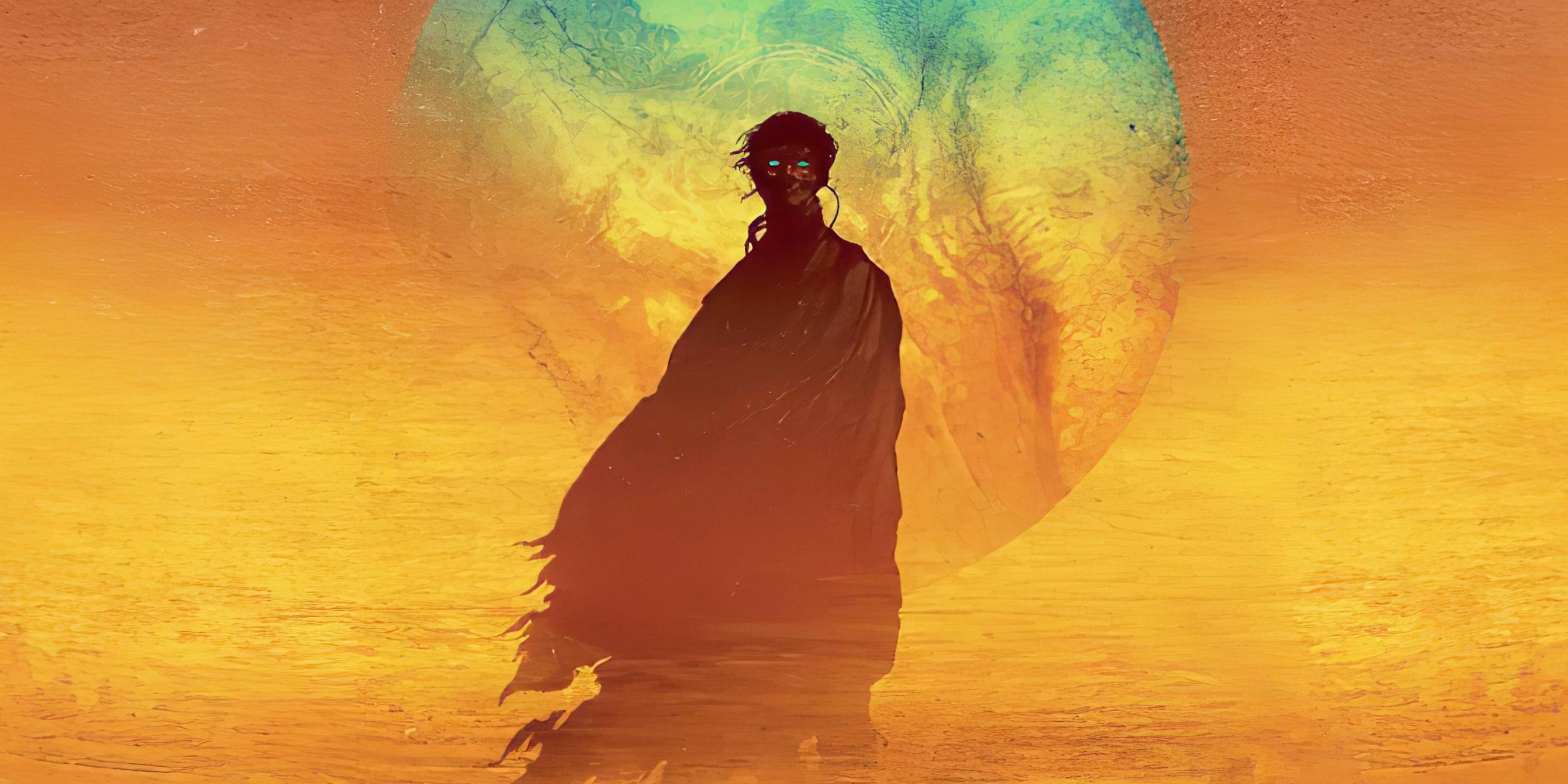
Dune has a reputation that is absolutely massive at this point, to put things very mildly. It kicked off its own series, and one that has kept on going despite Frank Herbert himself passing away in 1986, after having completed six Dune books. Those six are the main ones, for obvious reasons, and of those, it’s hard to deny Dune (1965), the first of them, being the best, not to mention the most influential overall if you're looking at this series and its place in the sci-fi landscape.
It’s been said before, but Dune is of similar importance to sci-fi as The Lord of the Rings was to fantasy. Also, Dune is a bit more soft sci-fi than hard sci-fi, because much of it’s psychological in nature, there are some fantasy elements alongside the scientific things, and so much of the saga deals with prophecies and certain things that remain unknown, or at least a little bit mysterious. Still some science here, and certain rules are followed, but Dune is arguable soft science fiction, and about as essential as books in that sub-genre get.
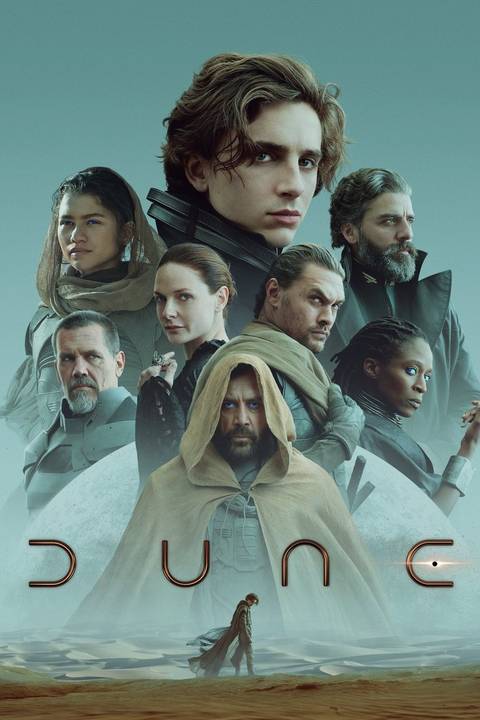
Dune
- Release Date
- September 15, 2021
- Runtime
- 155 minutes
- Director
- Denis Villeneuve
- Writers
- Denis Villeneuve, Eric Roth, Jon Spaihts, Frank Herbert
KioskNews shows a cleaned-up reading view extracted from the publisher’s page — the original always lives on their site, not ours.