Malayan Crape Myrtles herald ‘autumn’ in Singapore
SINGAPORE – A touch of autumn has arrived on Singapore’s streets with Malayan Crape Myrtle trees making a bold statement with their foliage across some parts of the island.
In a Facebook post on Sept 29, the National Parks Board (NParks) shared several photos showcasing the prominent reddish-brown foliage on some expressways and downtown Singapore, which resemble fall colours in cooler climes.
It added that sudden weather changes, such as a heavy downpour following a dry or cool spell, frequently trigger these synchronised bursts of colourful new foliage across the tree’s crown.
Young, newly sprouted leaves often emerge with a vibrant coppery, pinkish, or bright red colour before turning dark green as they mature.
The Malayan Crape Myrtle (Lagerstroemia floribunda) is not native to Singapore, and stands between 4m and 25m in height.
Its flowers bloom a few times a year. Its petals fade from purple to pink to white, making the tree appear to produce flowers of different colours.
Pretty in pink
Literally also blowing their trumpet are trumpet trees (Tabebuia rosea), which are flowering across different locations in
Singapore
, including North Buona Vista Road, Race Course Road, the CTE and junction of Tiong Bahru Road and Lower Delta Road.
Netizen YongJen Lim shared on the NSS Public Forum Facebook page on Sept 29 that trumpet trees were flowering in Bishan-Ang Mo Kio Park.
Singaporeans shared their delight at the Sakura-like flowers, with some saying that more trumpet trees should be planted across the island. “It will be amazing to look at,” said a netizen.
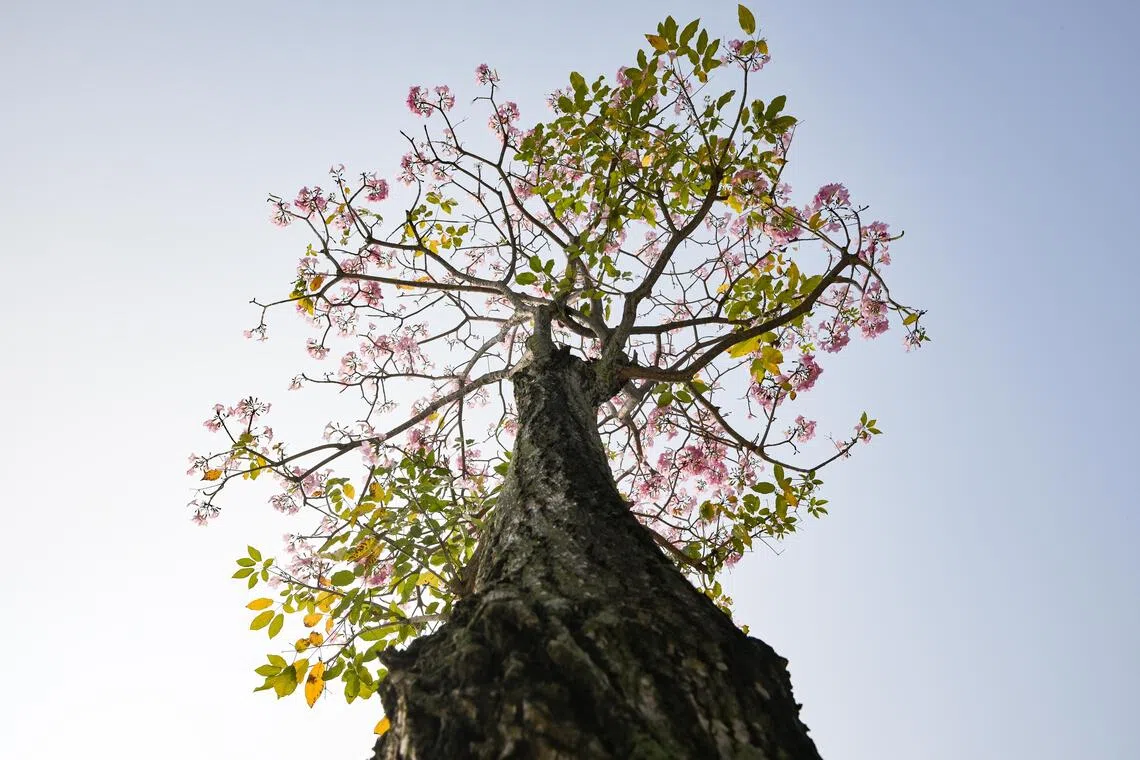
A trumpet tree, flowering outside Little India MRT station on Sept 29.
ST PHOTO: LIM YAOHUI
Another suggested planting the trees along Orchard Road as a “great tourist attraction”.
According to NParks’ website, flowering usually occurs between March and April and again between August and September. Trumpet trees previously bloomed in March.
NParks group director for streetscape Oh Cheow Sheng had said then that the flowering is usually triggered when heavy showers occur after a hot and long dry spell.
The dry season in January was followed by bountiful rainfall in February.
Named for its trumpet-shaped flowers, this non-native species can grow to about between 18m and 35m. Its flowers, which stay in bloom for several days before wilting, carpet the ground around the tree after falling off.
KioskNews shows a cleaned-up reading view extracted from the publisher’s page — the original always lives on their site, not ours.