Netflix’s R-Rated Sci-Fi Masterpiece Deserves Kudos For Being Bold & Experimental


Dhruv is a Lead Writer in Screen Rant's New TV division. He has been consistently contributing to the website for over two years and has written thousands of articles covering streaming trends, movie/TV analysis, and pop culture breakdowns.
Before Screen Rant, he was a Senior Writer for The Cinemaholic, covering everything from anime to television, from reality TV to movies.
After high school, he was on his way to become a Civil Engineer. However, he soon realized that writing was his true calling. As a result, he took a leap and never looked back.
Sign in to your ScreenRant account
Most successful sci-fi shows, even on Netflix, try too hard to fit into genre conventions. They remain relatively straightforward with their ideas and themes to be able to appeal to the masses. However, one show does not shy away from building a distinct identity for itself. Instead of following genre norms, the sci-fi masterpiece in question remains bold and experimental throughout its runtime.
Love, Death & Robots premiered on Netflix in 2019 when the streaming service was far more innovative with its sci-fi outings. Like most anthology shows, Love, Death & Robots did not impress viewers with every episode. However, every installment in the series captured the immense potential animation seemed to hold as a storytelling medium.
Owing to its no-holds-barred approach towards going all out with strange sci-fi ideas, provocative themes, and diverse animation styles, the Netflix sci-fi show became a critical and commercial hit. Some of the more recent episodes from Love, Death and Robots have arguably been hit-or-miss. However, the series continues to thrive as one of Netflix's most distinct sci-fi offerings.
Love, Death & Robot Champions Adult Animation With Boldness & Creativity

Outside of Japanese anime, mainstream animation often leans more towards comedy or family-friendly fare. Love, Death & Robots, however, fully embraces hard-R ratings, combining everything from explicit violence to philosophically dense horror without ever softening its tone.
While some episodes in the Netflix sci-fi show are relatively tame, several others do not even rely on the traditional rules of TV pacing. Episodes range from 6 to 21 minutes, and even some of the shortest offerings from the series are incredibly profound and hard-hitting.
Love, Death and Robots even keeps bouncing between genres, featuring cosmic existential dread ("Zima Blue"), dark military sci-fi ("The Secret War"), dark comedy ("Three Robots"), hypnotic artistic surrealism ("Jibaro"), and even Lovecraftian horror ("In Vaulted Halls Entombed").
Speaking of episodes like "Jibaro" in Love, Death and Robots, many installments in the series also intentionally adopt uncanny rendering. They combine photorealistic motion capture with erratic, hand-held camera movements that almost makes them look like fever dreams.
Since the episodes in Love, Death and Robots barely last over the 15-minute mark, most of them do not bother with traditional three-arc structures. They immerse viewers into their worlds from the opening second with little to no exposition and allow them to use their imagination and fill in the blanks. Not every episode in the series is memorable, but the best ones deserve to be touted as sci-fi masterpieces.
Netflix Should Never Stop Churning Out New Love, Death & Robots Installments

Little seems to be known about Love, Death and Robots' future on Netflix. The show's most recent season also received a more mixed reception, which has probably put Netflix on the fence about renewing it. However, one season's critical ratings should not discourage Netflix from bringing the show back for more installments.
While there is always room for more mainstream sci-fi shows that please the masses and rely on familiar and conventional story beats, ones like Love, Death and Robots allow the genre to grow. Sci-fi should not be confined to tried and tested ideas, and, instead, should continue pushing into strange and even uncomfortable territory.
If shows like Love, Death and Robots keep getting canceled, the overarching sci-fi genre, too, could gradually lose the very elements that make it so fascinating. Hopefully, Netflix will renew the series soon and keep churning out new stories that challenge sci-fi's norms.
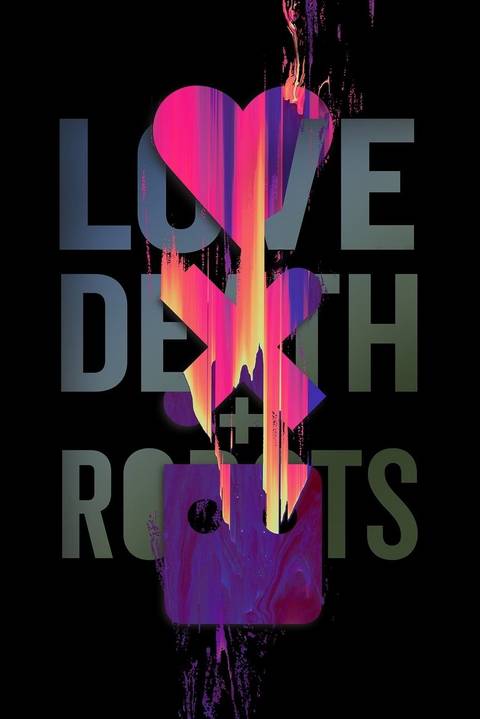
Love, Death & Robots
- Release Date
- March 15, 2019
Love, Death & Robots is an anthology series released in 2019, presenting a collection of animated stories curated by Tim Miller and David Fincher. Each episode explores diverse genres, featuring terrifying creatures, unexpected twists, and elements of dark comedy.
- Network
- Netflix
- Cast
- Bruce Thomas, Jane Leeves, John Oliver, Nika Futterman, Rhys Darby, Scott Whyte, Sumalee Montano, Feodor Chin, Rahul Kohli, Ronny Chieng, Josh Brener, Mary Elizabeth Winstead, Topher Grace, Helen Sadler, Hayley McLaughlin, Omid Abtahi, Christine Adams, Hakeem Kae-Kazim, Anastasia Foster, Neil Kaplan, G.K. Bowes, Courtenay Taylor, Tudi Roche, Michael Benyaer, Matthew Yang King
- Directors
- Víctor Maldonado, Patrick Osborne, Robert Valley, Alfredo Torres Martínez, Jerome Chen, Emily Dean, Rémi Kozyra, Léon Bérelle, Dominique Boidin, Alberto Mielgo, Maxime Luère, Andy Lyon, Robert Bisi, Dave Wilson, David Nicolas, Simon Otto, Damian Nenow, Laurent Nicolas, Kevin Van Der Meiren, Vitaliy Shushko, Owen Sullivan, István Zorkóczy, Javier Recio Gracia, Oliver Thomas
- Writers
- Tim Miller, Philip Gelatt
- Main Genre
- Animation
- Creator(s)
- Tim Miller
- Executive Producer(s)
- Aaron Sims, Al Shier, Andy Williams, Antonio Canobbio, Ben Kalina, Caleb Bouchard, Chris Prynoski, David Fincher, Jack Liang, Jason Taylor, Jake Aust, Jennifer Miller, Joshua Donen, Lauren Siller, Luisa Murray, Nathalie Bergeron, Shannon Prynoski, Shuzo John Shiota, Tim Miller
- Producers
- Elena Volk, Jessica Ambrose, Alex Dos Santos, Andrew Chan Gladstone, Artur Zicz, Bill E. Miller, David Guti Rosado, Dennis Beier, Ellen Collins, Jialiang Pan, Jordan Harkins, Meg Darcy
- Seasons
- 4
- Where To Watch
- Netflix
KioskNews shows a cleaned-up reading view extracted from the publisher’s page — the original always lives on their site, not ours.