10 Fantasy Books That Are a Masterclass in Prose
-19.jpg)

Diego Pineda has been a devout storyteller his whole life. He has self-published a fantasy novel and a book of short stories, and is actively working on publishing his second novel.
A lifelong fan of watching movies and talking about them endlessly, he writes reviews and analyses on his Instagram page dedicated to cinema, and occasionally on his blog. His favorite filmmakers are Andrei Tarkovsky and Charlie Chaplin. He loves modern Mexican cinema and thinks it's tragically underappreciated.
Other interests of Diego's include reading, gaming, roller coasters, writing reviews on his Letterboxd account (username: DPP_reviews), and going down rabbit holes of whatever topic he's interested in at any given point.
Sign in to your Collider account
There are multiple different ways for a fantasy book to enshrine itself as one of the genre's greatest works. Perhaps it can be through intricately detailed world-building, or through deeply nuanced and compelling character work, or through plotting that is irresistibly exciting and makes for an absolute page-turner from start to finish. There is one other way, however, that sometimes doesn't get nearly as much love as it deserves: Beautiful, meaningful, and functional prose.
Throughout history, authors like Ursula K. Le Guin and Mervyn Peake have completely re-defined what fantasy readers expect from any given book's prose with masterpieces of the caliber of A Wizard of Earthsea and Gormenghast. Whether the prose in question is great because it's beautifully melodic, or because it's highly detailed, or simply because it's so vivid that it successfully brings an enrapturing fantastical world to life, these are ten books that are absolute masterclasses in fantasy prose.
10 'A Wizard of Earthsea' (1968)

Ursula K. Le Guin was far and away one of the most important and transformative figures in the 20th-century history of speculative fiction, an author who helped elevate sci-fi and fantasy from their pulpier days to truly sophisticated, philosophically-charged high art. She did that through masterpieces like A Wizard of Earthsea, the beginning of her iconic Earthsea Cycle, which is one of those fantasy series where every book is a masterpiece.
She was very economical and spare in how she wrote, proving that less can be more when creating worlds as captivating as Earthsea.
While Le Guin's proseis often praised for having a cadence and rhythm that are almost musical, she was also very economical and spare in how she wrote, proving that less can be more when creating worlds as captivating as Earthsea. A Wizard of Earthsea sees her at her absolute peak, finding in Le Guin's masterfully precise and introspective language the foundations for it to read like some kind of ancient folktale.
9 'Perdido Street Station' (2000)

China Miéville is a major figure in contemporary speculative fiction, a pioneer of the "New Weird" literary movement. Emerging between the late '90s and early 2000s, this movement blended elements of sci-fi, fantasy, and horror to completely revolutionize weird fiction, a subgenre of speculative fiction that's all about evoking feelings of dread, uncanniness, and awe. Largely thanks to his dense, maximalist prose, Miéville proved how closely sci-fi and fantasy could interact with things like politics and philosophy.
Nowhere is that clearer or more masterfully realized than in Perdido Street Station, almost universally regarded as Miéville's magnum opus, and one of the best soft sci-fi books of all time. It's science fantasy at its least Tolkienian, elevated by Miéville's hugely descriptive and viscerally ornate prose. It's language so baroque that it almost demands keeping a thesaurus by one's side when reading Perdido Street Station, but it's all in service of a story about the bloated, sprawling, horrific nature of a hyper-industrial world.
8 'The Ocean at the End of the Lane' (2013)

Neil Gaiman is a major modern voice in fantasy books and comics, and his award-winning novel The Ocean at the End of the Lane, written by Gaiman as a way of reconnecting with his own childhood, is easily one of his greatest works. The author's prose is often hugely accessible and deeply atmospheric, and that elevates this particular novel tremendously.
The unnamed protagonist of Ocean at the End of the Lane is seven years old, and the way Gaiman manages to capture the innocence, vulnerability, and deceptively simple perspective of such a narrator is nothing if not admirable. It's straightforward, entirely unpretentious language, but crafted with such a lyrical and sensory rhythm that it ends up being beautiful. Gaiman originally wrote the story as a private piece for his wife, and that makes the prose feel like it has a level of emotional candor not often seen in this genre.
7 'The Fifth Season' (2015)

N. K. Jemisin's Broken Earth trilogy made history by becoming the first book trilogy in history where every installment won the Hugo Award for Best Novel in consecutive years—and for good reason. But at least when it comes to unforgettable prose, it doesn't get any better than the first installment in the series, The Fifth Season. It's one of the best books published since 1990, and a must-read for pretty much anyone who enjoys science fantasy.
There's a myriad of factors that make Jemisin's prose in The Fifth Season absolutely masterful, from its intimate feel to its structural boldness to its delightfully experimental attitude. Some chapters are narrated in second person, and the way Jemisin shifts between these and the chapters narrated in third person creates a visceral sense of emotional weight that allows all 512 pages of the novel to feel potently consequential.
6 'Gormenghast' (1950)

Widely considered one of the most critically important and revolutionary works of 20th-century speculative fiction, Mervyn Peake's Gormenghast series is an undisputed pillar of modern fantasy. This is not, however, a piece of highly commercial fantasy. Instead, Peake's magnum opus series is a more experimental, deeply psychological, and structurally complex cornerstone of the genre's history, and when it comes to the question of which installment has the best prose, the answer has to be the second chapter, Gormenghast.
The book's prose is remarkably dense, lyrical, and intensely visual. Peake was also a professional painter and poet, and you can absolutely tell from the wonderfully painterly and baroque way in which he describes the exaggerated, even grotesque details of the story's world. The author plays with the sound and rhythm of Gormenghast's verbal foundations in ways that are both masterfully slow-paced and gorgeously atmospheric.
5 'Tigana' (1990)

Canadian writer Guy Gavriel Kay, though undeniably a major figure in modern speculative fiction, is nevertheless an awfully underappreciated author. To understand the reasons why, one needn't look much furthern Tigana, which some may go so far as to say is his masterpiece. It's one of those forgotten fantasy books that have aged like fine wine, cited by many as one of the greatest single-volume fantasy epics in the history of literature.
Tigana in particular finds the author at his most lyrical and dreamlike.
Kay's prose has always been known for its elegantly poetic and deeply emotional nature, and Tigana in particular finds the author at his most lyrical and dreamlike. His wording often reads more as classic historical fiction rather than purely commercial high fantasy, and that allows the book's potent themes of memory, tyranny, and grief to pack all the more of a punch.
4 'Piranesi' (2020)

Due to a severe, debilitating chronic illness, it took Susanna Clarke a whopping 15 years to craft another novel after the tremendous success of 2004's Jonathan Strange & Mr Norrell; but, in the end, not only was the wait worth it, it gave us one of the greatest fantasy books of the 21st century as a whole: Piranesi, perfect for those looking for a great standalone fantasy book that requires no series commitment.
On the surface, Clarke's prose in Piranesi may seem deceptively simple. Written as a series of diary entries, the book relies on language that feels as immediate and personal as you'd expect when reading an actual diary. Clarke, however, elevates that prose with a solemn, immersive tone that allows the book's dreamlike atmosphere to feel powerfully surreal. It's writing so strong that it makes a re-read or two not only instantly tempting, but pretty much necessary in order to appreciate the full brilliance of Clarke's writing.
3 'The Forgotten Beasts of Eld' (1974)

A foundational piece of modern fantasy and the historic inaugural winner of the World Fantasy Award in 1975, Patricia A. McKillip's The Forgotten Beasts of Eld is frequently cited among the best-written fantasy books of all time. With elements of romance, suspense, and—of course—enrapturing fantasy adventure, it's a special kind of fairy tale fantasy book that prioritizes beautiful prose over a sprawling scope or massive world-building.
Lush and grand yet ethereal and intimate, McKillip's prose in Forgotten Beasts of Eld packs a surprising level of density and verbal depth considering that this is a novel that's barely a little over 200 pages long. The author's writing sometimes feels almost more closely akin to verse than your typical fantasy prose, making this feel like one of the richest and most timeless fantasy novels of its kind.
2 'The Lord of the Rings' (1954–1955)

Saying that J. R. R. Tolkien's The Lord of the Rings is the greatest, most influential, and most important fantasy book of the 20th century would almost be an understatement. Published in three volumes but technically all one single fantasy epic, this is one of those fantasy books where every chapter is perfect, an absolutely foundational piece of speculative fiction whose historical importance truly can't be overstated.
Tolkien's prose is famously deeply rooted in his expertise as an Old English philologist, yet surprisingly versatile and flexible—and nowhere is that prose more enrapturing or famous than in The Lord of the Rings. Hugely detailed, beautifully sensorial, and surprisingly cinematic considering the book's age, it's some of the greatest prose that any fantasy novel has ever seen. While some readers today may find it somewhat archaic or slow, those with the patience for its unobtrusive style should be perfectly able to understand why it has been so influential over the years.
1 'The Name of the Wind' (2007)
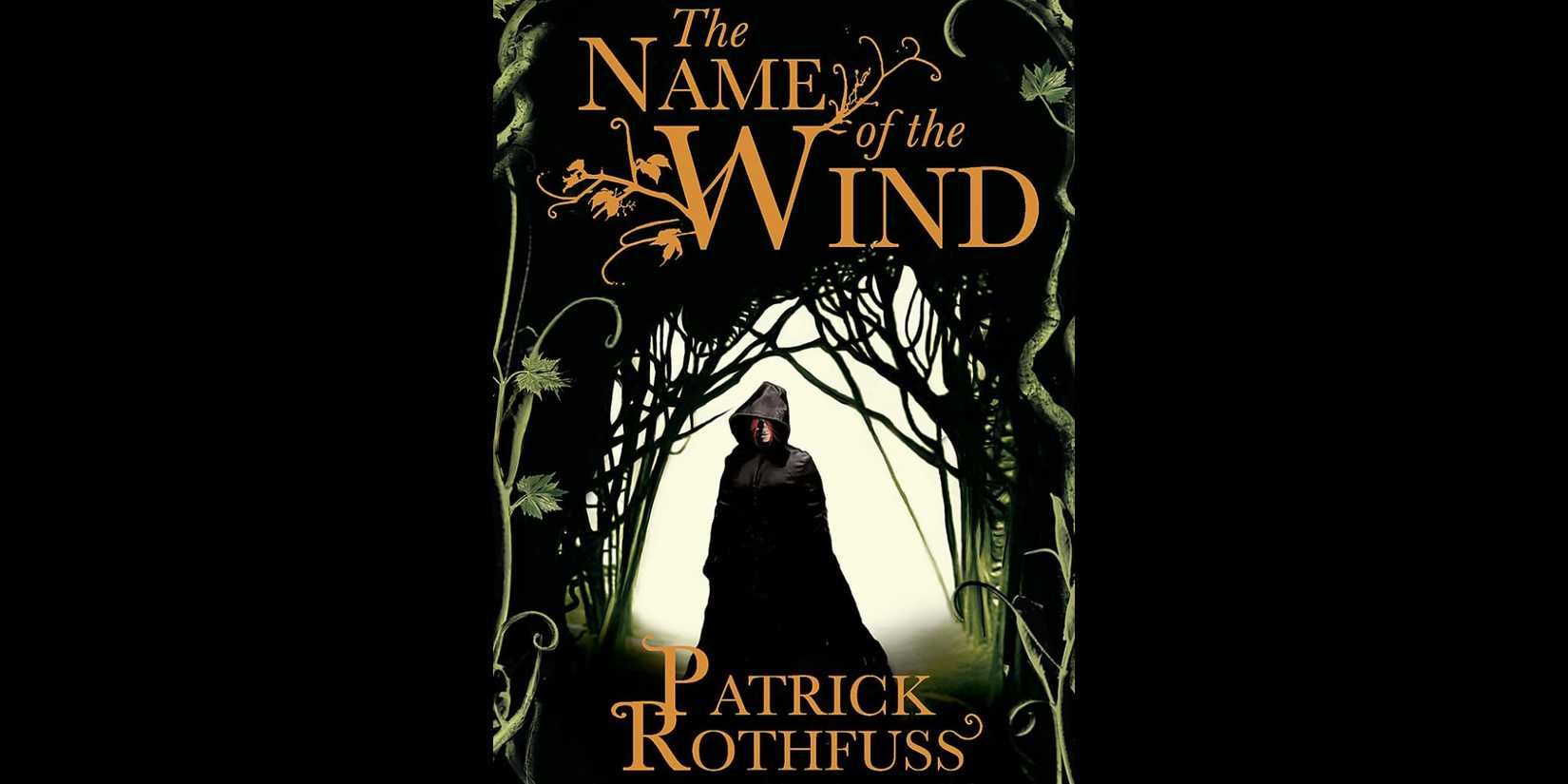
There is arguably no fantasy book that is better-known for its masterful prose than Patrick Rothfuss' The Name of the Wind, and that's for good reason. Regardless of whether or not the world will ever get to see the third chapter in Rothfuss' Kingkiller Chronicles, one thing will forever remain certain: Name of the Wind is easily and by far one of the greatest fantasy novels of the 21st century, one of those fantasy book masterpieces that are perfectly written.
From the complex character work to the richly nuanced world-building, there are countless reasons why The Name of the Wind is a masterpiece. However, from regular readers to creative titans of the stature of Lin-Manuel Miranda and Ursula K. Le Guin, most people tend to agree that the book's biggest strength is Rothfuss' prose. Lyrical, atmospheric, beautifully florid, and yet surprisingly seamless in how it incorporates all of those elements together, the writing in Name of the Wind is arguably the greatest prose that any fantasy book has ever seen.
Collider Exclusive · 8 Questions · 2 Minutes What Fantasy World Do You Belong To? Middle-earth · Grand Line · The Continent · Camp Half-Blood
Pick your magic, your crew, where you want to wake up and who you would rather be fighting, and we will tell you which world you actually belong in. Four are open to you: an ancient kingdom living through its last good age, an endless sea full of pirates, a continent that pays people to kill monsters, and a summer camp where the Greek gods are extremely real and mostly a nuisance.
💍Middle-earth(Rings of Power)
👒Grand Line(One Piece)
🐺The Continent(The Witcher)
🔱Camp Half-Blood(Percy Jackson)
01
What kind of power do you want? Every one of these worlds runs on a completely different sort of magic.
02
Who is travelling with you? Nobody gets through any of these stories entirely on their own.
03
Where do you want to wake up tomorrow? The best fantasy is usually just somewhere you would genuinely like to live.
04
How are you making a living out there? Even in fantasy somebody has to pay for the horse.
05
There is something in the woods. What do you do about it? All four of these worlds keep something unpleasant out there in the dark.
06
Who is the villain of your story? The enemy tells you far more about a world than the hero ever does.
07
What do you actually believe in out there? Every world hands its heroes one rule and asks them to hold onto it.
08
A thousand years from now, how are you remembered? Eight questions in, this is the one that decides your world.
The Map Is Drawn Your World Is…
Four worlds and four completely different ideas of what a good life looks like. This is where you belong, what it would ask of you, and what you would get back in return.
Middle-earth
You belong somewhere old enough that the mountains have names and somebody can still tell you who gave them. Middle-earth is for people who think the right thing is worth doing even when it will not be finished in their lifetime.
- This is the only world on the list where doing good is understood as a very long defeat, fought anyway, by people who will never see how it ends.
- You are drawn to grandeur, to white cities and deep forges and the sense that almost everything you touch is older than your entire family line.
- The Rings of Power is set in the last good age before it all goes wrong, which gives every quiet scene in it a slightly unbearable weight.
- You would take the hard road, and you would take it on foot.
The Grand Line
You want the sea, a crew, and absolutely nobody telling you where you are allowed to go. The Grand Line is the world for people whose main ambition in life is finding out what is over there.
- One Piece has run for decades on one very simple engine, which is a group of people who each want something impossible and have decided to go and get it together.
- You collect people. Your ideal crew is a set of misfits who were each written off somewhere else before you turned up and offered them a better idea.
- The world is enormous and deliberately ridiculous, and the emotional gut punches land harder because of that rather than in spite of it.
- You would set sail knowing the map runs out, which is more or less the entire point of it.
The Continent
You would rather be feared and useful than liked and useless. The Continent is a world where the monsters are the straightforward part of the job and the people are where it all gets complicated.
- Witchers get paid to do what nobody else will and resented for existing at all, which is a trade most people would refuse and you would probably accept.
- You have no real illusions about which side is the good one, largely because on the Continent that question tends to have a disappointing answer.
- The best of these stories are not about the fighting. They are about somebody with a rigid code being repeatedly cornered into caring about people.
- You would take the coin, finish the job properly, and be out of town before the story got told wrong.
Camp Half-Blood
You want the myths to be real and loose in the actual world, and you want to find out at about thirteen that you were never anywhere near as ordinary as everybody kept telling you.
- Percy Jackson takes the oldest stories we have and drops them into car parks and diners, which makes the gods considerably funnier and a great deal worse.
- You would be the kid every school gave up on, who turns out to have been built for something nobody thought to test for.
- The series is genuinely about friendship rather than destiny, and it says so out loud every time a prophecy tries to get in the way.
- Camp Half-Blood is the real fantasy here: a place where the thing that made you difficult everywhere else is the thing that makes you belong.
KioskNews shows a cleaned-up reading view extracted from the publisher’s page — the original always lives on their site, not ours.