Indonesia eyes Rp500 trillion annual savings from bioethanol
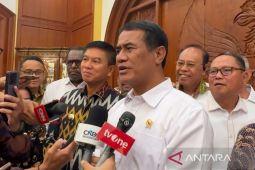
Jakarta (ANTARA) - Developing a domestic bioethanol industry could save Indonesia around Rp500 trillion (US$28.09 billion) in foreign exchange annually, according to Minister of Agriculture Andi Amran Sulaiman.
Speaking after a coordination meeting with 44 regional regents in Jakarta on Monday (September 21), Amran said that producing renewable biofuels domestically would keep significant capital within the domestic economy instead of sending it overseas for fuel imports.
"The key point is that the ethanol, the energy value, the biofuel, is currently produced by other countries, representing a value of Rp500 trillion,” Amran said.
He added that if the Rp500 trillion circulated among Indonesian farmers instead, it would strengthen the domestic economy.
To achieve this goal, the government is preparing between 1 million and 2 million hectares of land as a production base for raw materials.
Development will focus on three strategic agricultural commodities: sugarcane, cassava and corn.
Amran explained that the 44 participating regents had committed to supporting the program by identifying regional land potential and suitable crop types. The government will prioritize available land with clear legal status, including areas that have already been released for agricultural use.
To build the industrial processing facilities, the government plans to use a joint funding scheme between state-owned enterprises (SOEs) and private investors.
"The funding mix might be 30 percent from SOEs and 70 percent from the private sector; the private sector will certainly be interested, since the state is providing the land," the minister said.
Amran described the bioethanol development as part of a broader effort to achieve national sovereignty in energy, building on prior initiatives in food and protein security.
"The core objective is to achieve sovereignty in energy, food, and protein. God willing, Indonesia will become a major nation in the future. We have addressed food and protein; now, we are pursuing ethanol,” he said.
Related news: Indonesia prepares 2 million hectares for bioethanol
Translator: Muhammad Harianto, Yashinta Difa
Editor: Bayu Prasetyo
Copyright © ANTARA 2026
KioskNews shows a cleaned-up reading view extracted from the publisher’s page — the original always lives on their site, not ours.