With selfies and squats, Brazil's Lula fights for one last comeback
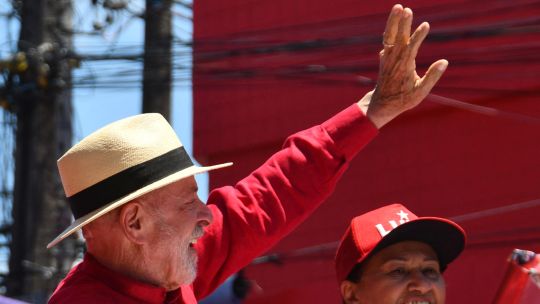
Brazil's leftist President Luiz Inácio Lula da Silva has done squats, jogged along the campaign trail, and posted his first selfie videos in a frenetic bid to prove that, at almost 81, he has one final comeback in him.
Lula, a defining figure in Brazilian politics over four decades, rose from poverty to the Presidency, fell into disgrace and was jailed, before once again rising from the political ashes when he returned to power almost four years ago.
He was blindsided after coming in second place to right-wing senator Flávio Bolsonaro in a first round presidential election earlier this month.
In a major campaign shake-up for Sunday's run-off election he called upon tech-savvy young lawmakers to give him a crash course in harnessing social media and began churning out selfie videos in a way his rivals had been doing for months.
The shift highlighted a certain disconnect with his country's extremely online, deeply polarised population, 14 years after he was first elected.
Lula is seeking a fourth term in office in his final election battle, which pits him against the son of his political nemesis, far-right former president Jair Bolsonaro.
His once-thick black hair has greyed and thinned, much like his trademark beard and he has had a few health scares, such as a fall in his bathroom that caused a brain bleed, and skin cancer.
But, he vows he is fitter than ever, sharing social media videos of his workouts, while jogging through crowds of supporters.
He credits his third wife Rosangela da Silva, 60, with keeping him young, but some in his camp complained about her over-exposure during the campaign.
Jailed for corruption
Lula's first round campaign focused heavy on his life story and legacy – which critics said was a misreading of what weary Brazilians wanted to hear.
Lula grew up in deep poverty, the seventh of eight children born to a family of illiterate farmers in the arid northeastern state of Pernambuco.
He worked as a shoeshine boy and peanut vendor before becoming a metalworker and trade unionist. In the 1960s, he lost a finger in a workplace accident.
After losing three presidential bids, Lula finally entered the presidential palace in Brasilia in 2003 and was re-elected in 2006.
He left office in 2010 as a blue-collar hero who presided over a commodity-based economic boom that helped lift 30 million people out of poverty.
Massive corruption scandals haunted Lula and his party, fueling a wave of disgust that propelled far-right leader Jair Bolsonaro into the presidency in 2018.
Lula was jailed later that year until the charges were thrown out on procedural grounds and the lead judge on the case was found to be biased.
However, Lula was not exonerated and the scandal contributed to enduring polarization in Brazil.
Bolsonaro's presidency was equally divisive, and by the 2022 election, Lula pulled off a dramatic comeback by a razor-thin margin.
'Love for the poor'
In his third term, Lula is credited with restoring social programs eroded by his predecessor, curbing the destruction of the Amazon rainforest, and putting Brazil's democracy back on a more secure footing.
But the father of five still triggers fierce rejection among voters frustrated by crime and corruption.
He has also faced criticism over Brazil's mounting public debt, which, with high interest rates, costs the government around US$18 billion a month in interest alone.
Lula has come under fire for an election-season spending push, including an increase to the Bolsa Familia social welfare benefits which, launched 20 years ago, remains his most significant legacy.
While he has bled support in much of the country, voters in his bastion of the poor northeast still recall the pangs of hunger they felt before Lula's social programmes were introduced.
"He has that love for the poor. That's all it is," fisherman Antonio Carlos Lima Ferreira told AFP at his home in the interior of Maranhao state, recalling times when he had to send his son to bed hungry.
"Today, at my table, I can choose what I want to eat."
Lula said recently he did not want to be remembered as "just the Bolsa Familia president."
No successor
Lula, who has not cultivated a potential successor, says he wants to stop the far right from returning to "destroy" the country.
If he loses on Sunday, he will leave office without the triumphant finale he seeks, but with an enduring legacy.
Lula has spent more time in office than any other democratically-elected leader in Latin America's biggest country.
"There is no-one in this country with more experience as president than me," Lula told foreign media, including AFP, in an interview.
KioskNews shows a cleaned-up reading view extracted from the publisher’s page — the original always lives on their site, not ours.