Why parts of Lucknow are flooded despite no rain for days
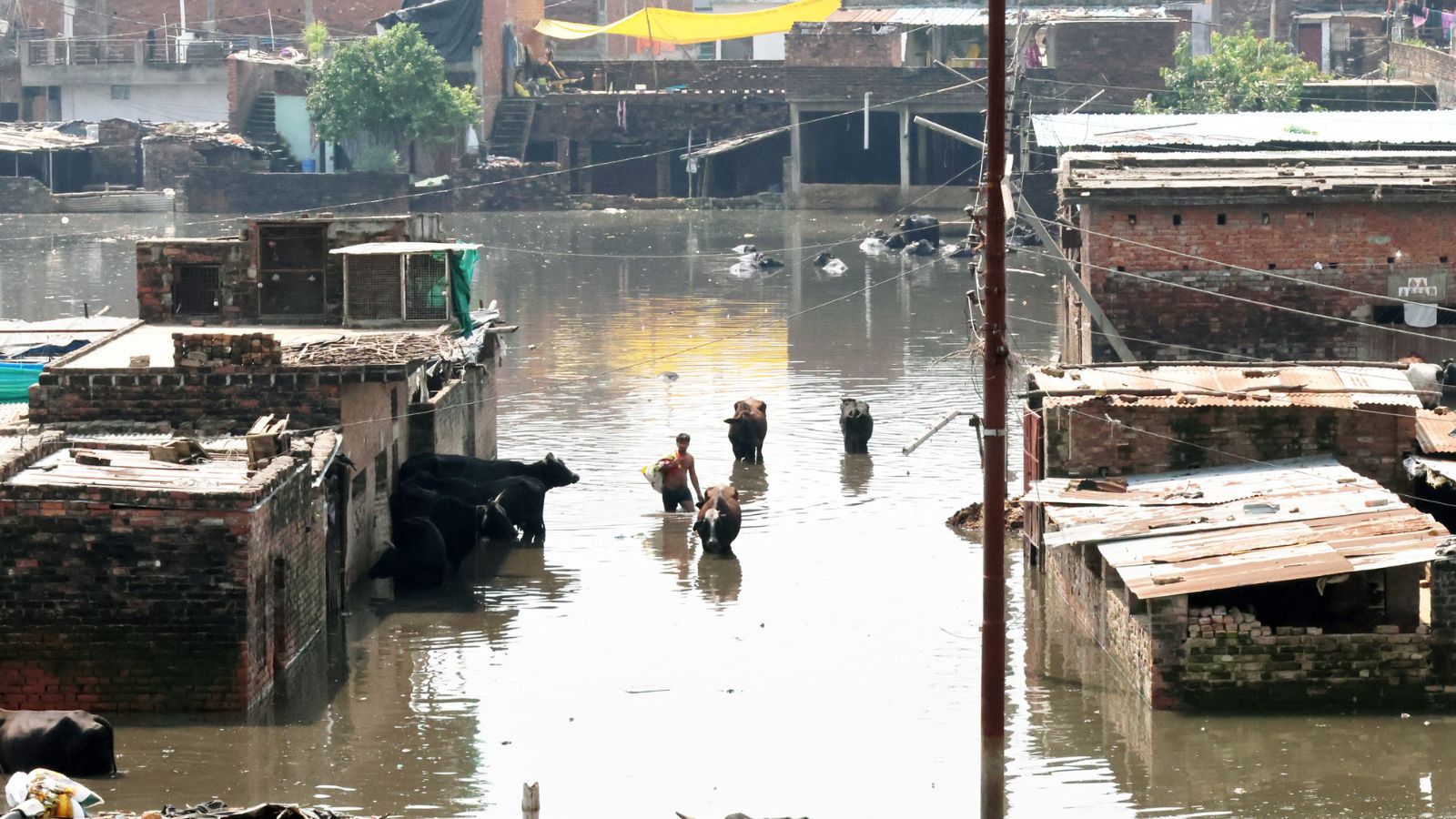
For the past few days, Lucknow has received no significant rainfall. Instead, it’s sunny. Yet large parts of the state Capital are flooded in the month of October. Faizullaganj, on the city’s northern fringes, is worst hit, and the situation has been deteriorating with each passing day.
The reasons for the flood-like situation are the result of a chain of events.
Officials said the water inundating low-lying areas is largely the result of heavy rainfall in the upper catchment of the Gomti in the last week of September, with the river now carrying the water downstream to Lucknow.
“The Gomti river’s catchment areas are spread over Pilibhit, Shahjahanpur, Lakhimpur Kheri and Sitapur districts that witnessed exceptionally heavy rainfall between September 22 and 27. Normally, the rainfall over five days would be around 15 mm. This time it was around 150 mm, with some places receiving nearly 257 mm,” Principal Secretary (Irrigation) Anil Garg said, describing the spell as extreme rainfall.
The Gomti originates near Madhotanda in Pilibhit and flows through the upstream districts before reaching Lucknow.
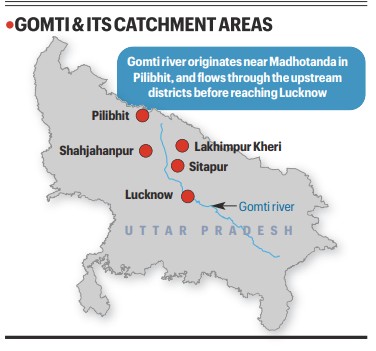 The Gomti originates near Madhotanda in Pilibhit and flows through the upstream districts before reaching Lucknow.
The “extreme rainfall” in the last week of September also flooded smaller rivulets and streams feeding the Gomti, resulting in a large volume of water entering the Gomti system.
How did this happen?
The water in a river system does not move instantaneously, Garg explained. Under normal conditions, it takes about 10-12 days for water to travel from the Pilibhit region to Lucknow, he added.
Story continues below this ad
“This time, however, several days of exceptionally heavy rainfall meant that large volumes accumulated across the catchment and in the smaller streams before moving downstream. So, even after the skies over Lucknow cleared, the city continued to receive water generated much earlier and much farther upstream,” the official said.
The high flow also takes time to move through the river. Since it takes 10-12 days for water from upstream to reach Lucknow, experts expect the water level to start receding after two days, as the peak inflow moves downstream.
“With the upstream areas of the Gomti receiving 25 per cent of the annual rainfall in just three days’ time till September 27, and with water travelling at the speed of 1 km per hour, it took several days for the water to reach Lucknow, which is about 240 km from the point of origin,” said District Magistrate Vishak G.
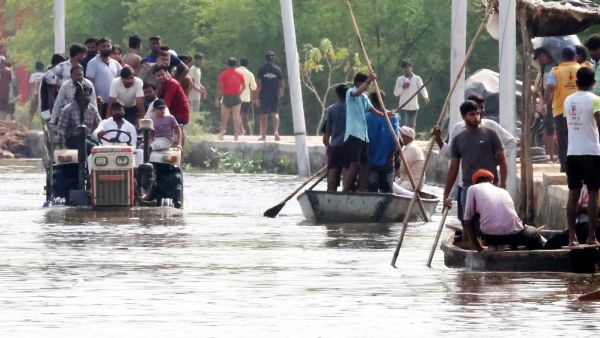 At least 40,000 residents have been affected as the Gomti river floods low-lying areas in Lucknow. (Express Photo by Vishal Srivastav)
Garg said the water generated after the September 22-27 spell continued moving downstream for several days, eventually heading towards areas such as Sultanpur.
Story continues below this ad
Lucknow’s own share of record rainfall
Lucknow itself received around 150 mm of rainfall during the September-end brief spell, adding to the water flowing through the Gomti.
“The combined effect of local rainfall and upstream inflow pushed the river’s discharge to around 1,100 cusecs,” said Garg.
To allow the excess water to pass downstream, all 10 gates of the Gomti barrage were opened, as holding back the water would have led to more problems, according to officials of the Irrigation Department.
Also, as the river passes through Lucknow, its flow is affected by multiple bridges and structures along the river, meaning the water does not move through the city as one uniform surge.
Why Faizullaganj is worst hit
Faizullaganj lies in the floodplain of the Gomti river, an area naturally prone to inundation when the water level in the river rises.
Story continues below this ad
“Concrete houses have come up in the area over the past two decades. This has increased the vulnerability of the settlement when the river receives an unusually large volume of water,” said an official.
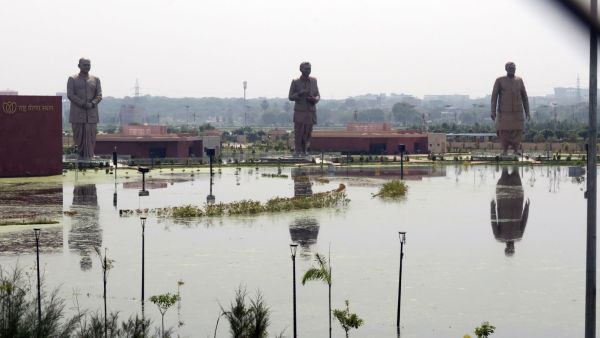 Rashtra Prerna Sthal, spread across 65 acres, next to the Gomti river embankment on Hardoi Road on the outskirts of Lucknow, is also flooded. (Express Photo by Vishal Srivastav)
Sources said that since there was no such flooding in the past two decades, settlements developed on this floodplain.
What’s next
The state government is now looking at building embankments from Faizullaganj to Naimish as a measure to protect vulnerable areas from future flooding.
According to officials, the Lucknow Development Authority (LDA) was already in the process of laying embankments in Faizullaganj. Chief Minister Yogi Adityanath, who on Monday did an aerial survey of the affected areas, ordered building embankments along the river. The Irrigation Department is expected to conduct the survey from Faizullaganj to Naimish in Sitapur.
KioskNews shows a cleaned-up reading view extracted from the publisher’s page — the original always lives on their site, not ours.