The 10 Best True Crime Books of All Time, Ranked

Jeremy has more than 2800 published articles on Collider to his name, and has been writing for the site since February 2022. He's an omnivore when it comes to his movie-watching diet, so will gladly watch and write about almost anything, from old Godzilla films to gangster flicks to samurai movies to classic musicals to the French New Wave to the MCU... well, maybe not the Disney+ shows.
His favorite directors include Martin Scorsese, Sergio Leone, Akira Kurosawa, Quentin Tarantino, Werner Herzog, John Woo, Bob Fosse, Fritz Lang, Guillermo del Toro, and Yoji Yamada. He's also very proud of the fact that he's seen every single Nicolas Cage movie released before 2022, even though doing so often felt like a tremendous waste of time. He's plagued by the question of whether or not The Room is genuinely terrible or some kind of accidental masterpiece, and has been for more than 12 years (and a similar number of viewings).
When he's not writing lists - and the occasional feature article - for Collider, he also likes to upload film reviews to his Letterboxd profile (username: Jeremy Urquhart) and Instagram account.
He has achieved his 2025 goal of reading all 13,467 novels written by Stephen King, and plans to spend the next year or two getting through the author's 82,756 short stories and 105,433 novellas.
Sign in to your Collider account
To get the necessary definition out of the way right at the start, true crime is a “non-fiction genre of literature, film, podcasts, etc. that depicts and examines real crime cases.” Films, podcasts, and anything else are going to be ignored below, though, because the focus here is on true crime books, which tend to go more in-depth than crime documentaries (they're longer), and they're also generally more nuanced and well-crafted than even the best true crime podcast can be.
These true crime books are the best of all time, with some being picked partly because they were historically important in the entire genre’s development, and others being more recent but still admirable for how they elevate the entire genre. They're great reads, and most can be recommended even if you don’t typically read a good deal of non-fiction.
10 'Casino: Love and Honor in Las Vegas' (1995)

While it’s not quite as good as another true crime book Nicholas Pileggi wrote a decade earlier (more on that one in a bit), Casino: Love and Honor in Las Vegas is still pretty great. It was the basis for Casino, the Martin Scorsese film that came out the same year, with this being a 2001: A Space Odyssey situation, where the book and movie came out very close together, and like Christine (1983) and Christine (1983), too.
Very different books. Sorry, bit of a tangent. This one, though, is about how the mob more or less ran Las Vegas for a little while, with the book spanning the 1970s and a bit of the 1980s. It’s a grim and violence-heavy read, just like the film of (almost) the same name, which most people would've probably seen before ever getting around to the book, so at least you kind of know what you're in for when you sit down to read it.
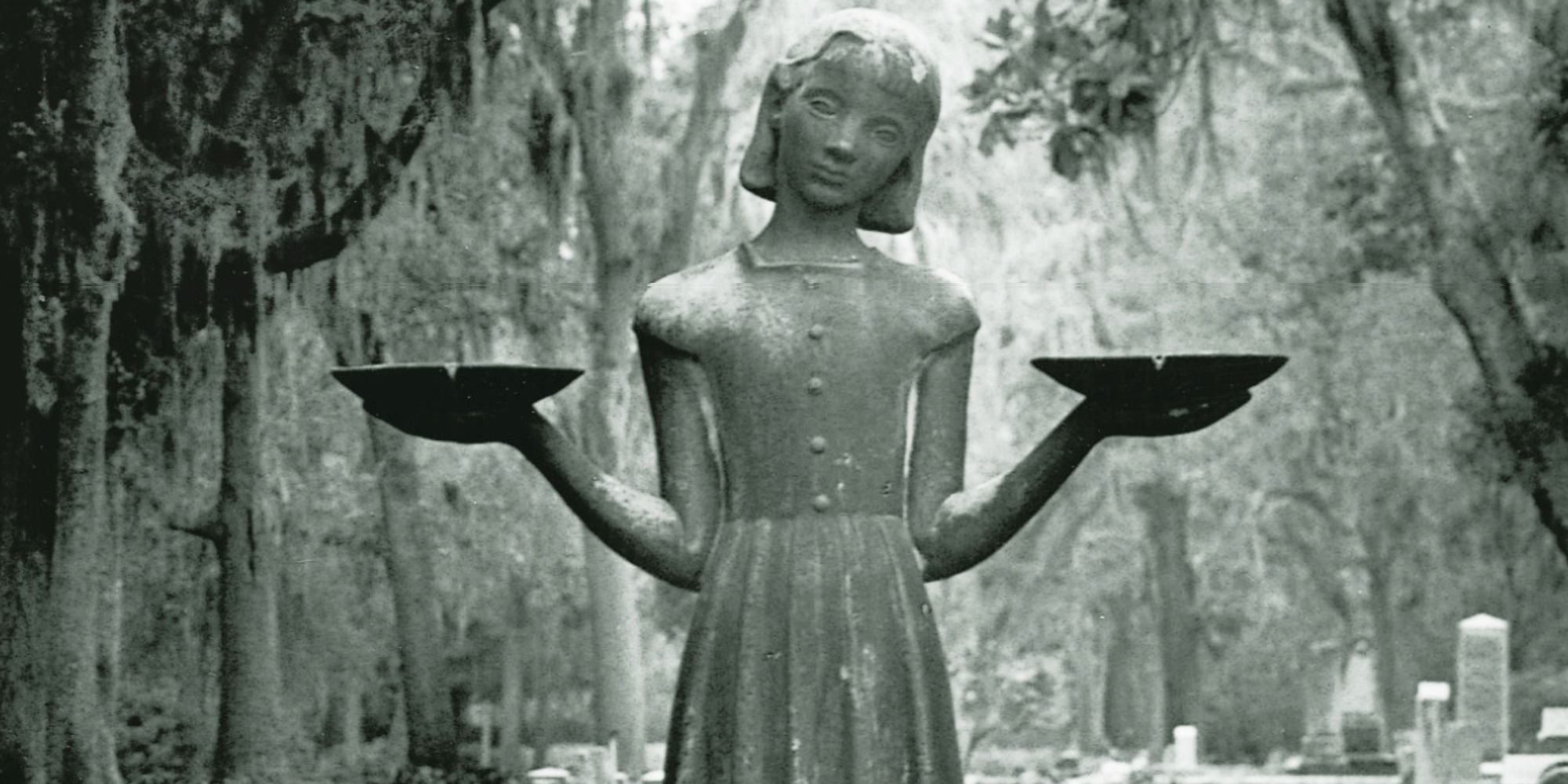
9 'Midnight in the Garden of Good and Evil' (1994)

This book was adapted into a film of the same name, directed by Clint Eastwood, but that version of Midnight in the Garden of Good and Evil doesn’t entirely do the source material justice. It should be noted, though, that while this is about a crime that did really happen, Midnight in the Garden of Good and Evil might be better described as a non-fiction novel (a real thing, apparently) than a truly true crime one.
It emphasizes novel-like storytelling to a greater extent than most true works of non-fiction, giving a little more by way of flair to a real-life story involving an antiques dealer on trial for murder. It’s to the book’s benefit in the end, though, since Midnight in the Garden of Good and Evil stands out from other true crime (or true crime-adjacent) books in a number of interesting ways.
8 'My Dark Places: An L.A. Crime Memoir' (1996)

James Ellroy doesn’t hold anything back at all with My Dark Places: An L.A. Crime Memoir, which is in the running for the title of “most uncomfortably introspective book of all time,” if that’s a title anyone actually wants to decide upon. It’s undoubtedly bold for sure, because he explores the murder of his mother, which happened when he was only 10, and in intense detail, unpacks how that event shaped his life going forward.
My Dark Places is not going to be for everyone, by any means, and it’s also not the most consistent of books, yet it is a remarkable achievement within the whole sub-genre of non-fiction crime.
The brutal and unsolved crime has clearly influenced his works of fiction (or they're possibly more historical fiction), too, but here, he goes into things in far more detail, and it makes sense, given it is a memoir. My Dark Places is not going to be for everyone, by any means, and it’s also not the most consistent of books, yet it is a remarkable achievement within the whole sub-genre of non-fiction crime, so it’s more than worthy of a mention here.
7 'Columbine' (2009)

At the very end of the 20th century, the Columbine High School massacre happened, and then the effects of it have lingered – and the events proved haunting – well into the 21st century. Fittingly, then, it took some years before any works could accurately document what happened and how it impacted things, with Columbine being a non-fiction book published almost exactly a decade on from the event it primarily explores.
There is a lot that needs to be unpacked with this real-life event, and it’s done with genuine care and an admirable attention-to-detail in Columbine. It’s heavy-going, even by the standards of the true crime sub-genre, with the crime here being an especially large (in scope) and distressing one, but this is probably about as good as a non-fiction book about the event in question can possibly be.
6 'Midnight Express' (1977)

Midnight Express is probably the least well-known book of all the ones being included and briefly discussed here, so calling it currently underrated feels fair. It was co-written by Billy Hayes and William Hoffer, with it being about Hayes, specifically how he ended up in a Turkish prison on drug smuggling charges, and how he plotted to escape once his sentence was imposed to last for three decades.
It’s incredibly engaging, as a document of a man’s time in prison, surviving it and then attempting to escape, and it also makes for a tense read, even if you go into it having some idea of how it’s going to turn out (like, Hayes himself can’t exactly die or anything, since he, you know, co-wrote the book and all). Midnight Express does touch upon ideas of crime and justice to some extent, all the while working best as a very personal – and consistently tense – memoir.
5 'Helter Skelter: The True Story of The Manson Murders' (1974)

Vincent Bugliosi was first and foremost a prosecutor, and so he didn’t write a ton of books, but the books he did write could be incredibly dense and ambitious (especially the mammoth work that is Reclaiming History). Helter Skelter: The True Story of the Manson Murders is his best-known book, and decently lengthy/comprehensive, being about the Manson murders (as the title tells you), told from the perspective of the prosecutor in the 1970 Charles Manson trial, though it was co-authored by Curt Gentry.
Still, Bugliosi’s involvement in the case can’t help but make his perspective on the murder and its aftermath an interesting one, with Helter Skelter having further historical value for being so popular and widely read as a true crime book. It is important, as a result, in tracing the development of the whole sub-genre and seeing how it’s come to be so popular today.
4 'Say Nothing: A True Story of Murder and Memory in Northern Ireland' (2018)

Say Nothing: A True Story of Murder and Memory in Northern Ireland does more than just feel like a true crime book, since the crime at its center is really just what’s used to explore a wider variety of things relating to the Troubles in Northern Ireland. The crime, though, involves the abduction of a woman named Jean McConville, exploring that incident and the fallout from it in great detail.
Well, great detail without things getting bogged down in the details, or otherwise difficult to follow/keep up with. Patrick Radden Keefe writes with remarkable coherency, condensing complicated events and issues into a surprisingly digestible and well-paced read that is a great true crime novel and then, subsequently, so much more (as mentioned before). And three years later, Keefe had an arguably even stronger book (that was also sort of true crime) get published. Speaking of…
3 'Empire of Pain: The Secret History of the Sackler Dynasty' (2021)

That other Patrick Radden Keefe book is Empire of Pain: The Secret History of the Sackler Dynasty, with the crime here being on a much greater scale than in the other books being talked about here, if it can be counted as a crime. It might be something else, but contributing (or even causing) something as destructive as the opioid epidemic definitely should be regarded as some kind of large-scale crime.
You get a lot of history regarding the Sackler family and how members of that family did things that led to the opioid epidemic, with Empire of Pain eventually getting even more devastating when it unpacks just a fraction of the human cost of the whole ordeal. It’s equal parts a challenging and essential read, and easily one of the best non-fiction books of the century so far.
2 'In Cold Blood' (1966)

It’d probably be some kind of crime, ironically enough, to not mention In Cold Blood when talking about the true crime genre, since this one was instrumental in the whole genre’s (or sub-genre’s?) development. In Cold Blood does also cross over, at least a little, into novel territory, rather than strict non-fiction, with the approach it takes being somewhat comparable to the one the aforementioned Midnight in the Garden of Good and Evil took.
With In Cold Blood, it’s about the murder of a family committed by a pair of home intruders, and the subsequent arrests and trials. It’s also an obvious one to put here because it’s regarded as one of the greatest books of all time, like generally, not just within the non-fiction and/or crime categories, so yeah… a bit of a boring pick, but a necessary one.
1 'Wiseguy' (1985)

The return of Nicholas Pileggi, here’s Wiseguy, which can be tied to Martin Scorsese as well, like Casino, because Wiseguy was the basis for Goodfellas. The central figure here is Henry Hill, with the book covering much of his life, but with a particular focus on the time he spent as an associate of the mafia, all before he turned informant and went into witness protection.
Wiseguy does let you know that’s where things are going to end up right near the start, so even if you’ve not seen Goodfellas before (wild as that might be), it doesn’t really count as a spoiler, if true crime books can even be spoiled in the first place. Anyway, this is as good as that kind of book gets, with it offering a great deal of insight into an undeniably interesting world, all the while being incredibly well-paced and put together, narratively speaking.
KioskNews shows a cleaned-up reading view extracted from the publisher’s page — the original always lives on their site, not ours.