Construction Ban, Dust Control: Delhi's Winter Action Plan Explained
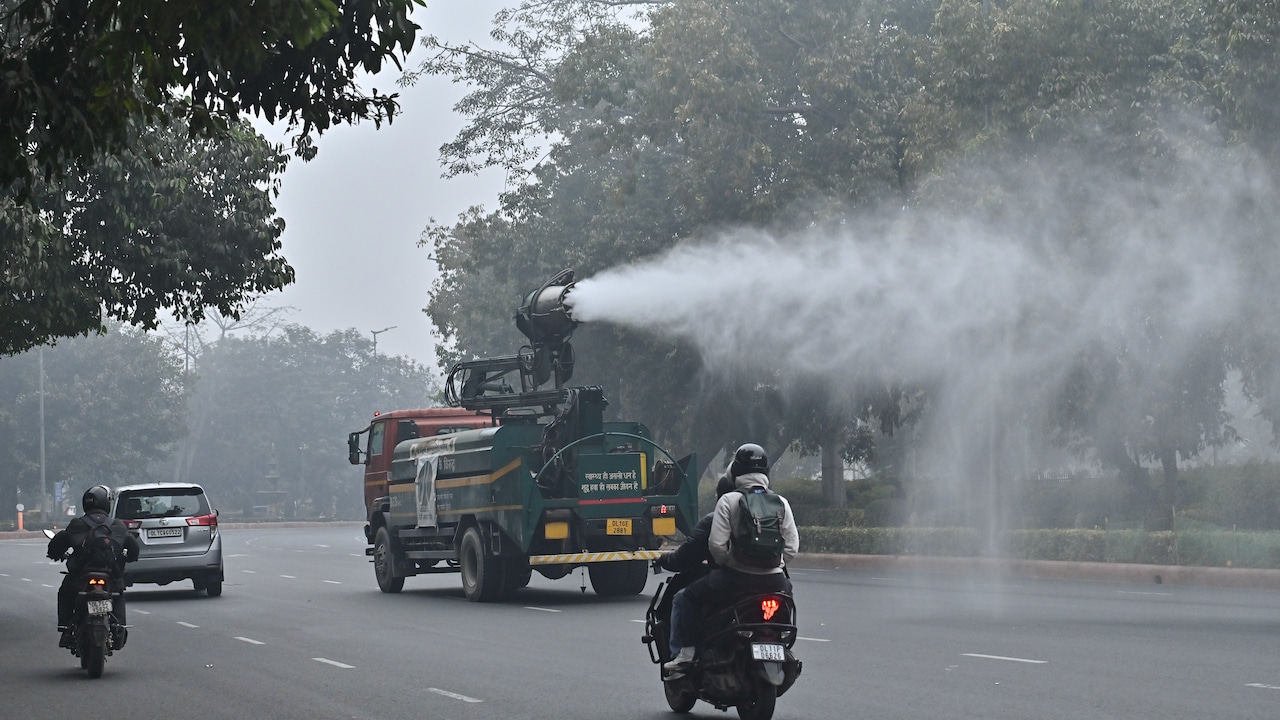
The Delhi government has unveiled its Winter Action Plan 2026-27. The plan aims to address air pollution-related problems in the NCR region and calls for stricter enforcement and restrictions on vehicular pollution, as well as construction. Dubbed as a collaborative effort, the plan has been crafted by the Delhi Government and the Ministry of Environment, Forest, and Climate Change.
The prescribed plan seeks cooperation between agencies such as the Commission for Air Quality Management (CAQM), Central Pollution Control Board (CPCB), Delhi Metro Rail Corporation (DMRC), Delhi Police, local authorities, and citizens.
Vehicles
For car owners, the plan has a very straightforward approach. The plan proposes the "No PUCC, No Fuel" campaign, which will intensify from October 1 at all 500 pumps with ANPR systems. This means that vehicles without a valid Pollution Under Control Certificate (PUCC) or those exceeding their prescribed lifespan will be denied fuel.
Not just this, starting November 1, petrol and diesel vehicles registered outside Delhi and not meeting BS-VI standards will be banned from entering the city, though CNG and electric vehicles are exempt.
The government states that it will intensify the 'Parivartan Scheme', which aims to encourage scrapping of old and end-of-life vehicles and promote electric vehicles. Public awareness campaigns will also target two-wheeler, taxi and goods-vehicle drivers.
Construction Work
As per the plan, construction restrictions will be implemented in phases: from November 1 to January 31, dust-generating demolition and outdoor civil works will be prohibited; a total ban on construction and demolition will apply from December 10 to January 20. Additionally, 100 per cent CCTV coverage at construction sites has been mandated.
Working Hours And Commute
To curb vehicular emissions, government and private offices have been advised to adopt 50 per cent work from home or two WFH days weekly from November 1. Municipal Corporation of Delhi (MCD) offices will operate from 8:30 am to 5 pm, while Delhi government offices will function between 10 am and 6:30 pm. Parking fees at authorised locations will double, excluding Metro parking facilities.
The government is also attempting to promote public transport and is currently operating 6,840 buses, including 5,088 electric buses. The government is targeting to raise daily Metro ridership to 7.2 million and Delhi Transport Corporation (DTC) ridership to 4.2 million. A campaign to promote the Delhi Metro Sarathi App to enhance last-mile connectivity will run from October 1 to 10.
Dust Control
In addressing road dust, the plan aims to redevelop approximately 3,000 km of roads, with 1,193 km already completed. Measures include intensified deep cleaning, mechanised sweeping, water sprinkling, footpath improvements, and greening vacant land. Weekly inspections of 37 air-quality and traffic hotspots by MPs, MLAs, councillors, and nodal officers will continue. Additionally, 15 major road stretches are targeted for signal-free, congestion-free movement, with eight already completed.
The plan incorporates a 'Zero Burning' campaign, heating provisions for security guards, and enhanced mechanised road cleaning. The number of mechanical road sweeping machines has increased to 98, operating in two shifts.
Industrial Emissions
Regarding industrial pollution, 2,283 polluting units have been sealed or closed following a survey of 11,271 units. An AI-enabled Command and Control Centre will become fully operational on October 1, supported by 334 enforcement teams working in two shifts. Citizens may report pollution-related complaints through the Green Delhi App and submit suggestions via a dedicated portal.
While the plan lists the detailed measures to be taken by the authorities, the real test will be to see its implementation and impact on the ground.
KioskNews shows a cleaned-up reading view extracted from the publisher’s page — the original always lives on their site, not ours.