Modi questions corporate India on jobs and wages. Will business leaders do more?
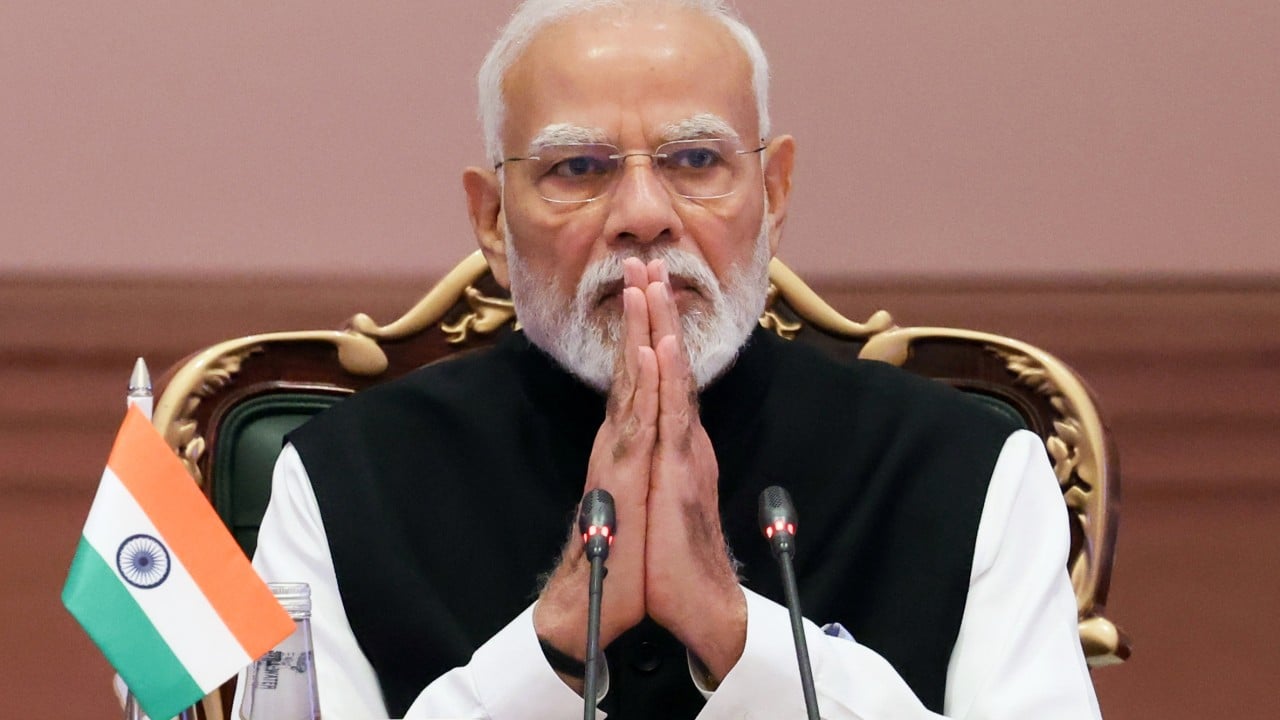
Prime Minister Narendra Modi’s observation that Indian companies were failing to create more jobs and raise wages despite government tax breaks has prompted a debate on whether business leaders should heed his call and do more for their workers.
Speaking at the annual convention of the Federation of Indian Chambers of Commerce and Industry last week, Modi said his government had cut the base corporate tax rate from 30 per cent in the 2014–15 financial year to 22 per cent in late 2019. He added that New Delhi eased rules for businesses and made annual income of up to 1.2 million rupees (US$12,966) effectively tax-free from the 2025–26 financial year onwards.
Despite these measures, Modi said Indian businesses still wanted more government help.
“I know you won’t applaud. I know that very well, because your appetite is so enormous that no matter how much you are given, it is never enough,” he said.
Turning to Indian businesses’ efforts on job creation and wages, Modi asked: “Have you increased the salaries of your employees? Have you increased the number of people you employ?”
Lloyd Mathias, an independent business strategist who has served on the board of several Indian companies, said Modi’s criticism was justified.
“The government has been doing its bit for the industry. It is fair that heads of state will use such a large industry forum to point out certain areas where they lag. The industry has accepted this as much-needed feedback,” he said.
However, analysts point out that wage growth in India has stagnated or declined over the past decade, amid concerns of the growing reliance on gig workers.
Opposition figures, including Kerala chief minister Pinarayi Vijayan and Congress leaders, criticised Modi’s remarks as posturing to deflect public attention from his policy shortcomings.

According to a June report by Motilal Oswal Financial Services, the profit of India’s top 500 companies grew by 28.7 per cent on a compounded annual growth rate (CAGR) between the 2020 and 2026 financial years, outpacing the Indian economy’s 9.5 per cent CAGR over the same period.
About 53 per cent of graduates and 36 per cent of postgraduates were employed in occupations below their educational qualifications, according to India’s 2024-25 economic survey.
Pranshu G, a partner at accounting advisory firm Ashok Pranshu & Co, said the cut in the corporate tax rate was partly aimed at stimulating private investment and job growth. If companies could increase workers’ wages, it would also boost domestic consumption, he added.
Prabir Jha, founder and CEO at human resource consultancy Prabir Jha People Advisory, said there should be a balanced approach to job creation and wages, taking into account the needs of companies and society.
“The social contract between the government and the industry must evolve. Businesses cannot be expected to create jobs overnight just because of some fiscal concessions,” he said.
“While it is fair to expect a wider societal cascade, investment and employment must be driven by sensible and sustainable economic logic.”
Beyond job addition, India should also focus on improving workers’ skills. “That will create a more effective flywheel effect than just the mirage of more jobs overnight,” Jha said.
02:32
Serving authentic Sichuan flavours in Mumbai
Nabomita Mazumdar, the founder of a think tank focusing on small and medium-sized enterprises, said Indian businesses should particularly do more to improve the well-being of the lowest-tier workers.
She cited the contributions of contract workers, who accounted for 42 per cent of workers in India’s manufacturing sector, referring to official labour data.
The industry and the government should strive to improve workers’ confidence and business transparency regarding job creation, she said.
Shourya Garg, founder of Garg & Garg Tax Associates, said the government should also set clear parameters linking its incentives for businesses to hiring and capacity expansion.
At the same time, it should also be mindful of the cost pressures faced by businesses, he said.
“Many firms are cautious about hiring permanently when demand is uneven, so they rely on contract staff and automation. Compliance costs and tax disputes also eat into management time and cash, especially for mid-sized companies,” he added.
KioskNews shows a cleaned-up reading view extracted from the publisher’s page — the original always lives on their site, not ours.