IMH to be expanded, redeveloped by 2040 as Singapore boosts mental health capacity
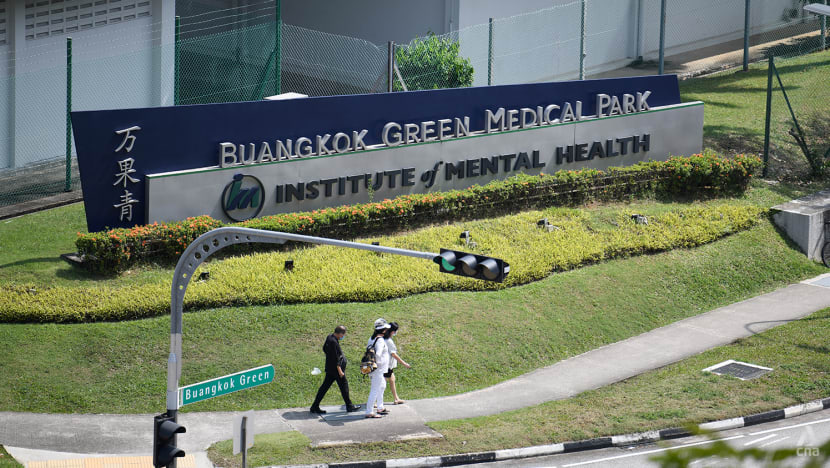
SINGAPORE: The Institute of Mental Health (IMH) will be expanded and redeveloped at its current site by 2040, as Singapore boosts its capacity to meet demand for mental healthcare.
Planning for the redevelopment has begun, Health Minister Ong Ye Kung said on Saturday (Oct 10). He added that three regional hospitals - Changi General Hospital, Woodlands Hospital and Alexandra Hospital - are also strengthening their psychiatric capabilities.
IMH will also be redesignated as a national specialty centre and renamed the National Centre for Mental Health Singapore in 2027.
Like Singapore's national specialty centres for cancer, heart or eye, the new centre will lead research, coordinate psychiatric care across hospitals and build capabilities across the mental health sector, said Mr Ong, who is also Coordinating Minister for Social Policies.
"The Institute of Mental Health has long been the bedrock of specialist psychiatric care in Singapore. But looking ahead, IMH will need stronger support from other hospitals," said Mr Ong, in a message marking World Mental Health Day.
RISING DEMAND
Mr Ong said mental health challenges were rising around the world, especially among young people, with hospitals and specialist clinics seeing more patients, including those still in school.
Community services were also supporting more people.
The number of youths receiving help in the community has more than doubled, while national mindline 1771 is handling about 9,000 calls for help each month.
Mr Ong said Singapore needed to respond on two fronts - by strengthening specialist care while focusing on prevention and early intervention.
The rise in community caseloads also reflected a greater willingness among people to seek help, he said, although stigma remained a key barrier.
Some people feared being judged by their families, friends, teachers or employers, while others worried that seeking mental health support could leave a record that would disadvantage them in future education opportunities, scholarship or job applications, or when buying insurance.
"Seeking mental health support should not, by itself, become a mark against a person," Mr Ong said.
"Where disclosure is genuinely necessary, it should be limited to relevant circumstances and handled fairly. This is something various government agencies will have to work on."
PARENTAL CONSENT SHOULD NOT BE A BARRIER
Mr Ong also highlighted parental consent as a potential obstacle for young people seeking mental health support.
Current practices vary, he said. For instance, callers to national mindline 1771 can remain anonymous, while community-based providers generally do not require parental consent before offering counselling and support.
Schools are more likely to require consent before formal counselling begins because of their approach of maintaining a strong partnership with families.
"But we should not let any across-the-board requirement for parental consent become a barrier to seeking help," Mr Ong said.
A young person may not yet be ready to speak to their parents, whether because they fear disappointing them or do not fully understand what they are going through, he said.
Some may need several confidential conversations with a mental health professional before involving their families.
"We need a balanced approach. The right system is one that lets a young person enter through a safe door, and then involve the family appropriately as the care journey progresses," Mr Ong said.
NEW GUIDELINES ON PARENTAL CONSENT
Mr Ong said the Singapore Medical Council is revising its ethical guidelines to provide doctors with clearer guidance on parental consent, allowing clinicians to proceed with treatment if it is in the patient's best interests.
The Ministry of Health is also developing guidelines on parental consent for various service providers.
The aim is to improve access while protecting young people's welfare and privacy, and involving parents in ways that strengthen the recovery process, he added.
Public views on the issue will be sought in the coming weeks.
KioskNews shows a cleaned-up reading view extracted from the publisher’s page — the original always lives on their site, not ours.