Birdwatch: the paradoxical puffin – a comical bird with a fighting spirit
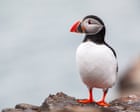
Few birds are as paradoxical as the puffin. It rivals the robin as Britain’s best-loved bird, yet most people have never seen one in the flesh. In spring and summer, they gather in large, noisy colonies to breed, but spend the autumn and winter far out to sea in the North Atlantic. And despite their small size, and gentle, clown-like appearance, puffins will fight to save their precious catch of sand eels from being seized by an opportunistic – and much larger – skua or gull.
Puffins, like penguins, have a very human quality, too. When the late Bill Oddie and I filmed puffins at a colony on Shetland, he memorably described them as “looking like old men in dinner jackets, waiting to go into supper at the club”, while the bird’s scientific name, Fratercula arctica, translates as “little brother of the Arctic”.
Their huge, colourful bill once earned them the name “sea parrot”, while “puffin” – meaning “fat” or “swollen” – was originally given to the young of another burrow-nesting seabird, the Manx shearwater. Confusingly, that species still retains the misleading scientific name Puffinus puffinus.
Now, like so many seabirds, puffins are in trouble. The sand eels, on which they rely to feed themselves and their single chick, are shifting north because of the climate crisis. Puffins are also threatened by avian flu, pollution and disturbance – ironically often caused by visitors to their colonies, over-eager to get closeup photos of these charismatic little birds.
after newsletter promotion
The Puffin: A Biography, by Stephen Moss, is published on 15 October.
KioskNews shows a cleaned-up reading view extracted from the publisher’s page — the original always lives on their site, not ours.