The 6 Best Sci-Fi Books Released Since 2020, Ranked

Luc Haasbroek is a writer and videographer from Durban, South Africa. He has been writing professionally about pop culture for eight years. Luc's areas of interest are broad: he's just as passionate about psychology and history as he is about movies and TV. He's especially drawn to the places where these topics overlap.
Luc is also an avid producer of video essays and looks forward to expanding his writing career. When not writing, he can be found hiking, playing Dungeons & Dragons, hanging out with his cats, and doing deep dives on whatever topic happens to have captured his interest that week.
Sign in to your Collider account
The 2020s have given sci-fi writers plenty of unsettling material to work with: AI, pandemics, global warming, algorithmic manipulation, gene editing, biohacking, the quest for immortality. The result has been an impressive slate of speculative books that raise urgent questions or take some of these concerning ideas to extreme conclusions.
This list looks at some of the most essential sci-fi novels of the last 6 years, from the subtlety of What We Can Know to the space-opera action comedy of Murderbot. There should be something here for every kind of sci-fi fan.
6 'Sea of Tranquility' (2022)
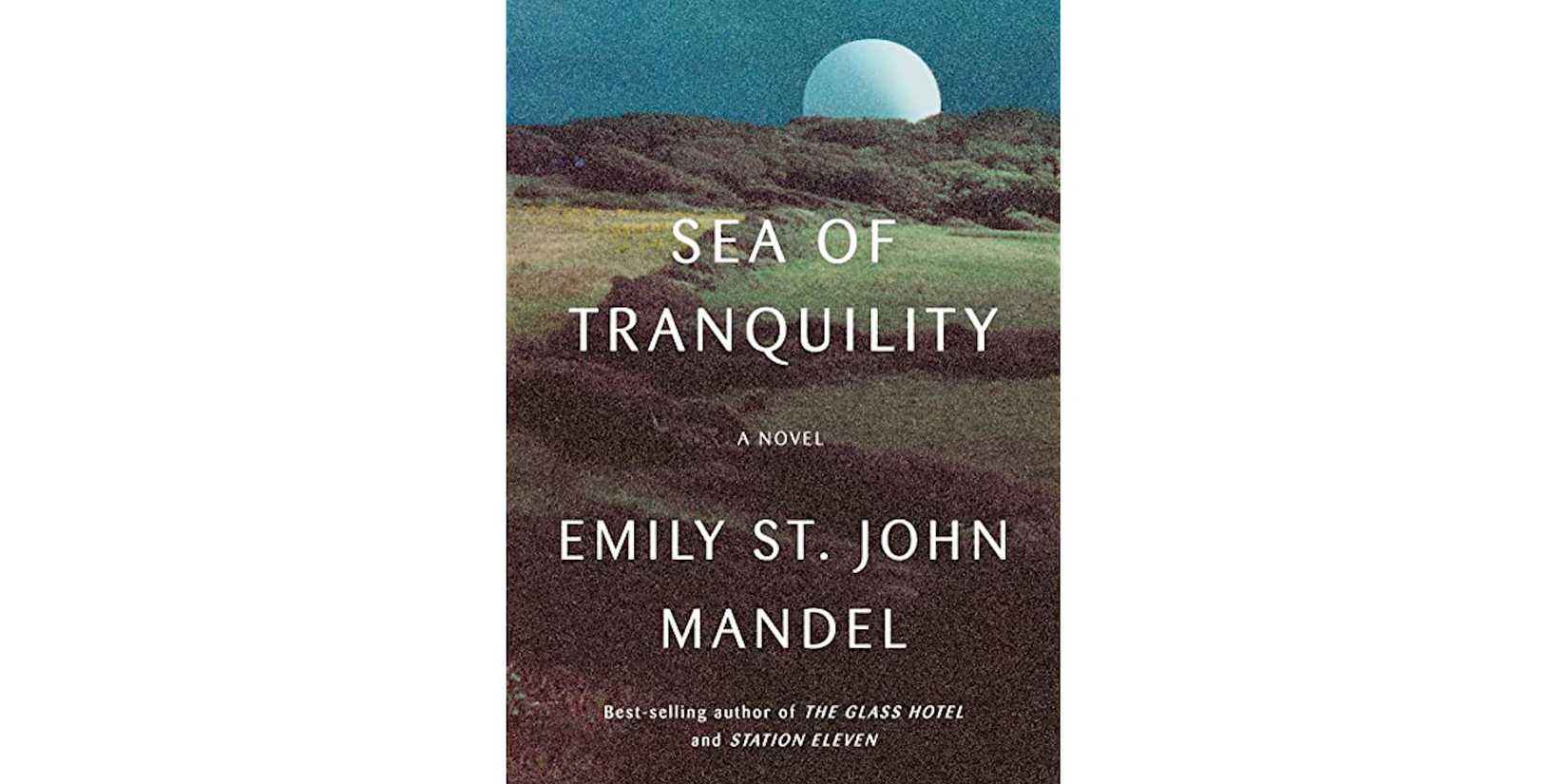
“No star burns forever.” Sea of Tranquility is an unusually elegant sci-fi story. Taking inspiration from Cloud Atlas, the intricate plot unfolds across four different time periods: one in 1912, one in 2020, one in 2203, and one in 2401. Among the central characters are Olive Llewellyn, a novelist living in a future where humanity has established colonies on the Moon, and Gaspery-Jacques Roberts, a man investigating strange events that appear to challenge the conventional understanding of time.
Along the way, author Emily St. John Mandel nimbly weaves together time travel, historical fiction, speculative technology, and questions about the nature of reality. Indeed, this is a smart and sensitive book, with a focus on themes and emotions. Questions about simulated reality and historical inevitability ultimately become questions about how people find meaning in lives that are brief and frequently uncertain.
5 'Alien Clay' (2024)

“Life finds a way.” This banger was written by Adrian Tchaikovsky, probably best known for the Children of Time series. It's a story of political oppression, rebellion, body horror, and alien superorganisms. Alien Clay takes place on Kiln, a distant planet with an extraordinarily complex ecosystem. The protagonist, scientist and dissident Arton Daghdev, is exiled there by an authoritarian government. He begins investigating the planet's bizarre lifeforms, which challenge all his (and the reader's) assumptions about biology and evolution.
Tchaivosky has a knack for creative alien biology, and that's very much on display here. Kiln's organisms exist within tight networks of biological relationships, making it difficult to tell where one life form ends and another begins. Instead of being driven by competition, these beings are cooperative and connected, making for a nice foil to the brutal social dynamics the characters are grappling with.
4 'Network Effect' (2020)
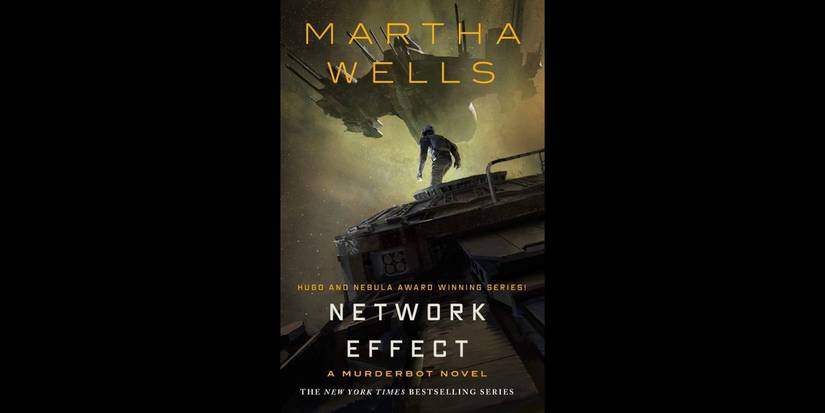
“I hate having emotions about reality.” Network Effect was the first full-length novel in the quirky Murderbot Diaries series, recently adapted into an enjoyable show starring Alexander Skarsgård. It centers on a robot who hacks his own governor module and gains free will, which he uses... to watch soap operas, mostly. While he is intelligent and armed with formidable combat skills, Murderbot has a deeply uncomfortable relationship with its own emerging personhood.
Plot-wise, this installment involves research expeditions, grey-skinned humanoids, wormholes, alien contamination, and a planet charmingly known as "Hell Plague Planet". However, while some of these ideas seem like stock sci-fi tropes, the Murderbot stories stand out by being unusually funny, animated by the title character's dry, frequently exasperated internal commentary. There's action aplenty, alongside likable main characters, including the TV-watching machine himself.
3 'Project Hail Mary' (2021)

“Fist my bump.” Project Hail Mary has been all the rage this year thanks to the incredibly entertaining movie adaptation, yet the original novel is very much worth checking out in its own right, even if you've already seen the film. Here, Andy Weir, author of The Martian, returns to the territory he knows best: a resourceful protagonist confronting seemingly impossible problems. Ryland Grace awakens aboard a spacecraft with no memory of who he is or why his fellow astronauts are dead.
He gradually discovers that he's humanity's last hope of preventing a catastrophe involving a mysterious microorganism that is draining energy from the Sun. To succeed in his mission, he must solve various intimidating engineering problems and scientific puzzles. The real achievement, however, is the relationship that develops between Grace and Rocky, an alien engineer facing a similarly desperate situation, taking this from survival sci-fi to heartwarming buddy comedy.
2 'What We Can Know' (2025)

“The past is a foreign country.” This sci-fi drama from Atonement's Ian McEwan is one of the genre's most interesting offerings in recent years. It's speculative, but subtle and restrained, leaning into psychology and three-dimensional characters more than high-concept ideas. Set primarily in the 22nd century, What We Can Know is told from the perspective of Tom Metcalfe, a scholar studying the literature and culture of the early 21st century.
The world he inhabits has been transformed by environmental catastrophe and rising seas, as well as supercharged AI and the scars of nuclear confrontations. However, the book is focused on our own time rather than Tom's. His research project, looking into a lost poem from 2014, becomes a clever way for McEwan to hold up a mirror to the eccentricities and flaws of humanity in the 2010s and 2020s. He does so while still serving up a gripping story.
1 'Klara and the Sun' (2021)

“The heart you speak of might indeed be the hardest part of Josie.” This is the most recent gem from Kazuo Ishiguro, who also wrote the poignant sci-fi tale Never Let Me Go. Here, we meet Klara, an Artificial Friend, a sophisticated solar-powered android designed to provide companionship to children. She possesses extraordinary observational abilities but understands the human world imperfectly. She also has an intense, almost religious devotion to the Sun.
Through her unusual perspective, Ishiguro shows us a society transformed by economic inequality, incredible new technology, and changing ideas about what makes human beings valuable. The fundamental question here is: Is there something unique inside us that can never be replicated, or are we all just data that could theoretically be cloned? This kicks into gear after Klara is purchased as a companion for a seriously ill teenager named Josie, and becomes increasingly determined to protect her.
Collider Exclusive · Sci-Fi Survival Quiz Which Sci-Fi World Would You Survive? The Matrix · Mad Max · Blade Runner · Dune · Star Wars
Five universes. Five completely different ways the future went wrong — or sideways, or up in flames. Only one of them is the world your instincts were built for. Eight questions will figure out which dystopia, galaxy, or desert wasteland you'd actually make it out of alive.
💊The Matrix
🔥Mad Max
🌧️Blade Runner
🏜️Dune
🚀Star Wars
01
You sense something is deeply wrong with the world around you. What do you do? The first instinct is often the truest one.
02
In a world of scarcity, what resource do you guard most fiercely? What we protect reveals what we believe survival actually requires.
03
What kind of threat keeps you up at night? Fear is useful data — if you're honest about what you're actually afraid of.
04
How do you deal with authority you don't trust? Every dystopia has a power structure. Your approach to it determines everything.
05
Which environment could you actually endure long-term? Survival isn't just tactical — it's physical, psychological, and very much about where you are.
06
Who do you want in your corner when things fall apart? The company you keep is the clearest signal of who you actually are.
07
Where do you draw the line — if you draw one at all? Every survivor eventually faces a moment that tests what they're actually made of.
08
What would actually make survival worth it? Staying alive is one thing. Having a reason to is another.
Your Fate Has Been Calculated You'd Survive In…
Your answers point to the world your instincts were built for. This is the universe your temperament, your survival instincts, and your particular brand of stubbornness were made for.
The Matrix
You took the red pill a long time ago — probably before anyone offered it to you. You're a systems thinker who can't help but notice the seams in things.
- You're drawn to understanding how the system works before figuring out how to break it.
- You'd find the Resistance, or it would find you — your instinct for spotting constructed realities is the machines' worst nightmare.
- You function best when you have access to information and the freedom to act on it.
- The Matrix built an airtight prison. You'd be the one probing the walls for the door.
Mad Max
The wasteland doesn't reward the clever or the well-connected — it rewards those who are hard to kill and harder to break. That's you.
- You don't need comfort, community, or a cause larger than the next horizon.
- You need a vehicle, a clear threat, and enough fuel to outrun it — and you're good at all three.
- You are unsentimental enough to survive that world, and decent enough — just barely — to be something more than another raider.
- In the wasteland, that distinction is everything.
Blade Runner
You'd survive here because you know how to exist in moral grey areas without losing yourself completely.
- You read people accurately, keep your circle small, and ask the questions others prefer not to answer.
- In a city where humanity is a legal designation rather than a feeling, you hold onto something that keeps you functional.
- You're not a hero. But you're not lost, either.
- In Blade Runner's world, that distinction is everything.
Dune
Arrakis is the most hostile environment in the known universe — and you are precisely the kind of person it rewards.
- Patience, discipline, and political awareness are your core strengths — and on Arrakis, they're survival tools.
- You understand that the long game matters more than any single victory.
- Others come to Dune and are consumed by it. You'd learn its logic and earn its respect.
- In time, you wouldn't just survive Arrakis — you'd begin to reshape it.
Star Wars
The galaxy far, far away is vast, loud, and in a constant state of violent political upheaval — and you wouldn't have it any other way.
- You find meaning in being part of something larger than yourself — a cause, a crew, a rebellion.
- You'd gravitate toward the Rebellion, or the fringes, or whatever pocket of the galaxy still believes the Empire's grip can be broken.
- You fight — not because you have to, but because standing aside isn't something you're capable of.
- In Star Wars, that willingness is what makes all the difference.
KioskNews shows a cleaned-up reading view extracted from the publisher’s page — the original always lives on their site, not ours.