Vending machines selling local veggies under $2 to be rolled out; support for fish farms to scale up
SINGAPORE – Residents and university students could soon buy more affordable local vegetables and seafood at their doorstep, with an agri-food organisation looking to roll out vending machines selling farmed produce islandwide over the next six months.
A pack of lettuce and nai bai costs between $1.40 and $1.80 and is sold under the SG Farmers’ Market brand, which consolidates produce from several local vegetable farms.
At FairPrice, each pack of leafy greens under the brand costs $2 to $3.50.
Ken Cheong, chief executive of the Singapore Agro-Food Enterprises Federation (SAFEF), which runs the brand, said he was able to lower the prices of vegetables at the vending machines because he could limit indirect business expenses along the supply chain.
Such expenses include storage costs and losses from wastage.
But to sustain vegetable prices below $2, he needs to have consistent sales, Cheong stressed, to keep costs down.
The organisation is aiming to roll out 30 to 40 pairs of seafood and vegetable vending machines within the next six months at places including Active Ageing Centres, community centres, condominiums and university dorms. Cheong did not reveal the specific locations where SAFEF is in talks with potential partners.
As part of a trial, a pair of vending machines has been set up at information technology company NCS Group’s headquarters in Ang Mo Kio, and the machines were unveiled at SAFEF’s annual reception at NCS Hub on Oct 28.
This link-up came from a chance corporate partnership between NCS Group and the federation.
One chilled machine currently sells seven types of greens, including bok choy, local lettuce, sharp spinach and crystal lettuce.
Another frozen-food vending machine will soon sell tilapia, Asian sea bass and vannamei shrimp, also under SAFEF’s brands. A 1kg pack of shrimp costs $15, while a 250g pack of marine tilapia fillet costs $7.
The five urban farms under SG Farmers’ Market that have committed to supplying vegetables and mushrooms for the vending machines are CropCiti, The Veggie Patch, Vegeponics, Arista Farming, and Spore Gardens, which grows gourmet mushrooms.
Once more machines are rolled out over the coming months, SAFEF intends to create micro-jobs for members of the community to help run the machines and restock them.
Those hired can also teach seniors how to use the machines, which accept only digital payment through QR codes.
SAFEF, which has more than 50 members, has been helping farms market their produce and get it on supermarket shelves under umbrella brands like SG Farmers’ Market.
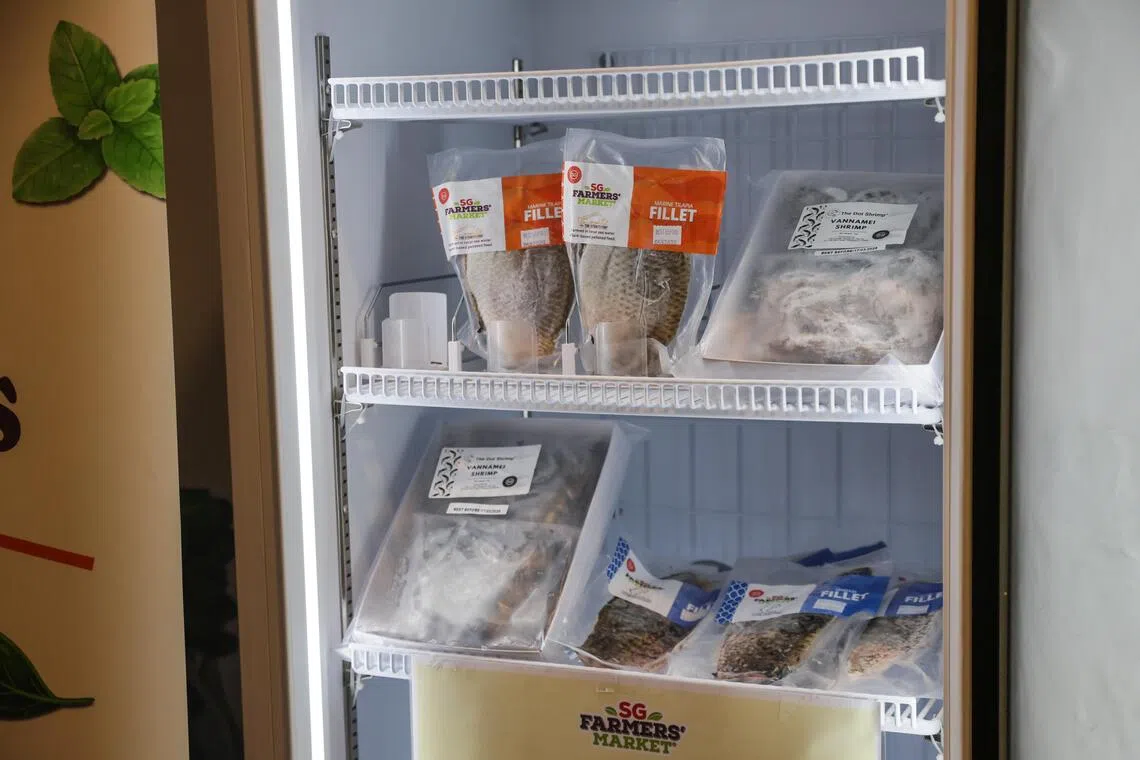
The frozen vending machine stocked with local seafood was unveiled at NCS Hub on Oct 28.
ST PHOTO: GIN TAY
The branding initiative started in late 2023 with The Straits Fish label for a handful of sea-based tilapia farms in the West Johor Strait, off Lim Chu Kang, to help them jointly produce the fish at scale. This initiative was later expanded to sea-based sea bass farms and vannamei shrimp farms on land.
The federation is now expanding into vending machines to bring local produce closer to customers. The aim is to create a dedicated sales channel for local produce, away from direct competition with imports on retail shelves.
Local produce is known to be more expensive than most imported vegetables and fish, largely due to the higher cost of operating a farm in Singapore.
“We needed to create our own supply line. Trying to feed local produce into the import line is very tough,” said Cheong.
Selling through vending machines could also be an option for smaller high-tech farms that struggle to enter physical retail stores, he pointed out.
In July, The Straits Times reported that local vegetables from at least three farms here would no longer be available in FairPrice supermarkets.
The SAFEF reception was attended by its new patron, Minister for Sustainability and the Environment Grace Fu.
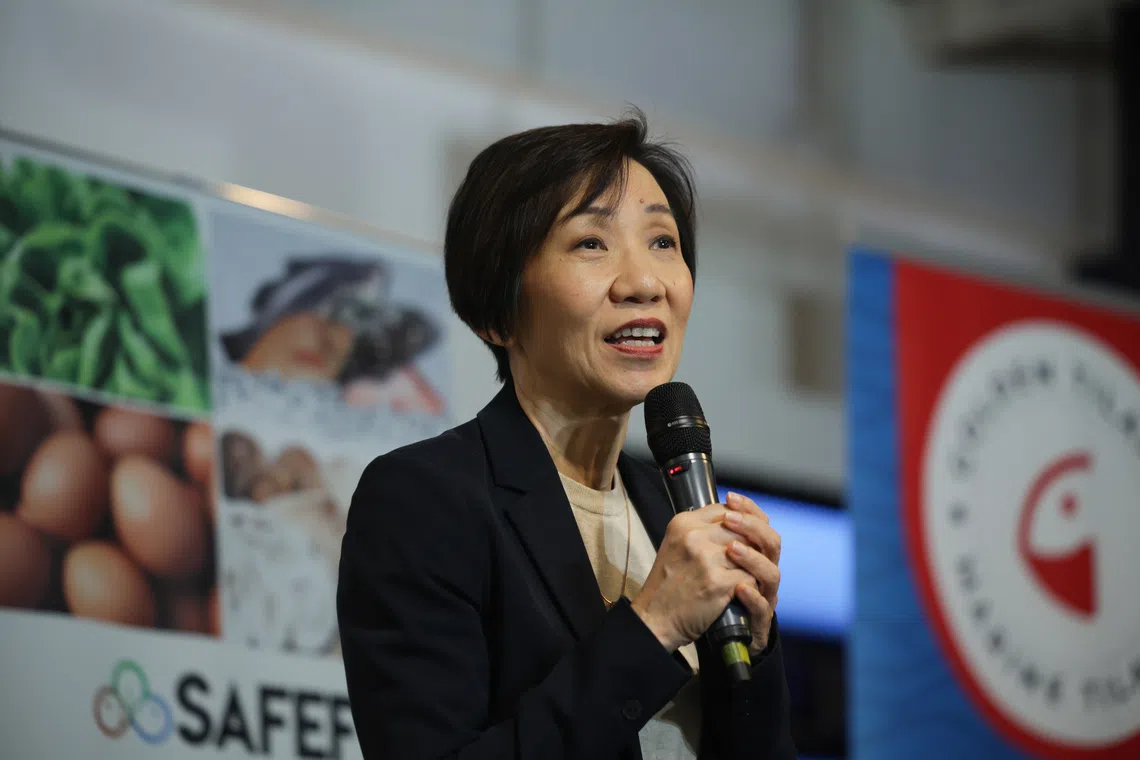
Minister for Sustainability and the Environment Grace Fu speaking at the SAFEF reception on Oct 28.
ST PHOTO: GIN TAY
Eyeing the big fish
Under SAFEF’s direction, four fish farms off Pasir Ris recently banded together to produce and sell premium fish like pompano, also known as golden pomfret, and red snapper that can weigh up to 4kg.
Having created a market for tilapia, smaller sea bass and vannamei shrimp, the federation is now eyeing the East Johor Strait – where more fish species are grown – to scale up the sale of bigger fish that can command higher prices.
Restaurants, hotels and other food and beverage businesses prefer bigger fillet chunks to cook with, and large fish to serve at buffets, said Cheong.
The farms involved in this initiative are Smith Marine, which mainly farms pompano, De Kelong, which mainly produces red snapper, Tropical Mariculture and Ah Hua Kelong.
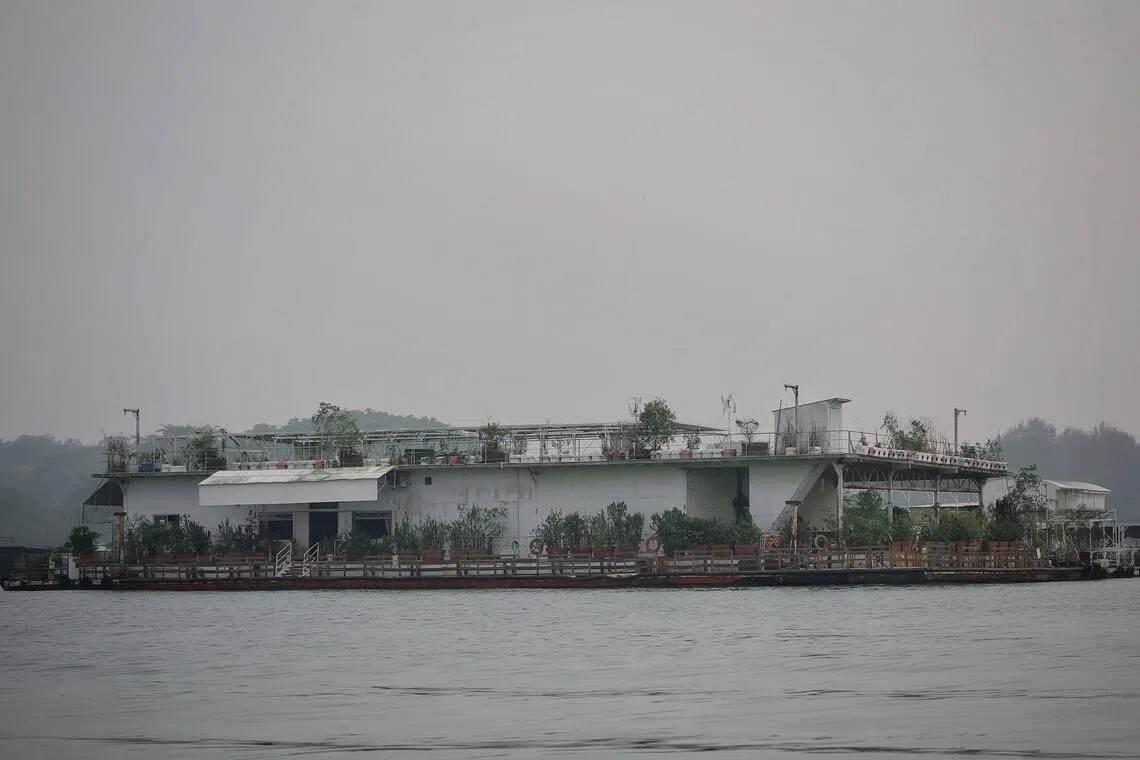
Smith Marine's farm off Pasir Ris also has a floating restaurant.
ST PHOTO: KEVIN LIM
Forming a coalition helps the farms secure better quality eggs and sustain demand. By working together, they can increase their bargaining power when importing pompano eggs from suppliers in Taiwan and China, Cheong added.
This is because when a small farm sources eggs from a supplier, it tends to receive lower quality eggs that take longer to grow. Better quality eggs are saved for larger customers.
Smith Marine has started distributing some juvenile pompano to the other farms. They aim to start importing the fish eggs from early 2027.
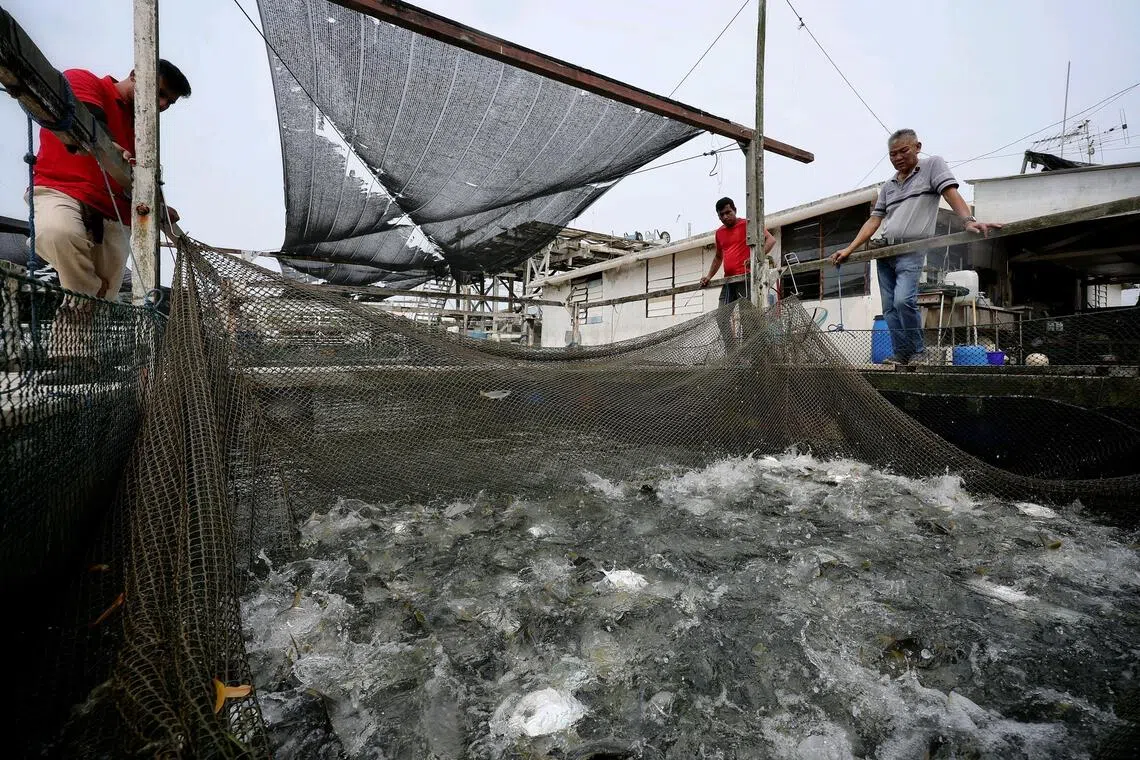
Smith Marine founder Ong Jong Yang (right) observing a net of pompano, also known as golden pomfret.
ST PHOTO: KEVIN LIM
Each farm’s biggest challenge has been to secure steady demand so that their fish can be consistently sold, Cheong noted.
By working as a group, the farms can ensure a steady supply to the buyer: If one farm runs out of fish to harvest, another can take over, as long as each farm staggers the growth of its fish.
“If we have a steady supply of fish, we can stabilise a price. With a stable price, we will likely attract more long-term buyers,” he added.
SAFEF has set the price of local pompano at no more than 20% higher than that of imported ones.
Smith Marine owner Ong Jong Yang said that his sales tend to be inconsistent throughout the year. Each month, he sells an average of two to three tonnes of fish.
Chris Lur of Tropical Mariculture chimed in: “I’ve been dumping my CPF into the sea.”
But they are positive that the collaboration with SAFEF will turn the tide.
Ong said: “We hope to gain confidence to make longer-term business plans for the farms.”
Currently, only the jumbo-sized red snapper have reached the market, with SAFEF having entered into a deal with cold chain distributor Pan Ocean Singapore. But it takes three years to rear a 3kg red snapper and relying on this alone cannot sustain a farming business.
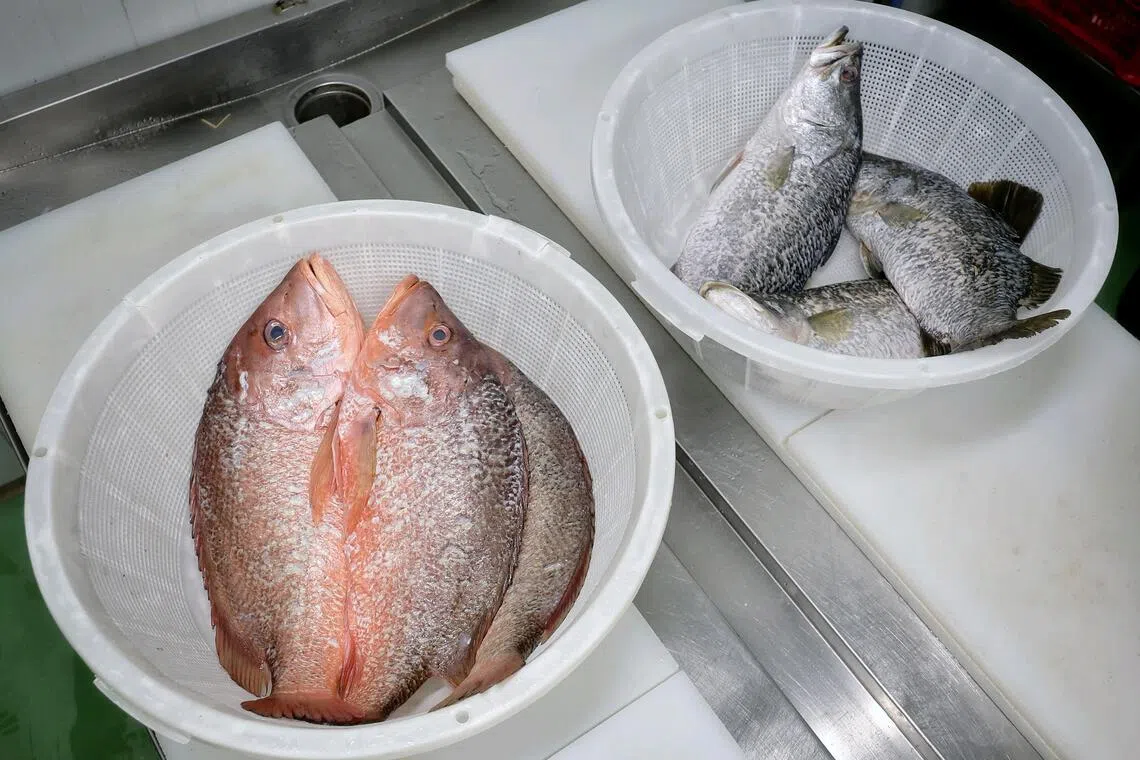
Red snapper weighing about 3kg each and barramundi awaiting processing at Pan Ocean Singapore on Oct 21.
ST PHOTO: KEVIN LIM
While pompano, which takes eight months to grow into a harvest size of 800g, will remain the farms’ bread-and-butter, SAFEF wants to ramp up the farming of larger Asian sea bass, also known as barramundi, which can reach 3kg in 1½ to two years.
Many farms have been reluctant to rear the disease-prone fish for that long, as prolonged time in the water exposes them to fatal diseases such as scale drop disease virus. To limit losses, they harvest the fish at a smaller, dish-sized weight of about 800g.
In 2023, Barramundi Group also gave up deep-sea farming in the southern waters of Singapore after a fish virus outbreak.
But recently, vaccines against the disease have been made available, and SAFEF is in talks with a few companies to acquire them for the farms.
From early 2027, young sea bass will be obtained from the Singapore Food Agency’s Marine Aquaculture Centre – where local sea bass eggs are produced – before they are vaccinated and reared on the farms.
KioskNews shows a cleaned-up reading view extracted from the publisher’s page — the original always lives on their site, not ours.