Hong Kong develops university hubs to attract global talent
Hong Kong is developing three massive university towns near the mainland Chinese border to attract top global academics, strengthen research capabilities, and forge industry partnerships.
Sited within the sprawling Northern Metropolis megaproject, the three hubs, San Tin, Hung Shui Kiu, and Ta Kwu Ling, will cover a combined 1,000 hectares. Approximately 300 hectares are earmarked for campuses, while the remaining areas will feature integrated technology, industrial, and residential zones. First proposed in 2024, the initiative aims to blend urban living with education, technology, and talent development.
Chief Executive John Lee Ka-chiu pitched the vision at the Global University Presidents and Leaders Summit in late October, inviting foreign universities to set up operations in the new border developments, the South China Morning Post reported.
To promote synergy between academia and the corporate sector, the government will encourage researchers to work directly with businesses and invite industry professionals to contribute to university teaching.
Lee stated the three hubs are designed to "woo the world's finest scholars and students" and bring research and industry closer together so that they can "complement and reinforce one another."
"We will invite institutions to establish basic research institutes and large-scale shared research platforms, including high-performance computing centers, joint laboratories, and interdisciplinary research centers," he said, as quoted by China Daily.
 |
|
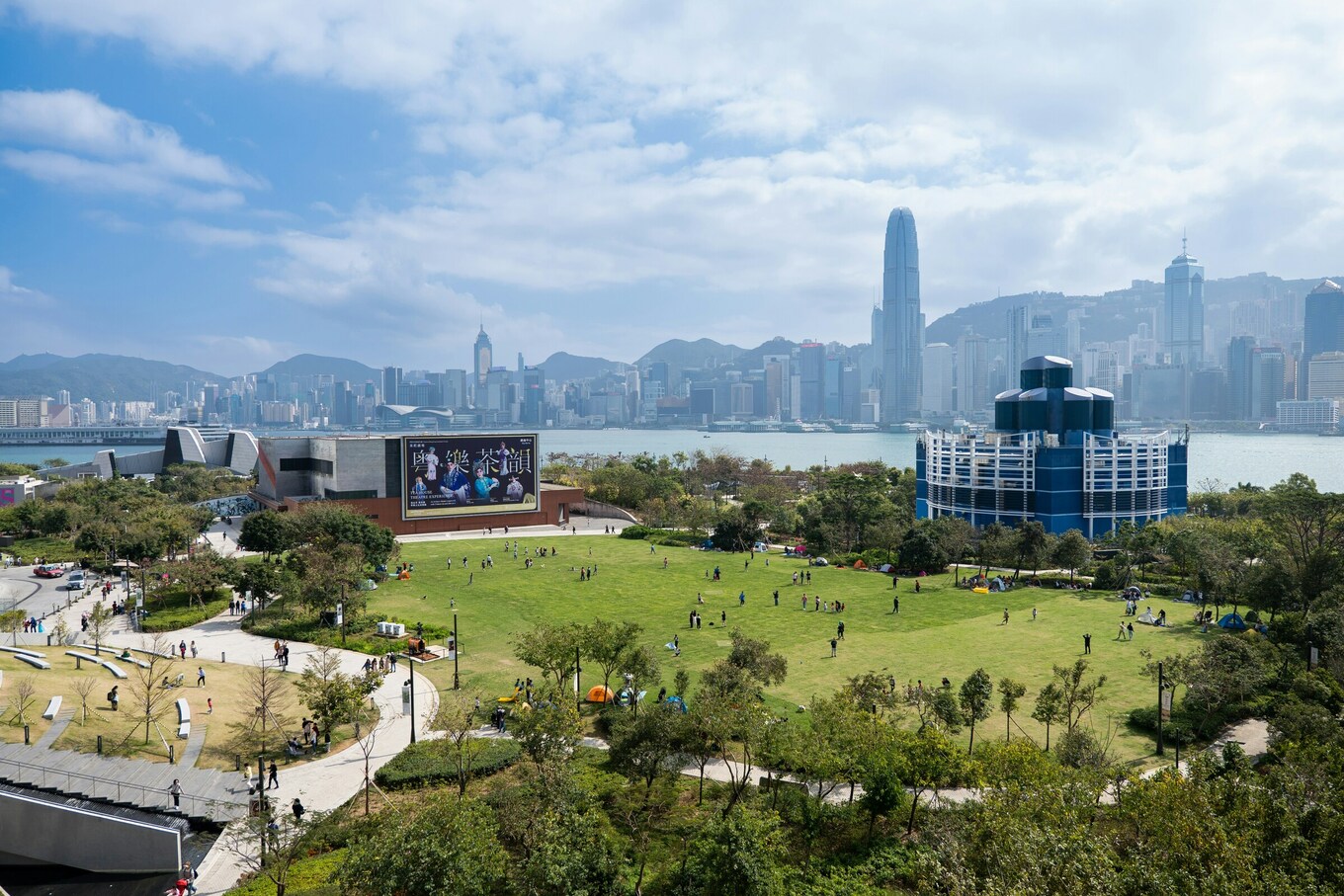
West Kowloon District in Hong Kong in 2024. Photo by Unsplash/Jason Yuen |
Under a five-year blueprint unveiled in September, each town will serve a distinct purpose, according to a report on the official news site of the Hong Kong government.
San Tin University Town will focus on medicine, life sciences, artificial intelligence, robotics, and microelectronics. It will also host a new medical school and an integrated teaching hospital for the Hong Kong University of Science and Technology.
Hung Shui Kiu will serve as a hub for smart manufacturing, applied post-secondary education, and international talent. Site allocations will begin in 2026, with universities slated to move in by 2027 or 2028.
Ta Kwu Ling will integrate arts and sustainable "blue-green" development while reserving strategic space for future expansion. Sites there will open progressively from 2030 to support traditional, emerging, and advanced construction industries.
Secretary for Education Christine Choi Yuk-lin framed the initiative as a core strategy to turn education into a driver for high-quality economic growth.
"The Northern Metropolis is no longer merely a plan on paper. It is a strategic vehicle for integrating high-quality post-secondary education with innovation, technology and industry, and for pooling international talent," she was quoted as saying in a government press release.
"The University Town is being developed as a place where campuses, research and industry may co-locate, and where the transformation of research outcomes into commercial and public value may be financed, not only conceived," she added.
Following the October summit, international interest has steadily grown, as reported by the SCMP.
At the World Class University Presidents Forum on Nov. 4, University of Sydney Vice-Chancellor Mark Scott praised Hong Kong's higher education investments and expressed eagerness to explore productive partnerships within the metropolis.
Leaders from other global institutions echoed this sentiment. Ebrahim Al Hajri, president of the UAE’s Khalifa University of Science and Technology, voiced interest in research collaborations, while Fudan University president Jin Li said the hubs could bridge the gap between mainland China and the global academic community.
Dawn Freshwater, executive director of the 23-member Worldwide Universities Network, said the project is a timely opportunity to reimagine international collaboration on global challenges.
Funding questions remain. Local education representatives warn the government's current financial blueprint may fall short, given the self-financing model expected for the developments.
The city government has earmarked HK$10 billion (US$1.3 billion) in low-interest, extended-repayment loans to support campus construction in Hung Shui Kiu, and winning institutions will pay a nominal land premium of just HK$1,000, according to The Standard.
To minimize public debt, officials have confirmed that universities capable of building without government loans, or those submitting highly competitive financial proposals, will be given favorable consideration during site allocation.
KioskNews shows a cleaned-up reading view extracted from the publisher’s page — the original always lives on their site, not ours.