The 10 Greatest Debut Books Ever Written, Ranked

At any given moment, Scott Simone has at least three books jockeying for his attention. He’ll never turn down a campus novel with a literary bent, nor will he hesitate to add yet another mystery to his Leaning Tower of Pisa-inspired to-be-read pile — which is built upon the bedrocks of too many short story collections, how-are-these-real true crime books, and classics waiting to be cracked open again. Topics that have him ripping through pages the fastest include closed-circle murders, unhappy professors, life-questioning philosophical deep dives, so long as they feature sharp sentences, a dark sense of humor, and at least a little malice.
He’s spent so much time in book shops over the years he is, to his wife’s chagrin, continuing to build a library that doesn’t quite respect the dimensions of the apartment meant to contain it.
Anyone who’s ever put ink to paper has the dream: a debut book that barely stays on shelves, one that garners so much acclaim it launches a fruitful career. Alas, we also live in reality where that seldom — if ever — happens. First books are usually messy, a training ground full of stumbles and falls, something to be hidden in a drawer, something to forget, if not teach you what not to do.
But there are exceptions to the rule. Writers who defy what’s possible and pen books that don’t just announce talent — they collect all of the awards, create phrases and characters that become part of the collective lexicon, and find themselves in the hands of generations of readers. The best debut books never feel like an introduction, but a cultural touchstone, and we're here to celebrate them.
10 ‘White Teeth’ by Zadie Smith

Zadie Smith was 24 when White Teeth was published. Mind-boggling enough. Add to it the fact that the novel was something most writers could never work up to, let alone lead with. It's funny, and it's loud, dissecting race and religion, immigration and assimilation, colonial history and family dysfunction, giving one of the most startling portraits of modern London.
Second-to-none prose aside, the novel is as chaotic and contradictory as Britain itself. It gives White Teeth a lived-in feel that places the reader into time and space like few others. Multicultural Britain isn't treated as subject matter, but something living and breathing around you. White Teeth won the Guardian First Book Award and Whitbread First Novel Award, and Smith went from basically unknown to one of Britain’s most talked-about writers.
9 ‘One Flew Over the Cuckoo’s Nest’ by Ken Kesey

Ken Kesey turned a psychiatric ward into a battleground: there’s Nurse Ratched and her swaddling, and then there's Randle McMurphy’s loud, anarchic individualism. That massive difference in character is what turns everything, including something as simple as a card game, that happens in One Flew Over the Cuckoo’s Nest into what feels like an act of revolution.
The novel's success turned McMurphy into the countercultural archetype, while Nurse Ratched became shorthand for cruelty. So it's no wonder why the story so quickly escaped from the hospital, moving from novel to stage to one of the most celebrated films ever made. Kesey’s original is stranger than any adaptation, though, because he filters everything through Chief Bromden, whose paranoia makes the world feel warped and hallucinatory. It's an unsettling masterpiece that'll leave you sitting in silence after the final line.
8 ‘The Catcher in the Rye’ by J.D. Salinger

Holden Caulfield is obnoxious, perhaps one of the most judgmental and self-important characters to ever grace the pages of a novel. It's why The Catcher in the Rye barely needs a plot. J.D. Salinger instead built the novel around Holden’s voice. It rambles on, contradicts itself, and, slowly, hints at just how scared and lonely he truly is.
This approach helped Holden become the mold future writers would use when building teenage alienation. That child-trying-to-sound-adult voice enraptured generations because it's so timeless, which is why The Catcher in the Rye has sold more than 65 million copies and influenced everyone from the Beat Generation to the counterculture that followed. Plenty of books capture adolescence, but The Catcher in the Rye defined what it sounded like, and there's nothing phony about that.
7 ‘The Bluest Eye’ by Toni Morrison

Toni Morrison’s first book is almost unfairly good; incredibly deep. The Bluest Eye deals with beauty as something society distributes unequally, then teaches children to mistake for worth. Pecola Breedlove wants blue eyes, a vehicle through which Morrison drives home her point. There are white dolls and movie-star faces bombarding her until wanting to look different begins to feel logical.
But unlike some other debut books, The Bluest Eye was not an instant commercial phenomenon. Its reputation grew with time — through classrooms, bans, and arguments — until the debut became inseparable from the American canon, something Morrison would eventually reshape. Powerful stuff, indeed.
6 ‘Go Tell It on the Mountain’ by James Baldwin

James Baldwin crammed an entire family’s worth of repression into one Harlem church. Go Tell It on the Mountain is seeping with faith and shame, desire and resentment, love and hypocrisy. John Grimes, a preacher’s son, is at the center of all of it. He struggles to figure out what salvation is supposed to look like when the adults around him are carrying so much damage of their own.
For a debut book, it's shocking how fully formed Baldwin is. The biblical rhythm and moral tension are already there; he plays with race, sexuality, and religion in much the same way as his later writings. You can see the writer he’d become without squinting. Later books and essays would make Baldwin one of the defining American voices of the 20th century, but none of that makes Go Tell It on the Mountain feel like a warm-up.
5 ‘To Kill a Mockingbird’ by Harper Lee
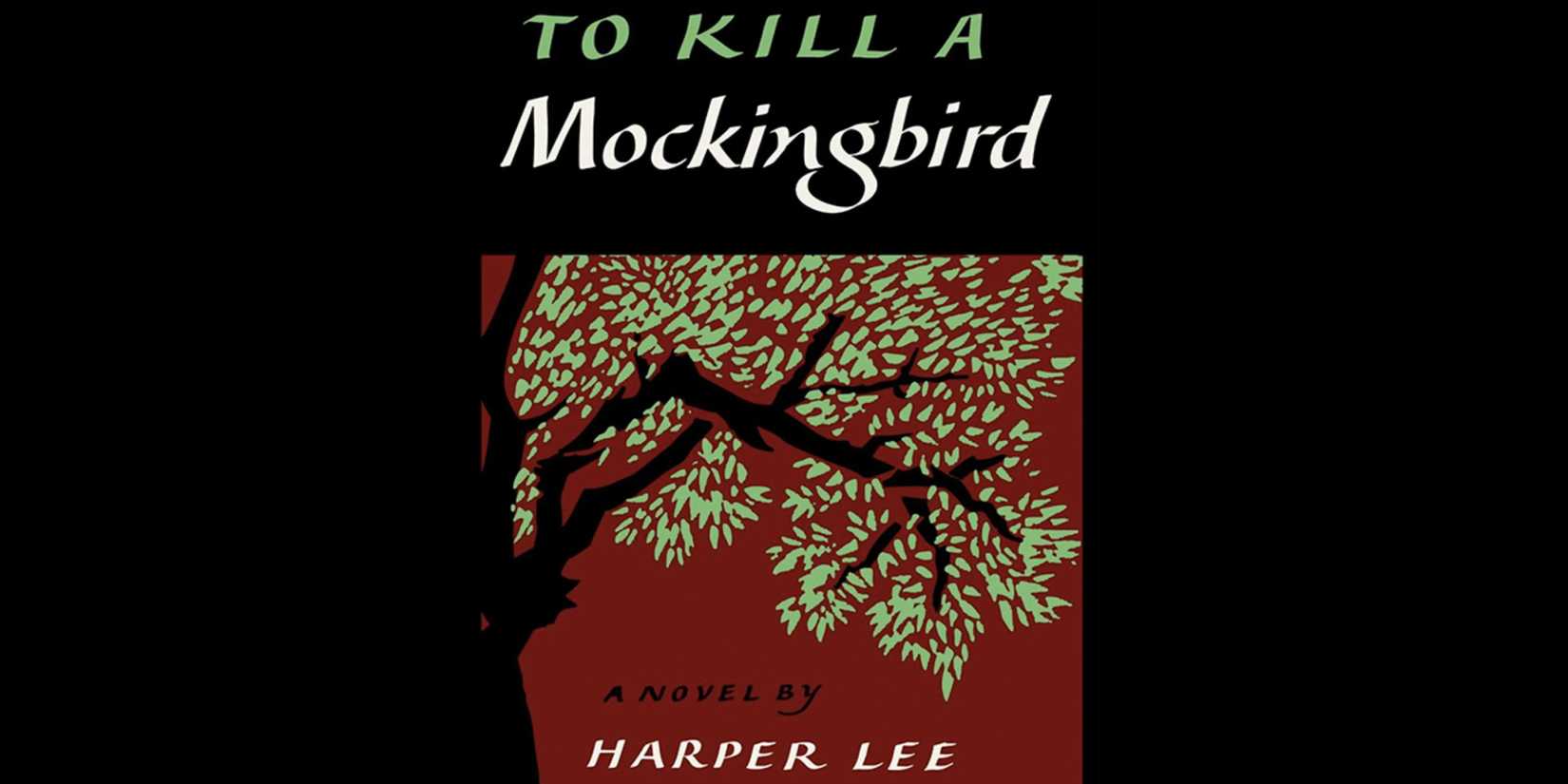
Scout Finch spends much of To Kill a Mockingbird trying to understand why the adults around her make so little sense. That child’s-eye view makes Harper Lee’s debut universal. Racism isn't an abstract evil; it stalks the schoolyards and takes a seat during dinner-table conversations. Scout observes it in neighbors who treat her family differently, the same people who can watch as something obviously wrong happens but carry on as if nothing has changed.
To Kill a Mockingbird's politics — and Atticus himself — have been debated and reexamined since it first hit shelves. It's why it went from a book people read in school to one Americans continued using to define themselves. Further cementing the book's impact is the fact that it won the Pulitzer Prize. Then it became a classroom staple, and Scout, Atticus Finch, and Boo Radley became characters that generations know the instant they're mentioned.
4 ‘Catch-22’ by Joseph Heller

Most novelists would be thrilled to write a book people still read 60 years later. Joseph Heller wrote one whose title became part of the English language. That alone tells you how precisely Catch-22 captured something people already understood but couldn't name: the contradiction of life itself. Yossarian wants to stop flying combat missions because he doesn't want to die. That proves he's sane. And because he's sane, he has to keep flying them. And so it goes.
Heller gave that insanity a name. The expression “Catch-22” entered the language as shorthand for any situation built so there’s no way out. That alone would be enough to secure the novel’s legacy, but Heller also changed what a war novel could sound like: absurd, funny, repetitive, horrifying, sometimes all within the same page. Plenty of books satirize institutions, but Catch-22 became one.
3 ‘Things Fall Apart’ by Chinua Achebe

Things Fall Apart is a classic, sure, but it also helped build a literary canon. Chinua Achebe wrote about Igbo life — the wrestling matches and harvests, religion and family, violence and pride — before colonialism. Nothing is explained for an outsider, because nothing is treated as exotic. Achebe never turns protagonist Okonkwo or his village into symbols of lost perfection, instead allowing them to exhibit the messes and flaws that existed long before the British arrived.
That's what makes the collapse hurt: Achebe gives you a whole world first, then lets you watch it come apart. It was a huge shift in literature, which often used Africa as a backdrop. Things Fall Apart has gone on to sell more than 20 million copies, but what's more is that it's credited with helping establish modern African literature on the world stage.
2 ‘Invisible Man’ by Ralph Ellison

Ralph Ellison published Invisible Man in 1952 and won the National Book Award the following year. And then he never released another one, which makes some sense, because he didn't leave much unexplored in the first one. Ellison plays with the idea of invisibility, about being present but never truly seen. It pops up in the novel across race, politics, education, and labor.
The unnamed narrator walks into everyday American institutions — college, industry, political movements — thinking he'll be recognized. Instead, he discovers, each time, that everyone has already decided who he needs to be. Ellison plays with social realism and morphs it into satire, where speeches become surreal, and violence erupts out of comedy. Ultimately, Invisible Man is about the more dangerous experience of being seen constantly and incorrectly, and having everybody recognize a version of you that doesn't exist.
1 ‘Madame Bovary’ by Gustave Flaubert

Gustave Flaubert spent years holed up in his house working on what would become Madame Bovary. And the thanks he got, once it was serialized in France, was a court date. Flaubert was prosecuted for obscenity, which gives you some idea of the immediate impact his first book had. But don’t let the scandal distract you: the novel is, after all, about boredom.
Emma Bovary is a doctor’s wife stuck in the mundane life she convinced herself would be much grander. So she sits with it, and she sits some more. She sits long enough that something eventually breaks, sending her spiraling through shopping sprees and affairs. But the lovers disappoint her, the money runs out, and nothing ever quite matches what she imagined. Flaubert made all that mundanity revolutionary. Madame Bovary redefined literary realism so much, thus helping set the course of the modern novel.
KioskNews shows a cleaned-up reading view extracted from the publisher’s page — the original always lives on their site, not ours.