8 Fantasy Books That Marked the End of an Era

Luc Haasbroek is a writer and videographer from Durban, South Africa. He has been writing professionally about pop culture for eight years. Luc's areas of interest are broad: he's just as passionate about psychology and history as he is about movies and TV. He's especially drawn to the places where these topics overlap.
Luc is also an avid producer of video essays and looks forward to expanding his writing career. When not writing, he can be found hiking, playing Dungeons & Dragons, hanging out with his cats, and doing deep dives on whatever topic happens to have captured his interest that week.
Sign in to your Collider account
Fantasy is a genre uniquely obsessed with endings. Dark Lords fall, ancient kingdoms disappear, magical civilizations fade into legend, and heroes discover that even the greatest victories come with a cost. Occasionally, though, a fantasy book doesn't merely chronicle an ending within its fictional world but represents one in the real world, too.
These incredible books are the focus of this list. They marked the end of an era, not just for their plots and characters, but for a particular subgenre or fantasy trend, or even a milestone in the author's life or career. In other words, these seminal fantasy books were turning points, bridges, or glorious capstones within the genre.
'The Dragonbone Chair' (1988)

"When you stopped to think about it, he reflected, there weren’t many things in life one truly needed." In the late '80s, author Tad Williams helped push Tolkien-inspired epic fantasy toward a new stage in its evolution with this book. The opening installment in his Memory, Sorrow, and Thorn trilogy has plenty of familiar ingredients: an ancient evil, a sprawling medieval world, magical swords, lost history, and a seemingly insignificant young hero who finds himself swept up in world-shaking events.
Williams approached these tropes with more psychological complexity and moral ambiguity, pointing to where the genre could go. The result feels like a bridge between two generations of fantasy writing. Williams clearly owed a debt to Tolkien and the fantasy tradition that followed him, but The Dragonbone Chair would itself become an enormous influence on later writers, most famously George R.R. Martin. Its politics are messier and its heroes more vulnerable, setting the stage for what was to come.
'The Magicians' (2009)

"I got my heart's desire, and there my troubles began." This cold banger served as a firm rebuke to the optimism of mainstream 2000s fantasy, particularly Harry Potter. Like that series, it's about young wizards and a magic school, but here, sorcery provides no protection against nihilism or personal problems. The protagonist of The Magicians is Quentin Coldwater, an intelligent but chronically dissatisfied teenager who begins to study magic, eventually entering the fantastical world of Fillory.
Harry Potter taught a generation of young readers to dream about discovering that magic was real. The Magicians asks: what if getting everything you dreamed about didn't actually make you happy? Ultimately, The Magicians ushered in a wave of postmodern, self-referential "meta-fantasy" where the characters are deeply cynical about the very genre they inhabit. It deconstructs fantasy while still serving up some of its major thrills, from monsters to dark sorcerers.
'A Memory of Light' (2013)

"There are no endings, and never will be endings, to the turning of the Wheel of Time. But it was an ending." A Memory of Light was the final book in Robert Jordan's colossal, mega-bestselling Wheel of Time series, which had begun all the way back in 1990 with The Eye of the World. In it, storylines separated by thousands of pages finally converge as the forces of the Light make their stand against the Dark One. It thus marked the conclusion to the saga, as well as an end to a whole era of sincere, pre-Grimdark heroic fantasy.
Indeed, A Memory of Light was a massive, unironic throwback to a grander, more earnest style of storytelling. It featured a literal battle between ultimate light and ultimate darkness, echoing back to the very foundations of fantasy. Jordan himself passed away before completing the project, and Brandon Sanderson was brought in to finish his work, hugely boosting his profile and paving the way for his own modern fantasy classics.
'The Crippled God' (2011)

"We were only what we were. Remember us." Here's another capstone to an epic fantasy series, one that's even more sweeping than The Wheel of Time (which is truly saying something). Across 10 enormous novels and more than 10,000 total pages, author Steven Erikson constructed a saga containing hundreds of characters, multiple continents, millennia of history, sprawling military campaigns, gods, ascendants, undead warriors, dragons, and enough competing civilizations to fill several lesser fantasy series.
The Crippled God somehow had to bring that mammoth undertaking to a meaningful conclusion, and it nailed it. In it, we get suspense and action, but also rich character development and a surprisingly human focus. Moreover, the book's publication closed the door on a specific style of hyper-dense, un-handheld worldbuilding, an approach where readers are thrown into the deep end and forced to figure things out for themselves. We might never see fantasy this ambitious in scale or confident in execution ever again.
Collider Exclusive · 8 Questions · 2 Minutes What Fantasy World Do You Belong To? Middle-earth · Grand Line · The Continent · Camp Half-Blood
Pick your magic, your crew, where you want to wake up and who you would rather be fighting, and we will tell you which world you actually belong in. Four are open to you: an ancient kingdom living through its last good age, an endless sea full of pirates, a continent that pays people to kill monsters, and a summer camp where the Greek gods are extremely real and mostly a nuisance.
💍Middle-earth(Rings of Power)
👒Grand Line(One Piece)
🐺The Continent(The Witcher)
🔱Camp Half-Blood(Percy Jackson)
01
What kind of power do you want? Every one of these worlds runs on a completely different sort of magic.
02
Who is travelling with you? Nobody gets through any of these stories entirely on their own.
03
Where do you want to wake up tomorrow? The best fantasy is usually just somewhere you would genuinely like to live.
04
How are you making a living out there? Even in fantasy somebody has to pay for the horse.
05
There is something in the woods. What do you do about it? All four of these worlds keep something unpleasant out there in the dark.
06
Who is the villain of your story? The enemy tells you far more about a world than the hero ever does.
07
What do you actually believe in out there? Every world hands its heroes one rule and asks them to hold onto it.
08
A thousand years from now, how are you remembered? Eight questions in, this is the one that decides your world.
The Map Is Drawn Your World Is…
Four worlds and four completely different ideas of what a good life looks like. This is where you belong, what it would ask of you, and what you would get back in return.
Middle-earth
You belong somewhere old enough that the mountains have names and somebody can still tell you who gave them. Middle-earth is for people who think the right thing is worth doing even when it will not be finished in their lifetime.
- This is the only world on the list where doing good is understood as a very long defeat, fought anyway, by people who will never see how it ends.
- You are drawn to grandeur, to white cities and deep forges and the sense that almost everything you touch is older than your entire family line.
- The Rings of Power is set in the last good age before it all goes wrong, which gives every quiet scene in it a slightly unbearable weight.
- You would take the hard road, and you would take it on foot.
The Grand Line
You want the sea, a crew, and absolutely nobody telling you where you are allowed to go. The Grand Line is the world for people whose main ambition in life is finding out what is over there.
- One Piece has run for decades on one very simple engine, which is a group of people who each want something impossible and have decided to go and get it together.
- You collect people. Your ideal crew is a set of misfits who were each written off somewhere else before you turned up and offered them a better idea.
- The world is enormous and deliberately ridiculous, and the emotional gut punches land harder because of that rather than in spite of it.
- You would set sail knowing the map runs out, which is more or less the entire point of it.
The Continent
You would rather be feared and useful than liked and useless. The Continent is a world where the monsters are the straightforward part of the job and the people are where it all gets complicated.
- Witchers get paid to do what nobody else will and resented for existing at all, which is a trade most people would refuse and you would probably accept.
- You have no real illusions about which side is the good one, largely because on the Continent that question tends to have a disappointing answer.
- The best of these stories are not about the fighting. They are about somebody with a rigid code being repeatedly cornered into caring about people.
- You would take the coin, finish the job properly, and be out of town before the story got told wrong.
Camp Half-Blood
You want the myths to be real and loose in the actual world, and you want to find out at about thirteen that you were never anywhere near as ordinary as everybody kept telling you.
- Percy Jackson takes the oldest stories we have and drops them into car parks and diners, which makes the gods considerably funnier and a great deal worse.
- You would be the kid every school gave up on, who turns out to have been built for something nobody thought to test for.
- The series is genuinely about friendship rather than destiny, and it says so out loud every time a prophecy tries to get in the way.
- Camp Half-Blood is the real fantasy here: a place where the thing that made you difficult everywhere else is the thing that makes you belong.
'Harry Potter and the Deathly Hallows' (2007)

"Of course it is happening inside your head, Harry, but why on earth should that mean that it is not real?" It's difficult to overstate just how much Harry Potter and the Deathly Hallows felt like a cultural event back in 2007. The series had grown from a successful children's fantasy into a global phenomenon, with midnight release parties, enormous media coverage, and millions of readers desperate to discover how Harry's battle with Voldemort would end.
By the time the seventh book arrived, an entire generation had effectively grown up alongside its characters. Finishing it thus meant saying goodbye not merely to a story, but to a ritual that defined a significant portion of those readers' childhoods. In many ways, Deathly Hallows might have been the apex of the global literary monoculture, the last moment when so many millions of people across the world read the same thing at the same time.
'The Rose Field' (2025)

"Stories are a different kind of true." Philip Pullman has been writing about Lyra Belacqua and her world for more than three decades, and The Rose Field was the perfect sendoff for the character. The Book of Dust began with La Belle Sauvage, a prequel set before Northern Lights, before The Secret Commonwealth returned to Lyra as a young adult. Its third volume finally continues that journey while drawing upon ideas, characters, and mysteries stretching all the way back to His Dark Materials.
That history gives The Rose Field an unusual position in modern fantasy. Lyra first appeared as a fearless 11-year-old in 1995; by the time this book arrived 30 years later, generations of readers had known her as both a child and an adult. At the same time, The Rose Field represented the culmination of the author's lifetime work exploring the intersections of consciousness, religion, imagination, and freedom of thought.
'The Shepherd's Crown' (2015)
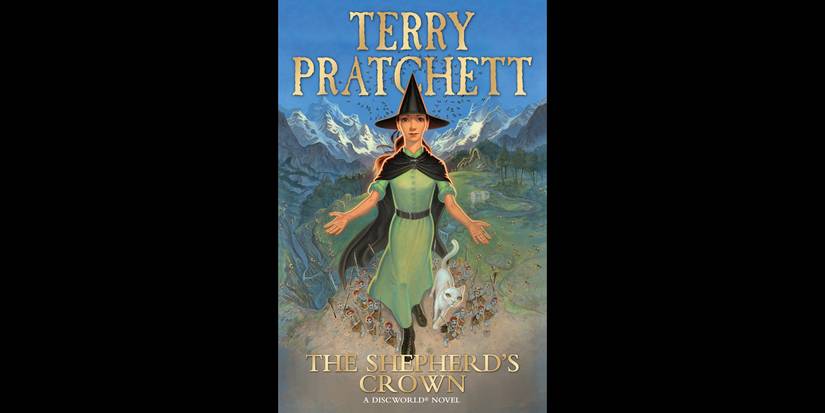
"Those who can must do for those who can't. And someone must speak for those who have no voices." No book on this list represents the end of an era more literally than The Shepherd's Crown. Terry Pratchett died in March 2015 after writing more than 40 Discworld novels, and his final completed book was published later that year. Fittingly, The Shepherd's Crown is deeply concerned with death, inheritance, and the necessity of carrying on.
In it, Tiffany Aching once again takes center stage, but the novel also provides a farewell to one of Discworld's defining characters, Granny Weatherwax. Her absence forces Tiffany to consider what remains when an apparently irreplaceable person is gone. The parallel with Pratchett himself is impossible to miss, even though the book was never intended as a straightforward allegory for his death. Still, the connection makes the themes hit especially hard: icons step aside, as the burden of maintaining the world falls squarely on the next generation. Beautiful stuff.
'The Fall of Gondolin' (2018)

"Great is the fall of Gondolin." The Fall of Gondolin is a compilation of Tolkien's writings, edited by his son Christopher, telling of the hidden Elven city of Gondolin, its betrayal, and its catastrophic destruction by Morgoth's forces. The author never truly finished it, so The Fall of Gondolin therefore presents the story through different versions written across Tolkien's life. Rather than trying to hide its unfinished nature, this approach allows readers to see the mythology developing.
In a more literal sense, The Fall of Gondolin closed a chapter on Middle-earth. After its publication, Christopher Tolkien stated "indubitably" that this would be his last book as the editor of his father's writings. His passing in January 2020 solidified this claim as the full stop on their father-son collaboration. In the end, The Fall of Gondolin returned to one of Tolkien's earliest stories to bring his legendary universe full circle.
KioskNews shows a cleaned-up reading view extracted from the publisher’s page — the original always lives on their site, not ours.