AI in engineering education is an opportunity, not a replacement for lecturers — Prem Gunnasegaran
OCTOBER 1 — Artificial intelligence (AI) is rapidly becoming part of everyday life, and universities are no exception. In engineering education, AI tools are already changing how students learn, solve problems, complete assignments and explore technical concepts.
Rather than viewing AI simply as a threat, educators should see it as an opportunity to rethink how engineering education is delivered and how graduates are prepared for a changing world.
The question is no longer whether students will use AI. They will. The more important question is whether universities can teach them to use it responsibly, critically and ethically.
Engineering has always evolved alongside technology. The engineer of yesterday relied heavily on physical calculations and technical drawings. Today’s engineer works with sophisticated software, digital modelling, automation and data-driven systems. Tomorrow’s engineer will increasingly work alongside intelligent technologies.
However, this does not mean AI can replace the role of an engineering lecturer. Engineering education is not simply about obtaining the correct answer. It is about understanding why an answer is correct, identifying assumptions, evaluating alternatives and making decisions when information is incomplete.
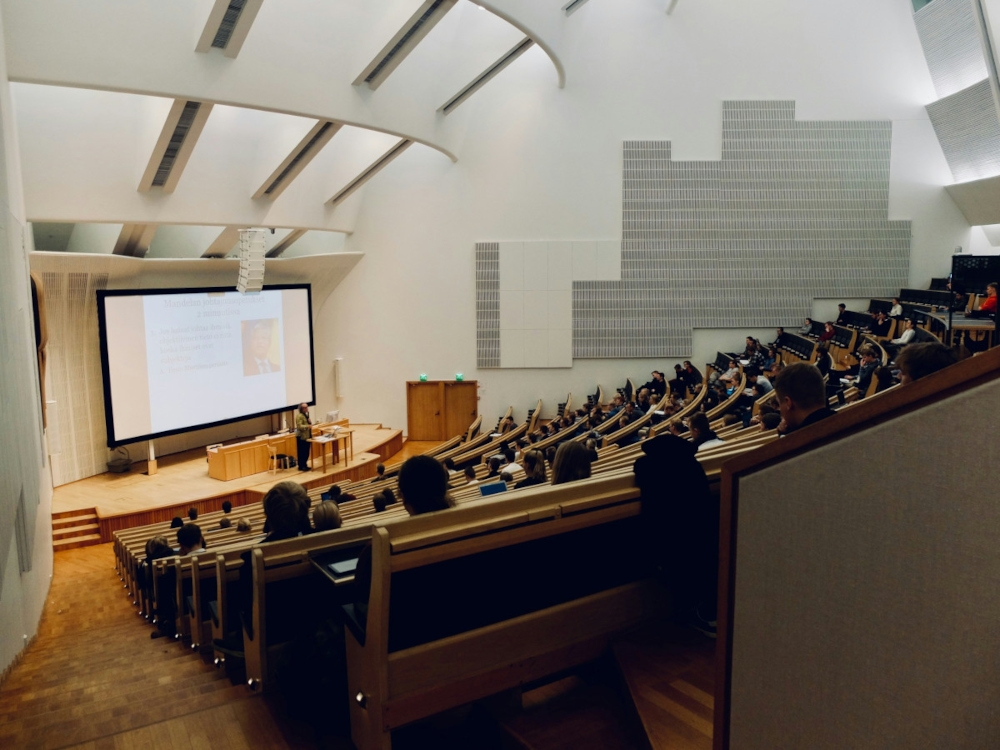
The future of education lies not in choosing between humans and AI, but in teaching students how to use AI wisely. — Unsplash pic
Why lecturers still matter
A student may ask AI to solve a complex engineering problem and receive an impressive answer within seconds. But if the student cannot explain the assumptions behind the calculation, identify an inappropriate boundary condition or recognise an unrealistic result, meaningful learning has not taken place.
This is where lecturers remain essential.
Lecturers provide context, challenge assumptions and encourage students to think beyond the immediate answer. They also help students develop professional judgement, ethical awareness and the ability to apply engineering knowledge to real-world situations.
AI can generate information, but it cannot replace the engineer’s responsibility to decide whether that information can be trusted.
The use of AI also raises legitimate concerns about academic integrity. If students use AI to generate entire assignments or engineering solutions without understanding them, universities risk producing graduates who appear competent but lack the skills required in professional practice.
The solution should not simply be to ban AI. Assessment methods need to be evolved.
Universities can place greater emphasis on problem-solving processes, oral presentations, design demonstrations, laboratory work, case studies and reflective explanations. Students should be asked not only to provide an answer, but also to explain how they reached it and how they verified the result.
AI can also become part of the learning process. Engineering students could be asked to use AI to generate a preliminary solution and then critically evaluate it using engineering principles. They could identify errors, challenge assumptions, compare different approaches and improve the proposed solution. This transforms AI from a shortcut into a learning tool.
Such an approach is particularly important in engineering because poor decisions can affect safety, infrastructure, energy systems and quality of life. Technical competence must therefore be accompanied by ethics and responsibility.
Malaysia’s ambition to develop a high-value, technology-driven economy makes this issue increasingly important. Universities must produce graduates who are comfortable with emerging technologies while remaining capable of independent thinking.
We do not need engineers who simply know how to ask AI for an answer. We need engineers who can frame the right questions, verify information, recognise limitations and take responsibility for their decisions.
AI adoption should also come with appropriate guidance and institutional support so that differences in digital literacy and access to technology do not widen existing inequalities.
The lecturer’s role is changing, not disappearing
As lecturers, our role is changing, but it is not disappearing. We may increasingly become facilitators, mentors and critical-thinking coaches rather than merely providers of information. This is an opportunity to make the role of educators even more meaningful.
AI should not be regarded as a substitute for human educators. Used responsibly, it can complement human expertise, support learning and encourage students to explore engineering problems from different perspectives.
The future of engineering education should not be about choosing between humans and AI. It should be about humans using AI wisely.
If we get this balance right, our universities can produce a new generation of engineers who are not only technologically capable, but also ethical, thoughtful and responsible professionals prepared to contribute to Malaysia’s future.
* Ir. Ts. Dr. Prem Gunnasegaran is a senior lecturer at the Department of Mechanical Engineering, College of Engineering, Universiti Tenaga Nasional (UNITEN), and can be reached at [email protected]
** This is the personal opinion of the writers or publication and does not necessarily represent the views of Malay Mail.
KioskNews shows a cleaned-up reading view extracted from the publisher’s page — the original always lives on their site, not ours.