Homo erectus teeth found in China’s rainforest topple theory of human evolution
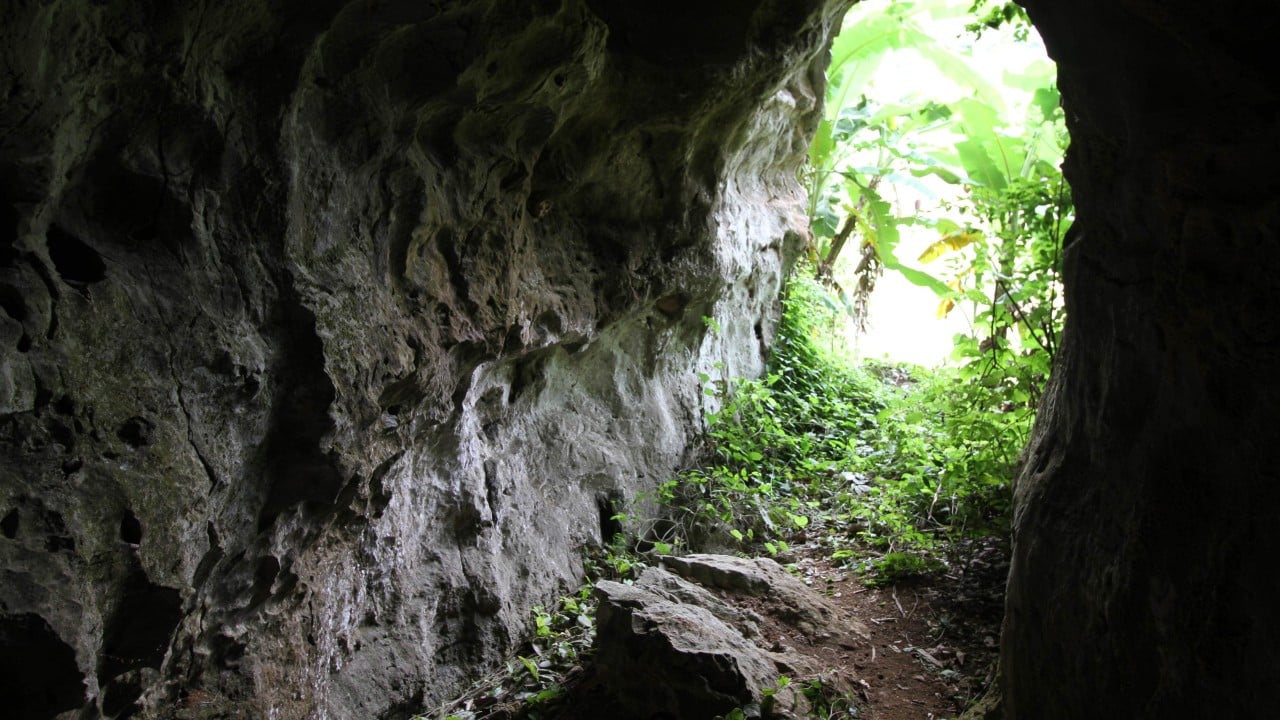
In Chongzuo, Guangxi, at the southernmost tip of China, steep limestone peaks rise abruptly, disappearing into the humid and dense tropical rainforest.
For tens of thousands of years, this green labyrinth of interwoven vegetation has not only swallowed sunlight and footprints but also preserved the secrets of ancient humans.
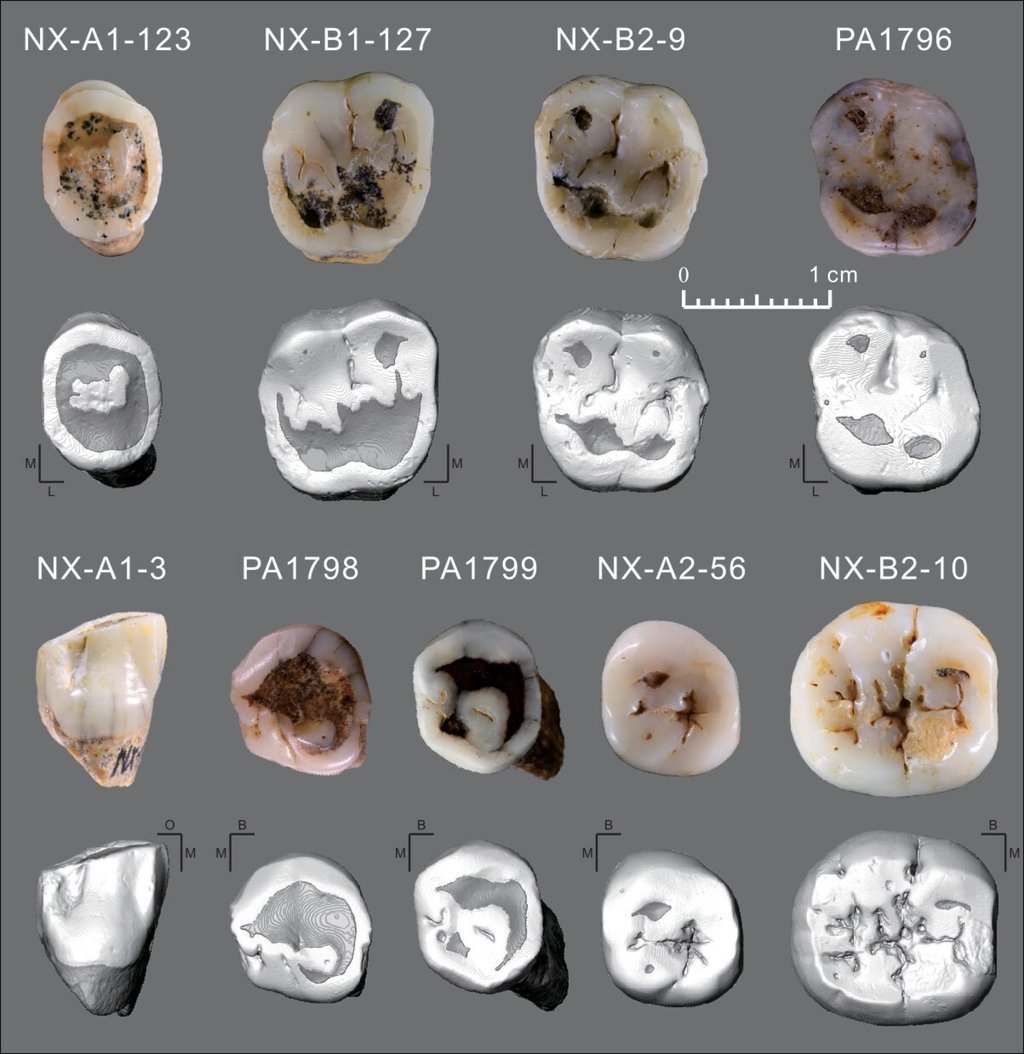
In Baxian Cave and Naxian Cave on the west bank of the Zuojiang River, archaeologists identified nine tiny ancient human teeth among more than 18,000 mammalian fossils.
Eight of them belong to Homo erectus – an ancient relative of modern humans, Homo sapiens.
Homo erectus existed on Earth for nearly two million years, far longer than our Homo sapiens ancestors. By various means, archaeologists have inferred that the owners of these teeth lived between 184,000 and 324,000 years ago.
This discovery challenges a long-standing consensus in anthropology: that the perilous, isolated tropical rainforest was a zone only Homo sapiens could conquer.
This research was conducted jointly by teams from China, Australia and Europe, and the findings were written up in two papers published in the latest issue of the leading academic journal Nature, released on November 19.
“These findings change how we think about Homo erectus,” author and palaeontologist Professor Zhang Yingqi, from the Institute of Vertebrate Palaeontology and Palaeoanthropology at the Chinese Academy of Sciences, wrote in a press release.
“Finding Homo erectus evidence for the first time among rainforest fauna challenges all our assumptions about their ability to adapt to environmental changes,” he added.
China has extensive evidence of Homo erectus, including the Zhoukoudian cave system in Beijing, where the remains of the so-called Peking Man, who lived between 400,000 and 780,000 years ago, were found.
However, such sites are mainly located in northern China, while very little evidence of Homo erectus has been found in southern China.
The two caves in Guangxi where the latest find was made are linked by a 15km (9-mile) karst valley corridor, surrounded by steep limestone hills, caves and patches of tropical vegetation.
Tropical rainforests are a harsh environment, where it is difficult to find food, navigate and survive. The rainy conditions also make fossil preservation more difficult – yet the limestone caves of Guangxi’s karst landscape happened to preserve these fossils.
More than 18,000 mammal fossils were unearthed from the two caves, including those of the extinct elephant-like Stegodon and the Guangxi giant antelope.
Among them, archaeologists identified nine teeth of human origin. Based on their morphology and ancient protein characteristics, eight were determined to belong to Homo erectus.
The ninth tooth (PA1796) differs morphologically from Homo erectus and does not have the derived amino acid sequence characteristic of Homo erectus.
This indicates that PA1796 does not belong to Homo erectus. However, it cannot currently be determined whether it is a Denisovan or another archaic human population.
By testing for strontium – a chemical element in tooth enamel linked to local geology – in the teeth of these individuals, researchers found that they may have travelled across surprisingly vast karst forest areas during childhood, rather than remaining within a small area.
01:27
Archaeologists in Georgia discover human tooth from 1.8 million years ago
Based on the strontium isotope data from three sets of teeth in the study, these Homo erectus individuals moved between the local limestone karst and more distant areas during childhood, travelling distances of up to 250km.
This movement extended as far as present-day northern Vietnam, forming a migration corridor between southern China and Southeast Asia.
Before this, Homo sapiens were thought to be the only species capable of adapting to such extreme environments. In West Africa, there is evidence that Homo sapiens survived in tropical rainforests 150,000 years ago.
In Southeast Asia, the expansion of rainforest during the Middle to Late Pleistocene is generally believed to be associated with the disappearance of archaic non-Homo sapiens hominins.
The world’s last Homo erectus were found on the alluvial plains of Java dating back to 100,000 years ago.
Archaeologists determined the age of the latest fossils through five independent methods, dating them to between 184,000 years and 324,000 ago – indicating that Homo erectus inhabited the two caves roughly contemporaneously.
This finding also extends the reliable record of Homo erectus in China beyond previous discoveries such as the He County site in Anhui (410,000 years ago) and the Nanjing site (640,000 years ago), confirming that southern China was a key habitat for late-surviving Homo erectus populations.
“While there has been growing recognition that our own species, Homo sapiens, adapted to rainforests around the world between 100,000 and 13,000 years ago, this is the first clear, direct evidence we have for another hominin living within these habitats,” said Professor Patrick Roberts of the Max Planck Institute of Geoanthropology, Germany, according to EurekAlert.
The South China Morning Post has contacted the author for comment.
KioskNews shows a cleaned-up reading view extracted from the publisher’s page — the original always lives on their site, not ours.